MENU
MENU
 Nasze ceny

 Przeczytaj fragment on-line

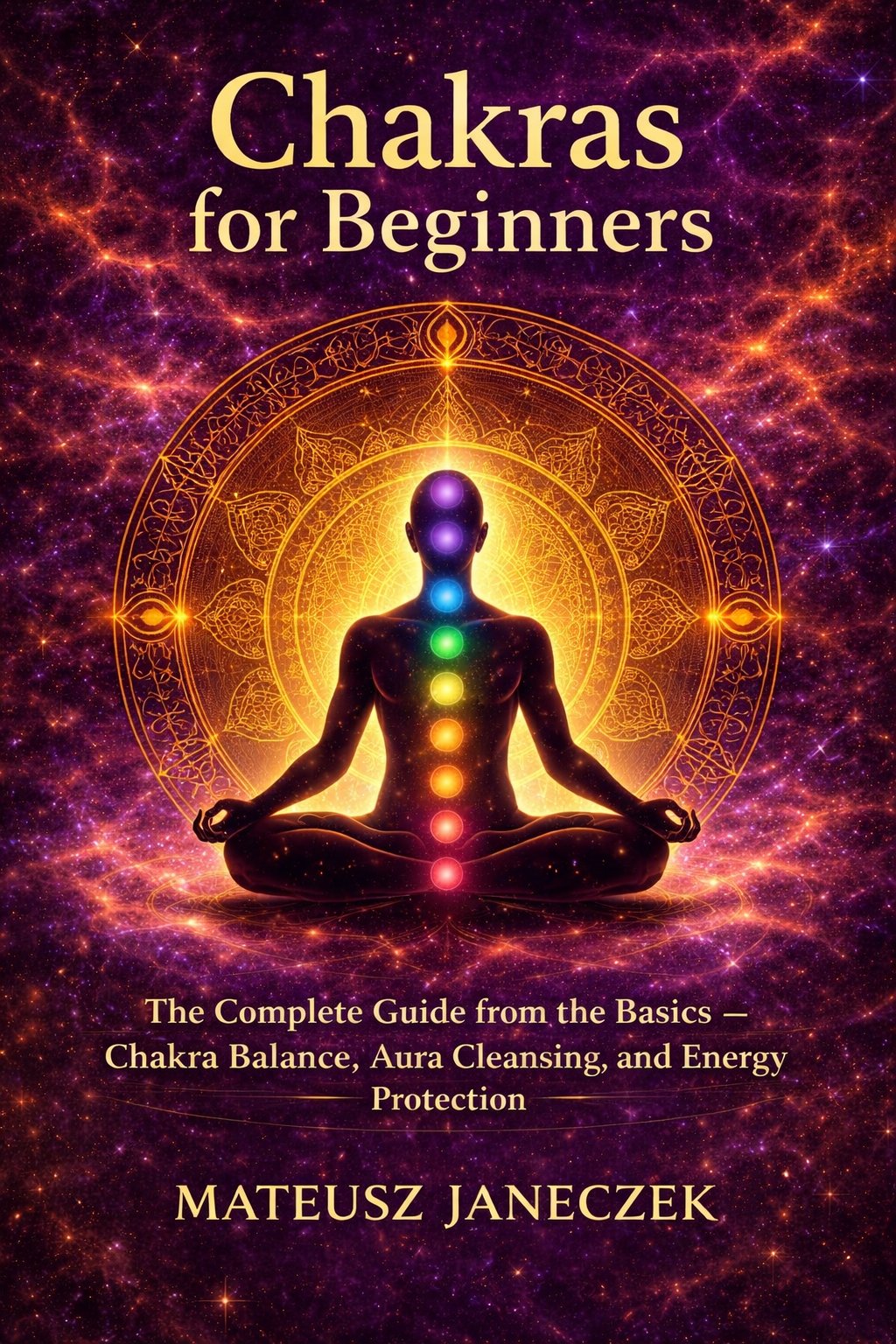
Chakras for Beginners – The Complete Guide from the Basics - ebook

Chakras for Beginners – The Complete Guide from the Basics - ebook
How does the human energy system work, and how can you use it consciously? This book guides you step by step through the seven main chakras—from root to crown—showing how they influence your emotions, health, and decisions. You will discover how imbalances in the chakras can block your growth and how to restore balance through aura cleansing, protecting your energy field, and rebuilding your strength after encounters with energy vampires. You will learn to recognize signals from the body, interpret energetic disturbances, and apply effective techniques for strengthening your boundaries. This is a practical guide for everyone—from beginners to advanced practitioners—who wants to live in alignment with their spiritual nature and fully access the power of the chakras.
Ta publikacja spełnia wymagania dostępności zgodnie z dyrektywą EAA.
| Kategoria: | Ezoteryka |
| Język: | Angielski |
| Zabezpieczenie: |
Watermark
|
| ISBN: | 9788368762983 |
| Rozmiar pliku: | 3,7 MB |
FRAGMENT KSIĄŻKI
7
Chapter 2: The Seven Main Chakras - a map
of energy in the body
11
Chapter 3: Chakras and biological systems -
how do they affect the body?
16
Chapter 4: Aura – man's energy field
22
Chapter 5: Energy channels – the flow of life
through the body
28
Chapter 6: Energy lockdowns – causes and
effects
34
Chapter 7: Basic Chakra - Safety, Body,
Survival
40
Chapter 8: Sacred chakra - emotions,
pleasure, sexuality
45
Chapter 9: Solar plexus chakra - strength, will,
action
51
Chapter 10: Heart chakra - love, healing,
relationships
58
Chapter 11: Throat chakra - communication,
truth, expression
64
3Chapter 12: Third Eye Chakra - Intuition,
Consciousness, Vision
69
Chapter 13: Crown Chakra - spirituality,
source, connection
77
Chapter 14: How to recognize a blocked
chakra - symptoms and energy differences
82
Chapter 15: Chakra Unlocking Techniques -
Specific Methods
87
Chapter 16: Chakra Meditations - Structure
and Conduct
92
Chapter 17: Sound Treatment – Frequencies
and Mantras
99
Chapter 18: Crystals and Chakras
105
Chapter 19: Herbs and essential oils for
chakra balance
112
Chapter 20: Colours, Food, and Clothing - The
Impact of Physical Choices on the Chakras
117
Chapter 21: Purification of the Aura
123
Chapter 22: Protection against energy drain -
practical shields and boundaries
131
4Chapter 23: Energy valus - how to recognize it
and not succumble
137
Chapter 24: Energy reset - emergency plan for
the crisis
144
Chapter 25: Aura in relationships -
consonance and cut-off
152
Chapter 26: Creativity as a function of the
harmonized chakras
159
Chapter 27: Working with the shadow in the
chakra system
165
Chapter 28: Chakras as a Map of Spiritual
Development
171
Chapter 29: Living from the level of
harmonized chakras - what it looks like in
practice
176
5CHAPTER 1: WHAT ARE CHAKRAS?
The chakras are the invisible energy centers of
the human body, which are named in Sanskrit and
mean "wheel" or "vortex," which refers to the
swirling movement of energy that occurs at these
points. Traditionally, there are seven main
chakras, arranged along the spine - from the base
to the top of the head - that regulate the flow of
vital energy, called prana in yoga or chi in the
Chinese tradition. The roots of this concept go
back to ancient India, where knowledge about the
chakras was transmitted in tantric and yogic texts,
such as the Upanishads or Shiva Samhita. In
tantrism, chakras were seen as centers of spiritual
awakening that can be activated through practices
such as meditation, pranayama, mudras, mantras,
or kundalini yoga. Over time, especially in the
20th century, the concept of chakras penetrated to
the West, where it was adapted into New Age
spirituality, energy psychology, holistic healing,
and body therapy. The modern popularity of the
chakras in the West has meant that they are often
7depicted in a simplified form, as seven color
points from red to purple, but their original
meaning goes much deeper and is associated with
a precise system of spiritual development. The
chakras act as energy relays between the physical
body, emotions, and consciousness. Each of them
is responsible for specific aspects of our lives -
from survival and instinct (base chakra), through
emotions, willpower, and relationships, to
intuition, spiritual vision, and connection with
higher consciousness. When the energy in the
chakras flows freely, a person experiences
harmony, health, and inner peace. However, if a
blockage arises in one of the chakras - as a result
of trauma, stress, suppressed emotions, or lack of
contact with one's own body - it can lead to
disturbances on a psychological, physical, and
spiritual level. Each chakra acts like a rotating
energy port that draws energy from the
environment and processes it to deliver it to the
right bodies and areas of consciousness. This
energy is then emitted outward, creating an aura
– i.e. the energy field around the person. This
mechanism is dynamic and constantly responds to
our thoughts, emotions, environment,
8relationships and lifestyle. The chakras can be
compared to the transformation points through
which information passes from the body level to
the spirit level and vice versa. The balance of the
chakras means that each of them functions in a
harmonious way - neither superactive nor blocked
- which translates into a sense of fullness, clarity
of thought, emotional stability and coherent
action. Modern research into energy psychology
suggests that our beliefs, emotional patterns, and
cellular memory affect the functioning of
individual chakras, and working with them can
support the process of self-healing and personal
development. For this reason, chakras are
increasingly treated not only as an element of
spiritual tradition, but also as a useful
psychological and energy tool. For many people,
conscious work with the chakras becomes a way to
better understand yourself, release emotional
blockages, restore inner cohesion and spiritual
growth. The chakras teach us that the body is not
just a physical vehicle, but a subtle instrument of
consciousness through which life force flows.
When we learn to read the signals coming from
our energy centers and consciously work with
9CHAPTER 2: THE SEVEN MAIN
Chakras - a map of energy in
the body
The seven main chakras are nothing more than
the seven energetic centers that are located along
the vertical axis of the body - from the base of the
spine to the top of the head. They are presented as
rotating energy centers, each of which is
responsible for a different aspect of our lives -
physical, emotional, mental, and spiritual. Their
location is not accidental, and each point on the
body map where the chakra is located is
associated with a specific endocrine gland, color,
element, and life theme that expresses the energy
of that sphere. The first of these is the base
chakra, located at the base of the spine, near the
coccyx. This center is associated with the earth -
both as an element and metaphorically with a
sense of grounding, security, survival, and basic
physical needs. This chakra is represented by the
color red and is associated with the adrenal
11glands, which respond in stressful situations,
triggering the fight or flight mechanism. When the
energy of this chakra is harmonized, a person feels
stable, safe, present in the body, and has a healthy
relationship with matter. Another center is the
sacral chakra, located a few centimeters below the
navel, in the lower abdomen. Its color is orange,
and the assigned element is water. This center is
related to emotions, creativity, sexuality, and the
ability to feel pleasure. The sacral chakra is
associated with the ovaries in women and the
testicles in men - the glands responsible for sex
hormones. When it functions harmoniously, a
person has a healthy contact with emotions, is
able to express them, and experience closeness.
The third chakra is the solar plexus, located in the
upper abdomen, in the area of the diaphragm. Its
color is yellow, and the element is fire. It is the
center of personal strength, will, action,
boundaries, and identity. The gland associated
with this chakra is the pancreas, which affects the
body's sugar balance. The harmonized solar
plexus gives a sense of inner power, self-
confidence, and the ability to act independently.
The fourth chakra is the heart chakra, which is
12located at the central point of the chest and is the
bridge between the three lower (more physical)
chakras and the three upper (more spiritual)
chakras. Its color is green or pink, and the
element is air - symbolizing space, openness, and
lightness. This chakra is associated with the
thymus - a key gland for the immune system. The
heart in an energetic sense is the center of love,
compassion, healing, relationships, and openness
to others. When it is open, we can give and receive
love unconditionally. The fifth chakra is the
throat, which is located at the height of the neck
and is the center of communication, expression,
and truth. Its color is blue, and its element is ether
- a subtle space of sound and word. It is associated
with the thyroid gland, which regulates
metabolism and the overall dynamics of the body.
A harmonious throat is the ability to speak
authentically, listen attentively, and express one's
own truth without fear. The sixth chakra, known
as the third eye, is located in the center of the
forehead, just above the eyebrow line. Its color is
indigo, and the element is light. It is the center of
intuition, inner insight, imagination, and clear
perception. The gland associated with the third
13eye chakra is the pineal gland - a small structure
in the brain responsible for the circadian rhythm
and melatonin, but also symbolically considered
to be the seat of spiritual consciousness. A well-
developed third eye gives clarity, vision, the ability
to look beyond illusion, and the superficiality of
things. The last of the main chakras is the crown
chakra, located on the top of the head. Its color is
purple or white, and the element is pure
consciousness - infinite, elusive, and at the same
time permeating everything. This chakra is
associated with the pituitary gland, the main
gland of the endocrine system that controls the
other glands. The crown symbolizes the
connection with something greater - with the
Higher Self, with the Source, with infinite
consciousness. When he acts harmoniously, man
feels the meaning of life, unity with the universe,
and openness to spiritual guidance. Each of these
seven chakras is not just a point on the body but a
whole spectrum of energy functions and life
themes that interact with each other and
complement each other. If at least one of the
chakras is blocked or overactive, the entire energy
system can be disrupted, affecting both our well-
14CHAPTER 3: CHAKRAS AND
biological systems - how do
they affect the body?
The chakras, although they are energy
structures, have an extremely deep and concrete
impact on the physiology of the human body.
Their connection with the biological systems,
especially the endocrine and nervous systems, has
been noticed by both ancient spiritual traditions
and by modern researchers of holistic medicine.
Each of the seven main chakras is located near the
key endocrine glands that govern the body's
chemical and emotional balance. The crown
chakra, located at the top of the head, resonates
with the pituitary gland, which acts as the
superior regulator of the endocrine system. The
pituitary gland oversees other glands, controlling
the body's water balance, metabolism, and
development, among other things. The third eye
chakra, located between the eyebrows, is
connected to the pineal gland - the gland
16responsible for circadian rhythms, melatonin
production, and deep meditative states. The
pharyngeal chakra corresponds to the thyroid
gland, which regulates the metabolic rate, body
temperature, and internal energy. The heart
chakra is located near the thymus, which is crucial
in the context of immunity and maturation of T
lymphocytes. The solar plexus, strongly associated
with emotions and identity, is energetically
responsible for the pancreas - the organ that
regulates blood glucose levels and is responsible
for the balance between insulin and glucagon. The
sacred chakra, closely related to sexuality and
emotions, correlates with the ovaries in women
and the testicles in men - the main sex glands
responsible for the hormones estrogen,
progesterone, and testosterone. Finally, the base
chakra resonates with the adrenal glands, which
produce adrenaline and cortisol - hormones
responsible for the "fight or flee" response,
regulating stress levels, energy, and blood
pressure. The nervous system, on the other hand,
is a physical medium through which the energy of
the chakras can manifest in consciousness and in
the body. The nerves of the nerve plexuses - such
17as the cervical, brachial, solar, and lumbar plexus
- coincide with the location of the main energy
centers. The chakras act as interfaces between
subtle energy and electrical impulses conducted
by neurons. When the chakra is in balance, the
nerve signals and hormone secretion proceed in a
balanced and harmonious way, which manifests
itself in a stable mood, clarity of mind, vital
energy, and general well-being. For example, the
throat chakra, as a centre of expression and
communication, when functioning properly,
allows for the clear formulation of thoughts and
self-expression, which is supported by the proper
functioning of the thyroid gland, which in turn
regulates the metabolism and the level of energy
needed to speak, think, and act. However, when
this chakra is blocked or hyperactive, there may
be problems with the thyroid gland - hypofunction
or hyperactivity - which is manifested by fatigue,
anxiety, irritability, or communication difficulties.
Similarly, the solar plexus chakra is responsible
for our willpower, sense of power, and
boundaries. Its energy imbalance can manifest
itself as problems with the pancreas - fluctuations
in blood sugar levels, hypoglycemia, type II
18diabetes - and mentally as a lack of control, low
self-esteem, or, on the contrary, domination and
aggression. There is a direct link between
emotional stress and chakra deregulation, which
leads to the unravelling of biological systems.
Chronic stress causes the adrenal glands to
constantly stimulate the production of cortisol,
which translates into an overload of the base
chakra. If the energy cannot flow freely upwards,
other chakras also suffer from a lack or excess of
energy. Long-term stress can also block the heart
chakra, leading to chest tension, relationship
difficulties, chronic anxiety, or emotional closure.
The body reacts with muscle tension, a change in
heart rate, digestive problems, and a weakening of
immunity—all as a result of the disruption of the
energy flow of the chakra system. From the point
of view of biochemistry, our body constantly
generates electrical impulses, action potentials,
enzymatic reactions, and hormones, which are
carriers of biological information. These
phenomena occur in real time and are
measurable, but what cannot be directly measured
is the way in which subtle energy affects their
course. Bioenergy, i.e. life energy present in the
19human body and field, penetrates these processes,
shaping their quality, rhythm, and direction. This
acts as a pattern or plan that controls physical
mechanisms, just like software controls the
operation of a computer. Without energy balance,
the body's biochemistry loses consistency—stress
reactions begin to dominate, inflammation,
unregulated hormone secretion, and changes in
neurotransmitter activity appear. For example,
the imbalance of the sacred chakra can lead to
overproduction or deficiency of sex hormones,
which translates into mood swings, libido
disorders, fertility problems, or emotional
instability. The third eye chakra, on the other
hand, when blocked or too open, can result in
confusion, sleep disturbances (effect on
melatonin), problems with concentration, and
withdrawal from the real world. Modern medicine
is beginning to see the importance of integrating
the body, mind, and spirit—not just as a
metaphor, but as a real model of health. Practices
such as meditation, yoga, qigong, or bioenergetics
show that working with chakras can bring
concrete results in regulating blood pressure,
lowering cortisol levels, stabilizing heart rate,
20improving immunity, and general well-being.
Working with the chakras is not only spiritual
development but conscious optimization of the
physiology of the body. The cooperation of
biochemistry and bioenergy is a natural symbiosis
—without one, the other cannot function fully.
Understanding this relationship allows not only to
heal specific symptoms but also to reach their
causes in the energy body and consciousness.
Chakras, as a system that connects consciousness
with the physical body, thus become the key to a
holistic health that encompasses all levels of our
existence.
21CHAPTER 4: AURA – MAN'S
energy field
The aura is a subtle energy field surrounding
the human body, which is an external expression
of its internal energy. It is not a new or mystical
concept in a purely spiritual sense – many
cultures over the centuries have seen man as a
being surrounded by light, fog, or radiation. In
Eastern traditions, the aura is sometimes referred
to as a pranic field, in Western traditions as an
emanation of the soul, and in scientific
experiments, more and more often it is called a
biofield or electromagnetic field of the body. The
aura consists of several layers, each of which is
responsible for a different aspect of human
existence - from the physical, through the
emotional, mental to the spiritual. The first layer
of the aura, adjacent to the physical body, is the
etheric layer. It is responsible for reflecting the
physical state of the body - diseases, pains or
tensions often manifest themselves first in this
22space. This layer is the subtle matrix of the body,
as it were, its energetic skeleton, which anticipates
and conditions changes in matter. The second
layer is the emotional aura - it is in it that all our
feelings, moods and emotional states are
recorded. It is a very dynamic, changeable space
that can change its color, shape and structure
depending on what we are experiencing at a given
moment. People with high sensitivity often sense
these changes in others before they are expressed
in words. The third layer is the mental aura -
associated with thoughts, beliefs, cognitive
patterns. This is where our beliefs about
ourselves, the world, and other people are
recorded. Disorders in this layer can lead to
mental chaos, lack of concentration, as well as
duplication of negative thought patterns. The
most subtle layer is the spiritual aura, also known
as the causal or divine layer. This is where the
patterns of the soul, information from past
incarnations, the deep desires of the heart, as well
as the channels of contact with the higher
consciousness are located. Her condition indicates
the degree of spiritual integration and the
compatibility of life with the internal mission. The
23perception of the aura is possible in various ways.
Some people see it naturally - they describe it as
colors, luminous clouds, shimmering rays. Others
sense it intuitively as an impression of warmth,
coolness, tension, or peace in the space around
another person. Still others use tools such as
Kirlian photography, which under certain
conditions can depict the electromagnetic field of
living objects. The ability to perceive the aura,
although considered by many to be a gift, is also a
skill that can be developed through concentration
exercises, meditation, purification of the senses,
and working with energy. Aura awareness can
significantly improve the quality of our lives. It
allows you to recognize changes in your health
status faster, gives you access to a deeper
understanding of emotions and relationships, and
also allows you to take care of your own energy
field more precisely. The aura is not constant - it is
influenced by both external and internal factors.
One of the main factors affecting the quality of the
aura is our mood. Negative emotions, such as fear,
anger, jealousy, or guilt, can thicken and darken
the energy field, making it more susceptible to
external disturbances. On the other hand, positive
24