MENU
MENU
 Nasze ceny

 Przeczytaj fragment on-line

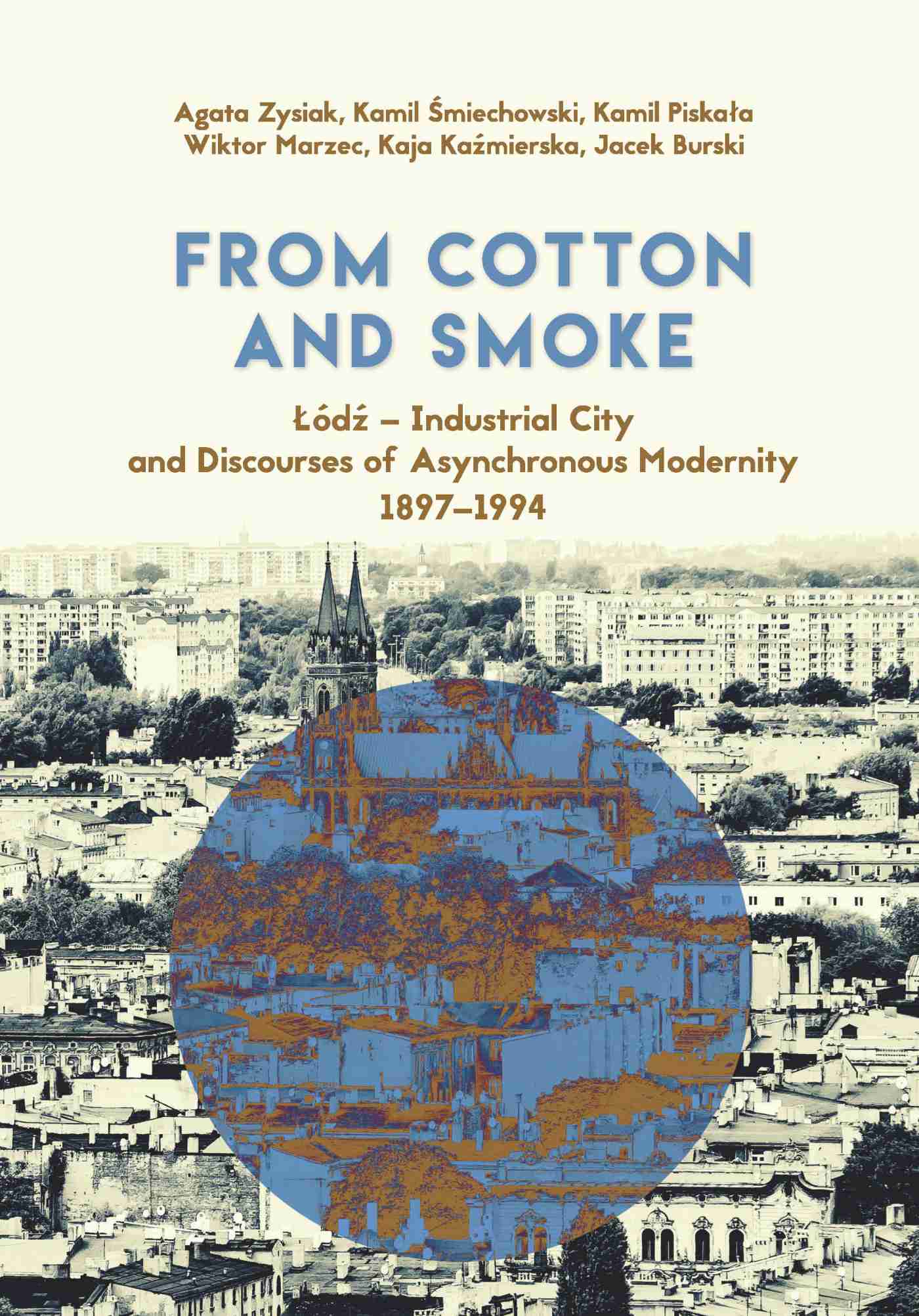
From Cotton and Smoke: Łódź – Industrial City and Discourses of Asynchronous Modernity 1897-1994 - ebook
From Cotton and Smoke: Łódź – Industrial City and Discourses of Asynchronous Modernity 1897-1994 - ebook
This book envisions Łódź, a city in present-day central Poland, the region’s textile industrial hub, to have been the capital of the Polish 19th century. Its history is a tale of struggle with modern change in Eastern Europe. The authors boldly challenge the romantic and noble-based Polish cultural imaginary, offering instead a revolutionary path to understanding confrontation with modernity in the region. The book examines local press debates during four pivotal periods, each of which stimulated self-reflection on the idea of the modern city: – Rapid industrial growth in the tsarist borderlands; – State crafting after WWI; – Socialist restructuring after 1945; – Transition and deindustrialization after 1989. Together these insights constitute a multi-faced portrait of 20th century urban experience beyond the metropolis, in different historical contexts. This innovative, interdisciplinary work deftly integrates urban and cultural history, historical sociology and discourse research. It will be of great value to Polish and Jewish studies’ specialists, as well as those in the field of Eastern European and Slavic studies. The book also addresses core intellectual debates within urban studies, modernity studies and historical discourse analysis worldwide.
Spis treści
Acknowledgments
List of Tables
List of Illustrations
Agata Zysiak, Kamil Śmiechowski, Kaja Kaźmierska, Wiktor Marzec, Introduction
There Is a City in Europe
Translocal Modernity
Printed Modernity
Journey through a Century
The Structure and Content of the Modern Discourse
Agata Zysiak, Kamil Śmiechowski, Wiktor Marzec, The Beginnings: Entrance to the Industrial World 1897–1914
The Promised Land in the Mud
From Othering to Condemnation
Re-imaging the City
Harmonious Modernity and Urban Self-assertion
The Dream of a Proper Infrastructure
Calling for Institutions
Inventing Welfare
Educating the Masses
Envisioning Urban Citizenship
Ethnicizing the Economy
Forging Modernity – Conclusion
Kamil Piskała, The Interwar: Democratic Politics and Modern City between Two World Wars 1918–1923
The Decline of the “Polish Manchester”
The Years of War: the Economic Collapse and Political Liberalization
Democratic Politics and the Press in the Independent State
From Class Warfare to the Modernization Program
The Visions of a Metropolis and Municipal Socialism
Rhetorical Shifts
Against the “Philosophy of the Crowd”
National Capitalism
Antisemitism as a Social Critique
From Antisemitism to Political Mobilization
Class or Nation?
The Crisis of Modernization and European Civil War – Conclusion
Agata Zysiak, Kamil Piskała, The Postwar: Social Justice for the Proletarian City? 1945–1949
New Reality
New Worldwide Order
Postwar Cinderella
New Scope of Press Influence
Tempting Visions in Hard Times
Rhetoric of Appeasement
Patterns of Legitimization: Dark Past and Bright Future
Working Classes and Everyday Life
Towards a Functionalist City
Osiedle and beyond
Planning
Metropolitan Dreams and a Wake-up Call
From Modest Modernization to Socialist City – Conclusion
Kamil Śmiechowski, Jacek Burski, Transition: The Postindustrial Orphan in Neoliberal Poland 1989–1994
Re-inventing the City
The Socialist-Style American Dream
Shock and Helplessness
New Press and New Politics
The Market as a Principle of Social Organization
City in Crisis
Projects of Breaking Through
Bringing Capitalism back in – Conclusion
Agata Zysiak, Kaja Kaźmierska, Wiktor Marzec, A City Lost in Space in a Country Lost in Time – Conclusion
Struggling with the Modern Challenge
City from Cotton and Smoke
The Press is Back in Town
Narratives of Modernity
Methodological Appendix
Primary Sources Covered
Reference list
Index of Names
List of Contributors
| Kategoria: | Military |
| Język: | Angielski |
| Zabezpieczenie: |
Watermark
|
| ISBN: | 978-83-8142-103-4 |
| Rozmiar pliku: | 12 MB |
FRAGMENT KSIĄŻKI
Acknowledgments
List of Tables
List of Illustrations
Introduction
There Is a City in Europe
Translocal Modernity
Printed Modernity
Journey Through a Century
The Structure and Content of the Modern Discourse
The Beginnings: Entrance to the Industrial World 1897–1914
The Promised Land in the Mud
From Othering to Condemnation
Re-imaging the City
Harmonious Modernity and Urban Self-assertion
The Dream of a Proper Infrastructure
Calling for Institutions
Inventing Welfare
Educating the Masses
Envisioning Urban Citizenship
Ethnicizing the Economy
Forging Modernity – Conclusion
The Interwar: Democratic Politics and Modern City Between Two World Wars 1918–1923
The Decline of the “Polish Manchester”
The Years of War: the Economic Collapse and Political Liberalization
Democratic Politics and the Press in the Independent State
From Class Warfare to the Modernization Program
Visions of a Metropolis and Municipal Socialism
Rhetorical Shifts
Against the “Philosophy of the Crowd”
National Capitalism
Antisemitism as Social Critique
From Antisemitism to Political Mobilization
Class or Nation?
The Crisis of Modernization and European Civil War – Conclusion
The Postwar: Social Justice for the Proletarian City? 1945–1949
New Reality
New Worldwide Order
Postwar Cinderella
New Scope of Press Influence
Tempting Visions in Hard Times
Rhetoric of Appeasement
Patterns of Legitimization: Dark Past and Bright Future
Working Classes and Everyday Life
Toward a Functionalist City
Osiedle and beyond
Planning
Metropolitan Dreams and a Wake-up Call
From Modest Modernization to a Socialist City – Conclusion
Transition: The Post-industrial Orphan in Neoliberal Poland 1989–1994
Re-inventing the City
The Socialist-Style American Dream
Shock and Helplessness
New Press and New Politics
The Market as a Principle of Social Organization
City in Crisis
Projects of Breaking Through
Bringing Capitalism back in – Conclusion
A City Lost in Space in a Country Lost in Time – Conclusion
Struggling with the Modern Challenge
City from Cotton and Smoke
The Press is Back in Town
Narratives of Modernity
Methodological Appendix
Primary Sources Covered
Reference List
Index of Names
List of ContributorsAcknowledgments
This project was possible thanks to the generous support of the Polish National Science Centre for the research project realized at the University of Łódź, Poland, financed by research grant Opus 2, contracted as UMO-2011/03/B/HS6/01874. Project coordinator: Kaja Kaźmierska.
The challenge of team work on a collective project stimulated exchange between sub-disciplines and allowed individual research pursuits to be improved through dialogue. Also, external insights help enquiry to go further on the uneasy way of long-term research. Many insights in this book were triggered by consultations, talks, conference interventions and private conversations which we are unable to recall and acknowledge in detail, and it would be too cumbersome to list them here anyway. Many of the ideas that appear in this study were suggested by generous commentators, and many other result from consultations, reviews and debates.
All team members benefited from the generous support of the various institutions which were their place of employment or which hosted them as research fellows during their work on the project. Because of the divergent trajectories of all the co-authors, it would be difficult to mention all of them here.
Apart from the authors of this book, during the initial phase Kamil Brzeziński and Patrycja Kruczkowska also participated in the project. Zbigniew Bokszański and Paweł Starosta from the University of Lodz supported the research team with kind advice and generous institutional support. Izabela Smuga and Adam Musiałowicz joined the team for scanning, character recognition and preparation of the research material. Michał Gruda from the Miastograf website offered his advice and resources to complete illustrations for the book. The complete list of colleagues at different universities in different parts of the world all of whom offered their generous support in commenting on early drafts, book proposals and articles presenting the results of the project would be too long and many important voices are, unavoidably, conspicuously missing. Scholars who offered advice and comments are (in alphabetic order) Ayten Alkan (Institute for Advanced Study, Princeton), Biskupski (Gdańsk University), Howard Brick (University of Michigan), John Bukowczyk (Wayne State University), Winson Chu (University of Wisconsin-Madison), Claudia Eggart (Free University, Berlin), Maciej Janowski (Institute of History, Polish Academy of Science), Brian Porter-Szucs (University of Michigan), Harsha Ram (University of California, Berkley), George Steinmetz (University of Michigan), Bo Strath (University of Helsinki), Balázs Trencsényi (Central European University), Peter Wagner (University of Barcelona), Joanna Wawrzyniak (Warsaw University) and Genevieve Zubrzycki (University of Michigan).
Academic reviewers of this book, Agnieszka Kolasa-Nowak (Maria Skłodowska-Curie University, Lublin) and Tomasz Majewski (Jagiellonian University, Cracow) carefully read the manuscript and offered insightful comments and feedback. Julia Podziewska heroically worked on language editing which allowed this study to be presented in a clear and an attractive form.
Marginal parts of this study (but none of the chapters as such) have been published in various academic journals in various languages. Work on those articles and comments by editors and reviewers of the following journals also proved helpful to us: American-Canadian Slavic Studies, Journal of Historical Sociology, Kwartalnik Historii Żydów, and Praktyka Teoretyczna.List of Tables
Table 1. Modern discourse about Łódź with obstacles, utopian and dystopian dimensions, 1897–1914
Table 2. Expression of metropolitan urban discourse with diagnostic expressions and visions of improvement 1897–1914
Table 3. The modernizing program presented in the discourse of Łodzianin and Dziennik Zarządu miasta Łodzi, 1918–1923
Table 4. The rhetoric of “class warfare”, 1918–1923 127
Table 5. “National capitalism” versus degenerate capitalism: image in the right-wing press, 1918–1923
Table 6. The rhetoric of the “consolidation of the nation”—ethnic conflict and political mobilization, 1918–1923
Table 7. The structure of “municipal socialism” and “national capitalism” discourses, 1918–1923
Table 8. Examples of binary oppositions in the postwar discourse on Łódź and its historical trajectory, 1945–1949
Table 9. Quality of everyday life in the discourse – examples of problems and projected solutions, 1945–1949
Table 10. List of main topics of the modern discourse with diagnoses and projects, 1989–1994List of Illustrations
Figure 1. Łódź and its shifting position regarding state borders
Figure 2. Structure of discourse of the modern (author: Agata Zysiak)
Figure 3. Łódź seen from the suburbs, postcard from Łukasz Biskupski’s collection
Figure 4. Karol Scheibler Factory, author: Bronisław Wilkoszewski, 1896, Archiwum Państwowe w Łodzi, PL 39 607 A-7 14 (Wikimedia Commons)
Figure 5. New Market: Town Hall and Evangelical Church, author: Bronisław Wilkoszewski, 1896, Archiwum Państwowe w Łodzi, PL 39 607 A-7 06
Figure 6. Pinkus apartment house, auhtor: Bronisław Wilkoszewski, 1896, Archiwum Państwowe w Łodzi, PL 39 607 A-7 35 (Wikimedia Commons)
Figure 7. Meyer Passage, author: Bronisław Wilkoszewski, 1896, Muzeum Miasta Łodzi, MHMŁ/I/2096 (Miastograf.pl – digital collection).
Figure 8. Piotrkowska Street, postcard from Łukasz Biskupski’s collection
Figure 9. Łódź Fabryczna railway station, postcard from Łukasz Biskupski’s collection
Figure 10. Łódź Kaliska railway station, postcard from Łukasz Biskupski’s collection
Figure 11. Town’s Credit Association (Miejskie Towarzystwo Kredytowe), author: Bronisław Wilkoszewski, 1896, Archiwum Państwowe w Łodzi, PL 39 607 A-7 11 (Wikimedia Commons)
Figure 12. Workers’ housing near the Scheibler factory, “Księży Młyn”, postcard from Łukasz Biskupski’s collection
Figure 13. The Izrael K. Poznański Factory, author: Bronisław Wilkoszewski, 1896, Muzeum Miasta Łodzi, MHMŁ/I/2096 (Miastograf.pl – digital collection)
Figure 14. Fair in Leonard Square, postcard from Łukasz Biskupski’s collection
Figure 15. German occupation during WWI, a time of rising political activity: patriotic demonstratoin on the anniversary of the Constitution of 3 May, 3.05.1916, from Łukasz Biskupski’s collection
Figure 16. General panorama of the industrial city, author: unknown, Narodowe Archiwum Cyfrowe, Ilustrowany Kurier Codzienny – Archiwum Ilustracji, 1-U-3228
Figure 17. Female textile workers on the road to the factory, author: unknown, Narodowe Archiwum Cyfrowe, Ilustrowany Kurier Codzienny – Archiwum Ilustracji, 1-P-2234
Figure 18. Typical backyard of a cheap tenement house in Łódź, Narodowe Archiwum Cyfrowe, Ilustrowany Kurier Codzienny – Archiwum Ilustracji, 1-U-3838
Figure 19. Crowd in the street in a district on the outskirts, Narodowe Archiwum Cyfrowe, Ilustrowany Kurier Codzienny – Archiwum Ilustracji, 1-G-5745
Figure 20. Electric tram on Piotrkowska Street, author: unknown, Narodowe Archiwum Cyfrowe, Ilustrowany Kurier Codzienny – Archiwum Ilustracji, 1-U-3852
Figure 21. Reymont Square, postcard from Łukasz Biskupski’s collection.
Figure 22. New building for the Stanisław Staszic elementary school; education was one of the main areas of local investment in the 1920s, author: unknown, ca. 1925, Narodowe Archiwum Cyfrowe, Ilustrowany Kurier Codzienny – Archiwum Ilustracji, 1-N-1643
Figure 23. View of the southern, industrial district (Catholic cathedral and the main Evangelical church in the center), from Łukasz Biskupski’s collection
Figure 24. Fair at the Old Market, postcard from Łukasz Biskupski’s collection.
Figure 25. The Bałucki Market, author: unknown, 1931, Narodowe Archiwum Cyfrowe, Ilustrowany Kurier Codzienny – Archiwum Ilustracji, 1-G-5749
Figure 26. Panorama of the southern working-class districts (view from the tower of the Catholic cathedral on Piotrkowska Street), author: unknown, Narodowe Archiwum Cyfrowe, Ilustrowany Kurier Codzienny – Archiwum Ilustracji, 1-U-3820-2
Figure 27. Piotrkowska Street in the 1930s, postcard from Łukasz Biskupski’s collection
Figure 28. District Court building in Dąbrowski Square, an example of modernist and monumental representative architecture of public service buildings in the 1930s, author: unknown, 1930, Narodowe Archiwum Cyfrowe, Ilustrowany Kurier Codzienny – Archiwum Ilustracji
Figure 29. Modernist headquarters of the Department of Waterworks and Sewerage System in Łódź, author: unknown, 1938, Narodowe Archiwum Cyfrowe, Ilustrowany Kurier Codzienny – Archiwum Ilustracji, 1-G-6595
Figure 30. Installation of the sewerage system on Piotrkowska Street, author: unknown, 1929, Narodowe Archiwum Cyfrowe, Ilustrowany Kurier Codzienny – Archiwum Ilustracji, 1-G-6598
Figure 31. Modernist housing estate on Polesie Konstantynowskie district, inspired by Karl-Marx Hof and the “Red Vienna” progressive housing policy, Narodowe Archiwum Cyfrowe, Ilustrowany Kurier Codzienny – Archiwum Ilustracji,
1-U-3831-1
Figure 32. The New Market during German occupation, postcard from Łukasz Biskupski’s collection
Figure 33. View of the powerplant EC1 in the 1960s, author: unknown, ca. 1960 (Miastograf.pl digital collection).
Figure 34. Textile worker, ca. 1960, author: Ignacy Płażewski, Muzeum Miasta Łodzi, MHMŁ/I/4717/2 (Wikipedia Commons).
Figure 35. Ruins of the Litzmannstadt Ghetto, author: Ignacy Płażewski, 1946, Muzeum Miasta Łodzi, MHMŁ-I-4723-1 (Miastograf.pl digital collection).
Figure 36. Widening of Zachodnia Street, ca. 1960.– once an elegant boulevard. Author: Wacław Kamiński (Miastograf.pl digital collection)
Figure 37. The „Widzew-Zachód”housing estate, ca. 1965, author: Ignacy Płażewski, Muzeum Miasta Łodzi, MHMŁ/I/4710/16 (Wikipedia Commons).
Figure 38. Skyscraper of the Textile Center (from 1956 TV headquarters), author: Wacław Kamiński, ca. 1960 (Miastograf.pl digital collection).
Figure 39. Construction of the Great Theater started in 1949, ca. 1950, author: unknown (Miastograf.pl digital collection).
Figure 40. Construction of the new building for the University Library which was completed in 1960, ca. 1957, author: Wacław Kamiński (Miastograf.pl digital collection).
Figure 41. Sports hall constructed in 1957, ca. 1960 ks. Skorupki 21 St., author: Wacław Kamiński (Miastograf.pl digital collection).
Figure 42. The „Party House”, headquarters of the Communist Party regional branch, ca. 1955, author: Ignacy Płażewski, Muzeum Miasta Łodzi, MHMŁ/I/4710/11 (Wikipedia Commons).
Figure 43. Tenement houses and factory chimneys in city center, 1960, author: Ignacy Płażewski, Muzeum Miasta Łodzi, MHMŁ/I/4717/6 (Wikipedia Commons).
Figure 44. View of a street parallel with Piotrkowska, just two blocks away, Wólczańska Street 162, ca. 1960, author: Wacław Kamiński
Figure 45. Piotrkowska Street, ca. 1960, author: Ignacy Płażewski, Muzeum Miasta Łodzi, MHMŁ/I/4721/6 (Wikipedia Commons)
Figure 46. Piotrkowska panorama, author: Grażyna Rutowska, Narodowe Archiwum Cyfrowe, Archiwum Grażyny Rutowskiej, 40-G-181-6.
Figure 47. The “Manhattan” housing estate in Łódź, author: Edwin Dekker, 1991 (Miastograf.pl digital collection).
Figure 48. Small business after transformation (street food), author: Edwin Dekker, 1991 (Miastograf.pl digital collection).
Figure 49. Small business after transformation (street food), author: Edwin Dekker, 1991 (Miastograf.pl digital collection)
Figure 50. Small business after transformation (street trading), author: Edwin Dekker, 1991 (Miastograf.pl digital collection)
Figure 51. Small business after transformation (street trading), author: Edwin Dekker, 1991 (Miastograf.pl digital collection)
Figure 52. Author: Edwin Dekker, 1991 (Miastograf.pl digital collection)
Figure 53. Author: Edwin Dekker, 1991 (Miastograf.pl digital collection)
Figure 54. Piotrkowska Street, author: Edwin Dekker, 1991 (Miastograf.pl digital collection)
Figure 55. Marchlewski Factory (former I.K.Poznański Factory) devastated, author: Edwin Dekker, 1992 (Miastograf.pl digital collection)
Figure 56. Entrance to the main building of ŁZZB im. Obrońców Pokoju (the former Scheibler factory), author: Edwin Dekker, 1991, Miastograf – digital collection.
Figure 57. The ideological positioning of the local dailies in Łódź in the four periods investigated in the paper. Colors indicate contemporaneity (author: Agata Zysiak).
Figure 58. Domains of intervention. Areas of interest and activity which were scrutinized, subjected to critique or projected within the discourses of urban modernity in the four investigated periods. The size of the bar indicates their relative importance (author: Agata Zysiak).------------------------------------------------------------------------
1 Artur Glisczyński, “Łódź po zaburzeniach” in: Piotr Boczkowski, Łódź, która przeminęła w publicystyce i prozie: (antologia) (Łódź: eConn, 2008), 495.
2 Iwan Timkowskij-Kostin, Miasto proletariuszów (Łódź: Tygiel Kultury, 2001).
3 Asa Briggs, Victorian Cities (Berkeley; Los Angeles: University of California Press, 1993), 56.
4 Janet Wolff, “Manchester, Capital of the Nineteenth Century,” Journal of Classical Sociology 13, no. 1 (February 1, 2013): 69–86, https://doi.org/10.1177/1468795X12461413.
5 Lucjan Rudnicki, Stare i nowe (Warszawa: Państwowy Instytut Wydawniczy, 1979), 176.
6 Jan Fijałek et al., eds., Łódź: dzieje miasta do 1918 r. (Łódź; Warszawa: Państwowe Wydawnictwo Naukowe, 1988); Julian Janczak, “The National Structure of the Population in Łódź in the Years 1820–1938,” Polin, no. 6 (1991): 20–26.
7 Karolina Kołodziej, Obraz Łodzi w piśmiennictwie pozytywistyczno-młodopolskim (Łódź: Piktor, 2009).
8 Jerzy Jedlicki, Świat zwyrodniały: lęki i wyroki krytyków nowoczesności (Warszawa: Wydawnictwo Sic!, 2000).
9 Leo Trotsky, The Permanent Revolution & Results and Prospects, trans. L. Nichol (Seattle: Red Letter Press, 2010).
10 Andrew C. Janos, East Central Europe in the Modern World: The Politics of the Borderlands from Pre- to Postcommunism, Nachdr. (Stanford: Stanford University Press, 2002).
11 Ernst Bloch, “Nonsynchronism and the Obligation to Its Dialectics,” trans. Mark Ritter, New German Critique, no. 11 (1977): 22–38.
12 Marshall Berman, All That Is Solid Melts into Air: The Experience of Modernity (London: Verso, 1983).
13 “Z dnia na dzień,” Goniec Łódzki, no. 78 (1900).
14 Carl E. Schorske, Fin-de-Siecle Vienna: Politics and Culture (New York: Vintage Books, 2012); David Harvey, Paris, Capital of Modernity (New York: Routledge, 2003); Hagen Schulz–Forberg, London–Berlin: Authenticity, Modernity, and the Metropolis in Urban Travel Writing from 1851 to 1939 (Brussels; New York: Peter Lang, 2006); Alan J. Kidd and Terry Wyke, Manchester: Making the Modern City (Liverpool: Liverpool University Press, 2016); Ben Singer, Melodrama and Modernity Early Sensational Cinema and Its Contexts (New York: Columbia University Press, 2001).
15 Paul Gilroy, The Black Atlantic: Modernity and Double Consciousness (Cambridge, Mass: Harvard University Press, 2000); Peter Linebaugh and Marcus Rediker, The Many–Headed Hydra: Sailors, Slaves, Commoners, and the Hidden History of the Revolutionary Atlantic (Boston: Beacon Press, 2002); Stefano Bianchini, Eastern Europe and the Challenges of Modernity, 1800–2000 (London; New York: Routledge, 2015).
16 Notable exceptions breaking away from this binary framework are Jennifer Jenkins, Provincial Modernity: Local Culture & Liberal Politics in Fin-de-Siècle Hamburg (Ithaca: Cornell University Press, 2003); Nathaniel D. Wood, Becoming Metropolitan: Urban Selfhood and the Making of Modern Cracow (DeKalb: Northern Illinois University Press, 2010); Paul Manning, Strangers in a Strange Land: Occidentalist Publics and Orientalist Geographies in Nineteenth-Century Georgian Imaginaries (Boston, MA: Academic Studies Press, 2012).
17 Robin Blackburn, The Making of New World Slavery: From the Baroque to the Modern, 1492–1800 (London: Verso, 1999); Massimiliano Tomba, Marx’s Temporalities (Leiden; New York: Brill, 2012).
18 Ash Amin and Stephen Graham, “The Ordinary City,” Transactions of the Institute of British Geographers 22, no. 4 (December 1, 1997): 411–29, https://doi.org/10.1111/j.0020–2754.1997.00411.x; Jennifer Robinson, Ordinary Cities: Between Modernity and Development (New York: Routledge, 2013).
19 Tomasz Majewski, ed., Rekonfiguracje modernizmu: nowoczesność i kultura popularna (Warszawa: Wydawnictwa Akademickie i Profesjonalne, 2009); Tomasz Majewski, Wiktor Marzec, and Agnieszka Rejniak-Majewska, Migracje modernizmu. Nowoczesność i uchodźcy (Łódź; Warszawa: Stowarzyszenie Topografie; Narodowe Centrum Kultury, 2014).
20 Jan C. Behrends and Martin Kohlrausch, eds., Races to Modernity: Metropolitan Aspirations in Eastern Europe, 1890–1940 (Budapest: Central European University Press, 2014).
21 Janos, East Central Europe in the Modern World.
22 Chana Kronfeld, On the Margins of Modernism: Decentering Literary Dynamics (Berkeley; Los Angeles; London: University of California Press, 1996).
23 Shmuel Noah Eisenstadt, Multiple Modernities (New Brunswick: Transaction Publishers, 2002).
24 Susan Stanford Friedman, Planetary Modernisms: Provocations on Modernity across Time (New York: Columbia University Press, 2015).
25 Harsha Ram, City of Crossroads. Tiflis Modernism and the Russian–Georgian Encounter, forthcoming book.
26 On differentials in surplus extraction connecting distant places see Tomba, Marx’s Temporalities. On global conjunctures of uneven development of production in localized outcomes see Kacper Pobłocki, “Learning from Manchester. Uneven Development, Class and the City,” Praktyka Teoretyczna, no. 3(19) (2013): 237–67; Alexander Anievas and Kerem Nişancıoğlu, How the West came to rule: the geopolitical origins of capitalism (London: Pluto Press, 2015).
27 David Harvey, Spaces of Capital: Towards a Critical Geography (New York: Routledge, 2001).
28 About the importance of thinking in terms of questions, see Holly Case, The Age of Questions Or, A First Attempt at an Aggregate History of the Eastern, Social, Woman, American, Jewish, Polish, Bullion, Tuberculosis, and Many Other Questions over the Nineteenth Century, and Beyond (Princeton: Princeton University Pres, 2018).
29 Peter Wagner, “As Intellectual History Meets Historical Sociology,” in: Handbook of Historical Sociology (London; Thousand Oaks, Calif: Sage, 2003); Elizabeth A. Clark, History, Theory, Text: Historians and the Linguistic Turn (Cambridge, Mass.: Harvard University Press, 2009); Elías José Palti, “The ‘Theoretical Revolution’ in Intellectual History: From The History of Political Ideas to The History of Political Languages,” History and Theory 53, no. 3 (2014): 387–405, https://doi.org/10.1111/hith.10719.
30 Joan W. Scott, “The Evidence of Experience,” Critical Inquiry 17, no. 4 (1991): 773–97.
31 David Howarth, Discourse, Concepts in the Social Sciences (Buckingham ; Philadelphia, PA: Open University Press, 2000); Jason Glynos and David Howarth, Logics of Critical Explanation in Social and Political Theory, Routledge Innovations in Political Theory 26 (London; New York: Routledge, 2007).
32 Peter Fritzsche, Reading Berlin 1900 (Cambridge, Mass.: Harvard University Press, 1998); Singer, Melodrama and Modernity Early Sensational Cinema and Its Contexts, chap. 3.
33 Bernhard Fulda, Press and Politics in the Weimar Republic (Oxford: Oxford University Press, 2009).
34 Martin Conboy, The Language of Newspapers: Socio–Historical Perspectives, Advances in Sociolinguistics (London: Continuum, 2010), 8. On imagined communities, see Benedict R. Anderson, Imagined Communities: Reflections on the Origin and Spread of Nationalism (London; New York: Verso, 2006).
35 Michael A. K. Halliday, Language as a Social Semiotic: The Social Interpretation of Language and Meaning (Baltimore: University Park Press, 1977); See also Allan Bell, The Language of News Media, Language in Society (Oxford, UK; Cambridge, MA: Blackwell, 1991).
36 Fulda, Press and Politics in the Weimar Republic.
37 Robert Blobaum, Rewolucja: Russian Poland, 1904–1907 (Ithaca: Cornell University Press, 1995).
38 Winson Chu, The German Minority in Interwar Poland (New York: Cambridge University Press, 2012), 117–18; Wiktor Marzec and Agata Zysiak, “Journalists Discovered Łódź like Columbus.” Orientalizing Capitalism in the Late Nineteenth and Early Twentieth Century Polish Modernization Debates,” Canadian–American Slavic Studies 50 (2016): 235–65, https://doi.org/10.1163/22102396–05002007.
39 Kamil Śmiechowski, Łódzka wizja postępu. Oblicze społeczno-ideowe “Gońca Łódzkiego”, “Kuriera Łódzkiego” i “Nowego Kuriera Łódzkiego” w latach 1898–1914 (Łódź: Dom Wydawniczy Księży Młyn, 2014).
40 Chu, The German Minority in Interwar Poland.
41 Stephen Kotkin, Magnetic Mountain: Stalinism as a Civilization (Berkeley: University of California Press, 1997).
42 Katherine Lebow, Unfinished Utopia: Nowa Huta, Stalinism, and Polish Society, 1949–56 (Ithaca: Cornell University Press, 2013).
43 Reinhart Koselleck, “Einleitung,” in: Geschichtliche Grundbegriffe, vol. 1 (Stuttgart: Klett–Cotta, 1972), xiii–xxvii; Reinhart Koselleck, Critique and Crisis: Enlightenment and the Pathogenesis of Modern Society, Studies in Contemporary German Social Thought (Cambridge, Mass: MIT Press, 1988).
44 Agnes Heller, A Theory of Modernity (London: Wiley, 1999).
45 Glynos and Howarth, Logics of Critical Explanation in Social and Political Theory.
46 This issue is described in detail in Agata Zysiak, “The Desire for Fullness. The Fantasmatic Logic of Modernization Discourses at the Turn of the 19th and 20th Century in Łódź,” Praktyka Teoretyczna, no. 3(13) (2014): 41–69, https://doi.org/10.14746/pt.2014.3.3.
47 Reinhart Koselleck, Futures Past: On the Semantics of Historical Time, trans. Keith Tribe (New York: Columbia University Press, 2004).
48 Koselleck.
49 Georges Minois, Geschichte der Zukunft : Orakel, Prophezeiungen, Utopien, Prognosen (Düsseldorf: Artemis & Winkler, 1998); Lucian Hölscher, Weltgericht oder Revolution: protestantische und sozialistische Zukunftsvorstellungen im deutschen Kaiserreich (Stuttgart: Klett–Cotta, 1989); Lucian Hölscher, Die Entdeckung der Zukunft (Frankfurt am Main: Fischer–Taschenbuch–Verlag, 1999); Peter S. Fisher, Fantasy and Politics: Visions of the Future in the Weimar Republic (Madison: University of Wisconsin Press, 1991); Rüdiger Graf, Die Zukunft der Weimarer Republik: Krisen und Zukunftsaneignungen in Deutschland 1918–1933 (München: Oldenbourg, 2008).
50 Alexander Escudier, “Temporalities and Political Modernity,” in: Political Concepts and Time: New Approaches to Conceptual History, ed. Javier Fernández Sebastián (Santander: Cantabria University Press; McGraw–Hill Interamericana de España, 2011); Diana Mishkova, Balazs Trencsenyi, and Marja Jalava, eds., “Regimes of Historicity” in Southeastern and Northern Europe, 1890–1945 Discourses of Identity and Temporality (Basingstoke: Palgrave Macmillan, 2014).
51 Richard Dennis, Cities in Modernity: Representations and Productions of Metropolitan Space, 1840–1930 (Cambridge; New York: Cambridge University Press, 2008); Behrends and Kohlrausch, Races to Modernity: Metropolitan Aspirations in Eastern Europe, 1890–1940; Daria Bocharnikova and Steven E. Harris, “Second World Urbanity: Infrastructures of Utopia and Really Existing Socialism,” Journal of Urban History 44, no. 1 (2018): 3–8, https://doi.org/10.1177/0096144217710227; Stephen J. Collier, Post-Soviet Social: Neoliberalism, Social Modernity, Biopolitics (Princeton: Princeton University Press, 2011).
52 Chris Otter, “Making Liberalism Durable: Vision and Civility in the Late Victorian City,” Social History 27, no. 1 (2002): 1–15; Patrick Joyce, The Rule of Freedom: Liberalism and the Modern City (London; New York: Verso, 2003).
53 Michael Ellman, Socialist Planning (Cambridge; New York: Cambridge University Press, 2014); Slavomíra Ferenčuhová and Michael Gentile, “Introduction: Post-Socialist Cities and Urban Theory,” Eurasian Geography and Economics 57, no. 4–5 (2016): 483–96, https://doi.org/10.1080/15387216.2016.1270615.
54 Anderson, Imagined Communities; Conboy, The Language of Newspapers, 8.
55 Fritzsche, Reading Berlin 1900.
56 Tania Li, The Will to Improve. Governmentality, Development, and the Practice of Politics (Durham: Duke University Press, 2007).