MENU
MENU
 Nasze ceny

 Przeczytaj fragment on-line

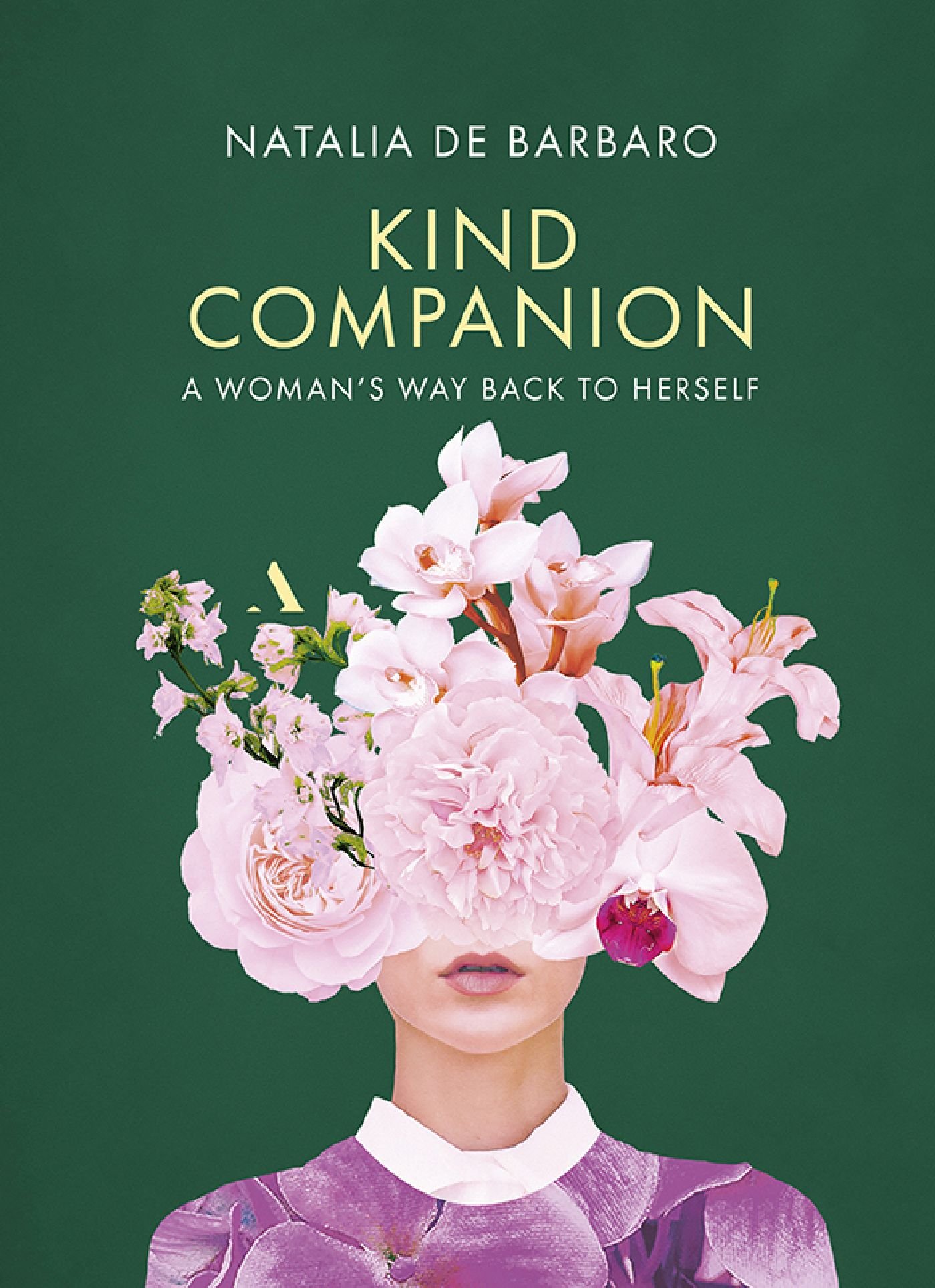
Kind Companion. A women's way back to herself - ebook

Kind Companion. A women's way back to herself - ebook
This book is about finding our way back to ourselves. That is our shared task – yours and mine. I feel you are already on this path; I am on mine.
I wrote this book so that, for a while, we can walk it together.
– Natalia de Barbaro.
Why do we not always live the way we would like to? Why do we often not do the things that are good for us – even when we know what would truly serve us? Why do we cling to old patterns of behaviour that feel alien to us, as if our lives were being directed by some harsh inner guide? Why do we turn away from our true selves?
This book is about finding a way back to our inner truth. There are countless books and audiobooks that promise to support our personal growth, boost our confidence, and enrich both our private and professional lives. Yet how many of them look at women’s experience with as much tenderness as this book by psychologist Natalia de Barbaro?
Feeling trapped in roles imposed on us by family, culture, and community, we are often afraid to step out of the old, self-defeating patterns that keep us stuck. We choose stagnation over rejection, the safety of the familiar over the fear of the new. Surrounded by advice, opinions, and criticisms – even those offered in good faith and with the best intentions – we lose touch with our own voice. Perhaps, like so many of us, you long for a companion on your path as a woman – someone who will help you see that you don’t need to fit any particular ideal to live life that feels meaningful and joyful.
In Kind Companion, Natalia de Barbaro shows how to draw wisely on women’s intuition and, by doing so, how to rediscover your own inner kind companion.
Ta publikacja spełnia wymagania dostępności zgodnie z dyrektywą EAA.
| Kategoria: | Nonfiction |
| Język: | Angielski |
| Zabezpieczenie: |
Watermark
|
| ISBN: | 978-83-838-0481-1 |
| Rozmiar pliku: | 3,5 MB |
FRAGMENT KSIĄŻKI
FROM THE AUTHOR
‘Why is everything wrong?’ she asked me, tears flowing down her cheeks, smudging her eyelash-lengthening mascara. ‘I have a great husband, children, a job, an apartment. So why can’t I bring myself to get out of bed in the morning?’ And then, anxiously, she added, ‘Have I smudged my make-up?’
That woman, my coaching client, had come to the conclusion that she was living in a state of chronic compliance. She’d got into law school because that’s what her parents had wanted. She’d taken a job in a large corporation because that’s where you earn ‘decent money.’ She’d painted her living-room walls the colour that stylists had declared fashionable. ‘Why is everything wrong?’ she asked at first. Then two sessions later: ‘How am I supposed to be happy when I was never really there in any of it?’
Working with women – in both the workshops I run (called A Room of One’s Own) and in one-on-one sessions – I often see how many of them have drifted away from themselves. How many organise their days around what they believe other people expect of them.
I used to do that too. When I began reflecting on where it came from, I realised it was out of fear. Fear whispered to me that if I spoke up, if I spoke my mind, I might be rejected. That if I stopped my racing – from meeting to meeting, training to training, assignment to assignment – I would lose my right to walk upon Mother Earth. That if I ordered beetroot soup at a restaurant on Christmas Eve instead of making it myself, I would be a disgrace.
None of that turned out to be true.
What we do out of fear separates us from ourselves. It hands over the direction of our lives to a Harsh Committee that watches us with a cold eye. What is warm and alive within us freezes under its glare.
In my own inner work, I discovered that someone else lives within me – an inner figure who, when I ask her to, shares her wisdom and maturity. I called her my Kind Companion. Perhaps you too, if you close your eyes and take a few breaths, will see her image behind your eyelids. Do it now, even if you’re just leafing through this book while standing in a bookshop. Contemplate the Kind Companion.
How is it that she’s there, waiting? How can I be so sure that you’ve seen her too? It’s a mystery to me. But I sense that she lives in you as well.
I’m doing it with you now – closing my eyes to see her. My Kind Companion doesn’t show me her face, but I see the edge of her cloak, and I see her walking along a path. I feel in my heart that I am meant to follow her.
If I do that, my fear will begin to change – it will soften into kindness towards myself, the way ice on a river melts in the sunlight and turns into lively, rushing water. Flowing breath will return where once there was breathlessness; space will open up within me for my own ‘yes’ and my own ‘no,’ for my own choices, for play, for warmth and tenderness towards the people I love. And with it will come a quiet faith that I too can be loved – boundlessly and without condition.
In my experience, this movement – the turning of fear into a form of love for oneself – is not a one-time thing. There are no fanfares, no finish line, no clear happy-ever-after ending. This shift asks for practice, for attentiveness, for the nurturing of the relationship with oneself – every day. Yet with each repetition, it draws us – day after day – closer to ourselves, until our lives become more fully our own.
This book is about that: that no matter how far we may have wandered from ourselves, there is always a way back. The road may have rough patches, bumps, and wrong turnings. But it is there, waiting for us. And at its end, we are there waiting for ourselves – like someone who has stepped out onto the porch and lit a lamp for a traveller returning home.
PROLOGUE
The Dream of the Corseted Women
A few years ago, I had a dream: deep underground – in a place that looked like the salt mines of Wieliczka – there was a vast pool of dark-green water. I was completely submerged in it, dressed in a nineteenth-century black gown, tightly laced-up, like the one Holly Hunter wore in the 1993 film The Piano. Around me floated other women, dressed the same. I couldn’t see their faces. We were treading water, or perhaps simply suspended in that underground pool, and I, the dreamer, knew that it was some sort of game. The rules of the game were simple: you can’t surface, and you can’t come up for air. As I dreamt, I felt I was running out of breath. My body began to rise slowly towards the surface. I knew that this meant failure, and that failure was close approaching. I felt ashamed. I knew that at the edge of the pool stood a man – faceless, like the women around me – but his silhouette reminded me of those cold businessmen who look at us from advertisements for investment funds or luxury watches. Later, I gave him a name: the Overseer of the Pool. His task was to make sure we never rose to the surface. It seemed effortless for him – one push with a stick, or even the tip of his shoe, and we would sink down again.
I told this dream to several women. One of them said that I was trapped in it in three ways, locked in three places – underground, underwater, and inside a corset. ‘A corseted woman,’ I thought. A dream about tightly laced-up women. When I first dreamed it, I didn’t yet fully understand its meaning, but I felt – with my whole being – that my mission would be to follow it. To do the work it called me to do. Perhaps if not for that dream, I would never have written this book.
I decided to track down the corseted women within me. When do I descend in a dark lift underground? When, in my daily life, do I step into that moss-coloured water wearing a dress no one could ever feel comfortable in – even if standing in the sun, on dry land? Who are these bound, imprisoned parts of me? Who is my inner Overseer of the Pool?
And the most important question of all – how do I get out of it? How can I unlace the corset and walk out into the sunlight? What kind of work will that take? From me?
From you?
My answer to these questions will fill many pages – and it still won’t ever be complete. But I know I will not abandon the search. And when I think of this work, I can feel joy spreading throughout my whole body.THE MEEK ONE
In my collage, she’s a woman. Her dark hair is neatly smoothed back, a tight string of pearls around her neck. Her face is wrapped in a scarf, almost like a bandage – with just her eyes visible. They are wide, fixed straight on me; I see fear in them, and hypervigilance. Across the photo, I pasted a torn scrap from a perfume advert that reads ‘Good Girl.’ The Meek One won’t stop looking at me – and I can’t stop looking at her.
Once, I attended a WenDo workshop – two days that combined self-defence, assertiveness training, and reflections on the recipes for womanhood we were all fed. One of the exercises was to complete the sentence ‘A girl should be… .’I guess you already know what words to write; I don’t have to tell you – we are all breathing the same air. Of course, what happened in our homes mattered. I was lucky – my parents wanted to hear what I had to say. At school, I was what they called outspoken. Teachers, with that mix of reproach and mockery that I could never quite grasp, would tell me I’d become a lawyer one day – because I spoke up for others. That was enough for the Meek One in me not to become my main inner figure. But I know her. I know you, Meek One. I know you’re made of fear.
The Meek One appears in me when I see a director’s raised eyebrow during a corporate training. When irritation creeps into my son’s or my husband’s voice, and I feel that tightness swelling in my belly. When I hesitate to accept an invitation to a radio show, even though I know whoever else was invited won’t think twice about it. She’s there when, in conversation, I instinctively make room for someone else’s discomfort – absorbing it, taking on the task of restoring their good mood – forgetting to check how I feel, whether I even have space for that, and what it will cost me. She’s there when I turn on my people-pleasing mode – helpful, accommodating – when I say, ‘More salad?’ just to change the subject, afraid that those at the table might be about to clash. The Meek One was there when – like probably every girl in Poland – I lived through my own version of #MeToo. She’s there now, when as a grown woman, I don’t react when a stranger calls me sweetheart. When instead of saying ‘Fuck off,’ I just say in a hushed tone, ‘I’m terribly sorry, I hope it’s not a problem, but would you possibly mind moving over just a little – maybe two millimetres?’ She’s there when, writing these words, I begin to doubt myself and want to stop – because I’m not sure if what I’m writing will ever be read by anyone.
The Meek One keeps her feet together, her hands folded neatly on the blanket, checks that there’s no run in her tights – and carries a spare pair, just in case. Knife, fork, spoon. She follows instructions without a murmur. Her voice, if heard, would be like a faint mumbling in the background – shh, don’t interrupt, the adults are talking. The Meek One never causes so much as a ripple with her mere existence. She slips into the kitchen as the men discuss important matters, tiptoes into the conference room, her lips silently forming the word sorry. She sits against the wall, gesturing, ‘No, no, please, don’t mind me,’ when someone points out a chair at the table.
Whose authority is she submitting to? Very often, it’s not entirely clear. In some women’s lives, the figure of the Ruler has taken on an unambiguous shape – because they’ve married an outright tyrant, the kind who freezes them with a glance at a slipper out of place or a shirt left unpressed. Under that stare, the Meek One moves like clockwork. When the Ruler takes on a clear, solid form – complete with a name, surname, and National Insurance number – a particularly dangerous kind of order settles in their minds. ‘That’s just how he is; there’s no other way to handle him.’ And from that moment, the story stops being about her – it’s about him. He’s the stimulus, she merely reacts, and in the only way that seems possible inside her world. As the Polish nursery rhyme goes: ‘Look, the old bear’s sleeping sound! Let’s all tiptoe round and round. If he should wake before we flee, he’ll eat us up – just wait and see!’
When I am the Meek One, I believe in a hierarchical world. Equality is nowhere to be found.
Geert Hofstede, the Dutch social psychologist who studied national and organisational cultures, tried to describe countries and companies as one might describe a person’s personality – using various dimensions and describing the intensity of different traits. Among these, he noticed one he called power distance – a measure of how much members of a society or workplace accept an unequal distribution of power and influence. In high-power-distance cultures, people aren’t outraged when some are allowed more and others less. As Orwell put it: ‘All animals are equal, but some animals are more equal than others.’
In a relationship where the partners (actually not really partners anymore) live by this model – the rules are clear and unquestioned. One person cleans, and the other checks whether it’s been properly cleaned. One asks timidly whether she might possibly pop out to meet her friends for an hour next Friday, and the other simply states, ‘I’m going out,’ shuts the door behind him, and all you hear is the beep of the car alarm. One cooks, serves, and clears away the dishes; the other judges whether it was good enough.
The Meek One is that part of us which, according to Eric Berne, the creator of Transactional Analysis (a therapy model developed in the States in the 1950s), corresponds to the ‘adapted child.’ She just assumes she’s weaker; she breathes the air of submissiveness. It’s automatic: the Meek One doesn’t even think to ask about equality, because she can’t see her situation from the outside; she lives in the cramped box of a paradigm that presumes some are higher and some are lower – and she is always ‘lower.’ For her, that’s the norm. No question arises in her mind about her own boundaries or their violation – others take up as much space as they take up, and she shrinks exactly as much as needed so they can have it. That’s how it is in conversation, on public transport, and in bed. The Meek One looks for something to obey because she has no inner compass of her own; and yet she has to navigate life somehow. So, she navigates by using a passive ‘It’ as her GPS – as in ‘that’s the way It’s done,’ ‘that’s not how It’s done.’ Society, culture, and patriarchal scripts serve up long, detailed lists of what’s appropriate and what isn’t, how to dress and what never to wear, and what the duties of a housewife and mother are. Every day, there will be those eager to ‘help’ her with that, because her sense of subordination meets their needs. A neighbour will cast a reproachful glance at her worn jeans; lacking the courage to show her own body, she harshly judges another woman who does. A manager refuses to let her have her say, and so cuts off discussion with a brusque, ‘I take it there are no questions.’ An uncle explains the director’s intent with regard to a film she’s seen and he hasn’t – because mansplaining feeds his ego.
Women trained like this – grown women with impressive lists of achievements – end up living a diminished life; a life reflecting other people’s expectations, or rather their idea of those expectations. When I look at my friends, colleagues, people I know and strangers – and in episodes of my own life – I’m flooded with regret to think that time can be wasted like this. That damned requirement to be ‘good,’ that coercion to conform to the notions of people we don’t even want to be friends with, that subordination which seems to flow through our veins. Even if we lecture at universities, speak at rallies, or manage millions in corporate boardrooms, this requirement clings like burrs that won’t let go. Don’t delude yourself: CEOs, directors, chairs of companies, or celebrities struggle with the same thing – the Meek One lives in them too, just like she does in you and me. She haunts the thoughts of women who have gone through mindfulness courses, graduated from leadership academies, and smashed pine boards with their bare hands at WenDo workshops.
I once saw a woman in despair. A few days earlier, her adult child had died. And still, in her grief, she felt obliged to clean and cook for the family. Her hands trembled as she placed the lid on a pot of cucumber soup. ‘Right… pot’s going in the fridge, Hot or not!’ she said in the shaken voice of a rebellious little girl, and I felt tears well up to my eyes. Putting hot soup into the fridge – that was the extent of her rebellion. When that woman was a small girl, my mother hadn’t been born yet, and in most European countries, women still had no right to vote. Today I can recognise the Meek One in myself, observe her, and write about her, not because I’m better than that woman in despair – but simply because I was born later on, in a world made wiser by the fruits of that struggle for our rights.
How is it possible that our Meek Ones have taken over inside us to such a degree? Where is the director of this drama? Who, specifically, is demanding all this of us? That neighbour, this manager, that uncle? The Church? The school? The management? It’s hard to say. Everyone at once and no one in particular. But as long as my finger points outward in blame, nothing will change. In my own experience, the central lesson is this: all those demands, expectations, and criticisms matter only when I let them in – when I internalise them. The pressure typically arises outside myself, but it starts working inside me only when I open the door: ‘Come in, be my guest, no need to take off your shoes!’ The longer I live, the clearer it becomes to me that the responsibility for giving in to that pressure lies within me. And that, short of extreme situations – which are rare – I always have a choice.
It’s different in the world of the Meek One, woven as it is from worry. She was trained to be well-behaved. Be good. Be nice. Give way. You know the drill; I won’t bore you – both of us know it by heart. My Meek One bows to yours, each lower than the other, because neither wants to seem above anyone else. Like our other inner figures, the Meek One is trying to survive: she freezes like an animal that fears an attack and plays dead. And it’s true: when the Meek One has you in her grip, you aren’t really there anymore – your needs are non-existent, so are your boundaries; your opinions are muted, your feelings muffled. You don’t know what you need, who you are, what you think or feel, because you’ve been too busy holding still. You’ve been trying to take up as little space as possible and to get by without breathing. And that’s hard work. As the years go by, the Meek One expands her operations. A popular branch of her work is what’s known as emotional labour. The term was introduced in 1983 by Arlie Russell Hochschild in her book The Managed Heart. She defined emotional labour as ‘the management of feeling to create a publicly observable facial and bodily display … sold for a wage.’ Hochschild began her research with flight attendants – smiling from ear to ear, unfailingly polite whatever the circumstances. She wondered about the inner process that leads to that smile. I used to fly quite a bit, and I saw it up close: the heels, the tight skirt suit, the lipstick – what time is take-off? And that smile, offered in response to an irate question about why there’s no blackcurrant juice, to crude remarks from tipsy men, to complaints about the size of a seat. What’s going on inside them? I thought about it a lot. And I’ve realised that when the plane lands and we all go our separate ways to our homes and offices, it turns out that it’s not just flight attendants who go around with fixed smiles. Hochschild noticed that anyone harnessed – or self-harnessed – into emotional labour may end up concealing the emotions they truly feel. ‘I smile when I’m angry,’ sang my beloved Leonard Cohen – and hands up who hasn’t done that? I hide what I feel – and on the surface, that seems to settle things. You’ve smiled your way through your anger, the ‘client,’ whoever they were, has calmed down, and you’ve gone on your way. But hold on – what are you left with?
I remember a workshop on assertiveness I once led for a group of women scientists at a university. We were acting out a scene in which an older male lecturer was making unsavoury jokes, and the task of the doctoral student was to find a way for her to say enough. The doctoral student was polite, composed, calm; but the lecturer, taking his cue from her restraint, went all in. When it came time to discuss the exercise, one of the senior participants practically shouted at the young woman playing the doctoral student: ‘Where is your anger?’ That question has stayed with me ever since, and it often comes back to me when I need it most. Where is your anger? The same anger we were taught not to express – not even feel – because, as an old Polish saying goes, ‘anger spoils your beauty.’ Unexpressed anger – whether toward a lecturer or anyone else we’ve let walk all over us – doesn’t just evaporate. It’s a living energy, circulating right now in our living body. So what happens to it later? When I ask this question in workshops, everyone knows the answer. Long lists appear – all the serious consequences of emotions that are unexpressed, hidden, denied. The path women most often take is to turn that anger against themselves. Knowing this fills me with an almost unbearable sadness: so many of us – countless women – have come to believe that the best thing to do with our rage is to direct it inward. Think you don’t do that? Try this: make a transcript of the thoughts that run through your head. God, what an idiot I am. I forgot to reply to that client! Ugh, I’m so stupid. Raise your hand – who among us has never thought something like that? Now imagine saying those same words to your best friend. Or not even your best friend – just someone you quite like. God, what an idiot you are. You forgot to reply to that client! Ugh, you’re so stupid. Would you say that to her? You can feel it, can’t you – what saying that would do to your friendship? Similarly, what happens to the friendship you have with yourself?
In addition to hiding the emotions we actually feel, Hochschild wrote, we also display emotions we don’t actually feel. Because it’s not enough, after all, for a flight attendant to suppress her anger – she must also perform kindness she’s not feeling, and wear it on her face, in a practised smile and a soothing, velvety tone. In this way, she serves the passengers not only on a practical level – pouring a drink, bringing a blanket – but also on an emotional one. She guides them from a state of dissatisfaction to relative calm.
The trouble with restoring someone else’s good mood is that it drains our own energy – and it teaches the other person that someone else will manage their emotions for them. The mechanism is exactly the same as when you’re teaching a child to tie their shoes: as long as you keep doing it for them, they’ll never learn. Simple, right? I should know – I’ve spent at least several dozen hours of my life tying my son’s shoelaces.
But try telling yourself that in the morning, when you know you should’ve been in the car ten minutes ago, but you spent ages looking for the car keys (because you forgot you’d switched handbags), and now your sweet, adorable little boy is flat-out refusing to leave the house without his beloved stuffed elephant – which, of course, you can’t find in either bag. In that moment, you’d honestly just rather tie the damn laces yourself and be done with it. The developmental perspective can wait – who has the patience for a lecture on child psychology at eight in the morning, seriously? So you tie those shoelaces, and then you do it again on Thursday, Friday, and Monday. Until, inevitably, the pre-school teacher takes you aside and tells you that she’s got fifteen kids in her group – and if she has to tie fifteen pairs of shoes, their walk gets delayed by fifteen minutes – and maybe, just maybe, it’s time for little Szymon to start learning to tie his own.
Unfortunately, there’s no pre-school teacher to remind us to stop doing the exact same thing – to stop stepping in to regulate other people’s emotions for them, even when they’re full-grown adults (at least theoretically). And yet, so many women do just that – with great zeal, on a daily basis, for an entire lifetime. In that moment – at the dinner table, in the meeting, at their desk, on a walk – when you sense that the person you’re with is nearing the point at which they can’t cope with their own emotions, you rush in headlong to help them out. Because it’s a habit. Because you’ve made it your job. Because it just seems easier right now. Because it helps you, above all, to calm your own tension – your fear that the old bear might wake up and eat you.
The idea of emotional labour was later redefined by Gemma Hartley, a columnist for Harper’s Bazaar – first in an article, and then in her book Fed Up: Emotional Labor, Women, and the Way Forward. Her piece opened with a small domestic scene: in the middle of the living room lay a box of wrapping paper that her husband had taken out of the closet two days earlier. After two days of stepping around it, Gemma had finally had enough. She went to the kitchen, grabbed a chair, and tried to hoist the box back up to the top shelf – where it belonged. ‘All you have to do is ask me to put it back,’ her husband said, watching her struggle with the box. ‘That’s the point,’ Gemma replied through tears. ‘I don’t want to have to ask.’ That moment led to a new take on emotional labour. Hartley defined it as ‘the unpaid, invisible work we do to keep those around us comfortable and happy.’ Part of that comfort, of course, is being able to walk through your living room without tripping over a box that’s been sitting on the floor for days – because someone has noticed it, and either reminded you to move it or quietly taken care of it themselves. One box – no big deal. But when there are a thousand and one of these ‘small things’ to notice and manage, it adds up to real work.
If you’re the one doing the emotional labour, you’ll feel responsible for remembering your co-worker’s birthday, reminding everyone else about it, and organising the gift – because you know exactly what she’d like. You’ll remember how everyone takes their coffee. You’ll remember who has how many kids, and you’ll ask how they’re doing. When you walk into a conference room and see unwashed mugs, you’ll clear them away, because you don’t want anyone to feel uncomfortable. Half an hour later, during the meeting, you’ll hear tension in a colleague’s voice and use humour to ease the atmosphere. At home, you’ll explain to your son why your husband got upset – and to your husband why your son got upset. Then you’ll ask both of them what they want for dinner. While scrolling through dresses online, you’ll listen to your boss drone on as he calls you from the airport – he’s got a long stopover and has decided to share his thoughts on the latest trends in online marketing. And when someone walks past your desk and remarks, ‘Why so serious? Smile!’ – you’ll smile, even though you feel like crying.
Authors writing on emotional labour make one crucial caveat: emotional labour is what you do under pressure (in practice, mostly your own). After all, most of the activities I listed above can just as well be done with pleasure, from the heart – and then they nourish you rather than drain you. I may want to invite ten friends over to dinner, remember what each of them likes, feed them, clean up, keep the conversation flowing – and then sink into an armchair and feel it was wonderful.
For me, the key is motive. Emotional labour, like the other things the Meek One does, comes out of fear – out of that hollow place within us which is scared that whatever attention the world pays us, whatever affection it shows us, can be withdrawn forever the moment we stop trying. In my experience, you can recognise that motive the same way you recognise many other important truths: through the body. If the Meek One is suiting up, it starts with a clench in the stomach, a knot of tension that demands release. The language of your thoughts will often give it away too: if you hear yourself thinking ‘I have to,’ ‘I can’t,’ ‘I should,’ ‘I’m supposed to,’ that vocabulary is a sign the Meek One has taken over.
A turning point in my own life, an insight that let me see the Meek One clearly, was realising that what I took for empathy and ‘caring about other people’ was, in fact, concern for myself and acting out of fear. The pivotal moment was in a conversation with a friend. I was telling him about another conversation I’d had and how deeply I’d cared about the person I was talking to – how I’d held back my criticism so as not to hurt their feelings, how empathetic I’d been. I said those three things in one breath, as if empathy, caring, and not wanting to upset someone were the same thing. ‘And how did things look from his point of view?’ my friend asked. ‘Well…’ I stalled – rummaging frantically through my hippocampus like a drawer for a missing sock, and with growing clarity realised that I simply didn’t know. I had no idea how the situation looked from the perspective of the person I supposedly cared about so very much. ‘You don’t know?’ my friend guessed from my expression – his bluntness has helped me more than once. ‘You don’t,’ he answered himself, while my mind was buffering. ‘So you weren’t being empathetic,’ he concluded, brutally. That’s when I saw it, and the insight stayed with me ever since: being preoccupied with someone is a far cry from empathy; my fear of hurting them often has nothing to do with them. Scrape off the pseudo-empathic glitter and what’s underneath is my fear – the fear of my Meek One – not true empathy.
I’m afraid to say what I want to say because I’m afraid of your reaction. I’m afraid of your reaction because I fear you’ll withdraw your approval. I fear that withdrawal because I don’t have that approval for myself – if I had it from within, I wouldn’t be chasing it outside.
The Meek One – the well-behaved girl – doesn’t feel she can lean on herself. So, she goes searching for something which simply cannot be found out there, the way you can’t buy mascara at the electronics and appliance shop.
Sometimes this search takes on a dramatic form. A woman who has allowed her Meek One to take centre stage in her psyche lives in a state of constant hunger. She has to be hungry – because she never feeds her own needs; and she never satisfies them because she no longer recognises them. To borrow the language of Clarissa Pinkola Estés from her book Women Who Run with the Wolves, such a woman has lost touch with her primal instinct and becomes easy prey for anyone who promises to feed her. Estés offers a painfully clear metaphor for this in the story of ‘The Little Match Girl.’ The girl is freezing to death on the street because she has no calm, warm inner home. Exiled from herself, she decides to light a match, if only to feel a moment’s relief: ‘Her frozen hands were so numb, she could hardly hold the bundle of matches. What if she lit just one, to warm herself? Just one.’
What is that match? From what I’ve observed, aside from the usual ‘comforts’ – wine, cigarettes, or too-often-taken sedatives – it’s often an affair. Not the kind that marks the beginning of a deep relationship, or a joyful adventure. I mean the kind that ends with a broken heart – the kind you somehow knew from the start would end that way. They tend to happen when a woman is especially vulnerable.
In Alcoholics Anonymous, they’ve found that a sober alcoholic is most at risk of walking into a bar – the one he’s been avoiding for months – when he’s hungry, angry, lonely, or tired (shortened to the acronym HALT). The Meek One is perpetually hungry, perpetually weary. And though she may seem fine on the surface, cut off as she is from her own anger – and may even appear content with her life – she carries layer upon layer of unexpressed anger, which keeps piling up as she allows unseen boundaries to be crossed without even noticing. She is lonely, too – because as shrunken and diminished as she is, she no longer knows how to receive. Hungry, angry, and tired, she has grown so weak that she lights a match in search of warmth. And all too often, that match is an affair – one that ends in heartbreak. I once developed my own theory of affairs, based on ‘The Little Match Girl.’ The stories women told me were all so similar that I began to recognise a recurring, almost predictable pattern. In the first stage, the Grown-up Match Girl – driven out into the cold (from herself) by her own meekness – believes that nothing is really happening. This stage of denial is necessary: it lulls her into a false sense of complacency so the story can move forward. (I’m not talking here about when there’s deliberate encouragement by another, but about the nature of a process – one that, like all processes, insists on fulfilling its own dynamic.) And so, in the opening act of the affair, the starving woman keeps telling herself, ‘It’s just harmless flirting,’ even though her friend – listening to her story over coffee – can already see and feel that something has started, something that won’t stop there. ‘Oh, come on, nothing’s happening – you’re imagining things!’ she says, having only taken the first steps of that ‘journey of a thousand miles,’ as the Chinese proverb goes.
If you’re a woman who has experienced this story, you may remember how it all began. ‘The saddest part of a broken heart / Isn’t the ending so much as the start,’ Feist sang in ‘Let It Die.’ But it’s only afterwards – once the whole narrative arc has run its course – that this becomes clear. At the start, there’s nothing sad about it at all: the instant before striking the match feels gorgeous, alive, thrumming with the hope of warmth, shot through with the spirit of Eros. The ping of a notification, a text read on the sly, a glance held a heartbeat too long in the company cafeteria. ‘Nothing’s happening.’ Then comes the moment the match catches fire. The frozen Little Match Girl feels the heat and, for a second, it seems like happiness – it tasted like happiness, didn’t it? The Meek One hears she’s beautiful, wonderful, that anyone who can’t see that is a fool. For a moment, reflected in her lover’s eyes, she feels as if it were true. It is her moment of triumph, of revenge against all those who’ve belittled her – and against herself, who kept herself small. No wonder the Meek One reaches for the next match. ‘I’ve got another conference next Saturday,’ she tells her husband after dinner. She reaches for the phone blinking on the bedside table at midnight. ‘What are you doing on your phone this late?’ he asks. ‘Nothing, just setting the alarm.’
Except that the Girl has barely a few matches left, an exhaustible supply. This story does not end well. Just the two last matches now. You burn the next-to-last; then there’s one more to go – you pull it from the box and it turns out it’s already burnt. The box is empty. The subscriber is temporarily unavailable. ‘Rainy Tuesdays that come after Sundays,’ as the wistful old Polish song goes. And so on. ‘Every addiction starts with pain and ends with pain,’ says Eckhart Tolle, in his book The Power of Now. Why am I calling unhappy love affairs an addiction? Because I sense that they’re driven by the Meek One’s hunger and fear. Like any addiction, they’re fuelled by exhaustion and the need for even momentary relief – the need to feel worthy, at least for a short while. I also believe that, deep down, we knew how it would end from the very start. What your friend said with concern – ‘take care of yourself’ – you could have said to yourself; you could have seen what she saw. You could have – were it not for the Meek One steering your choices; if you hadn’t been hungry, lonely, and tired. What we do out of fear will not satisfy our hunger. What we do out of pain will not feed us.
What lies outside ourselves will not nourish us.
The Meek One leads us down the wrong paths not because she wishes us harm, but because she doesn’t know any other way.
But there is a way out for her too, a portal – a transformation that can melt her fear, and turn it into love.