MENU
MENU
 Nasze ceny

 Przeczytaj fragment on-line

-
 W empik go
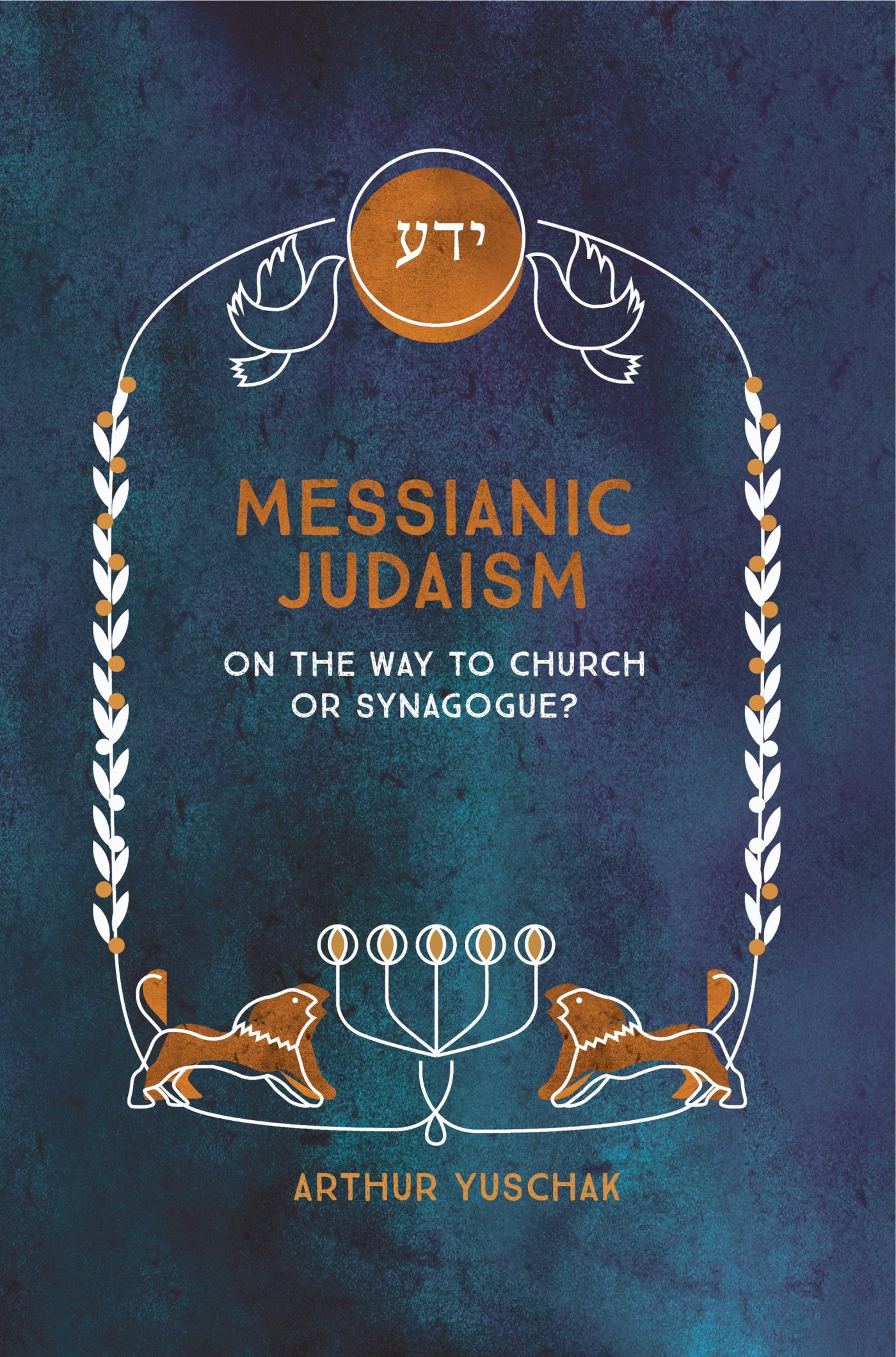
Messianic Judaism. On the Way to Church or Synagogue? - ebook

Messianic Judaism. On the Way to Church or Synagogue? - ebook
The popular understanding is that Judaism is a monolithic formation, resistant to divisions and splits. Meanwhile, diverse interpretations of the Holy Scriptures and Jewish tradition have formed the basis for many different currents and orientations branching from Judaism. In a relatively stable religious world, lively discussions do arise on the subject of a religious movement called Messianic Judaism. This controversial movement, established relatively recently - in the 1970s - tries to combine the traditions of Judaism and Christianity.
| Kategoria: | Wiara i religia |
| Język: | Angielski |
| Zabezpieczenie: |
Watermark
|
| ISBN: | 9788393456581 |
| Rozmiar pliku: | 2,8 MB |
FRAGMENT KSIĄŻKI
FROM THE AUTHOR
In a relatively stable religious world, lively discussions do arise on the subject of a religious movement called, alternatively, the Messianic Jewish Movement, the Movement of Messianic Jews, or Messianic Judaism. Guided by a scholar’s curiosity, I felt it extremely important to explore the nature of this religious phenomenon.
At the outset, the sensu stricto significance of Judaism for theological and cultural thought should be pointed out. There is no doubt that Gentile–Jewish relations have always been difficult and complicated due to fundamental religious differences, a low susceptibility of acculturation among Jews, ignorance among Gentiles about Jewish culture, and the proliferation of harmful stereotypes. Jewish communities were often viewed through the prism of their indisputable exclusivity, based on historical separateness and religious elitism. This resulted in a pejorative image of Jews, one still present in the consciousness of many Gentiles. Another current problem appears to be the stereotyping of Judaism. The popular understanding is that Judaism is a monolithic formation, resistant to divisions and splits. Meanwhile, diverse interpretations of the Holy Scriptures and Jewish tradition have formed the basis for many different currents and orientations branching from Judaism.
One of the currents arising relatively recently – in the 1970s – is the controversial movement of Messianic Judaism which tries to merge the traditions of both Judaism and Christianity. Followers of this religious movement, often associated with Judaism, are in fact treated by the world of rabbinic Judaism as a proselytising Christian sect. Moreover, the governmental institutions of the State of Israel regard these Jews as apostates and deny them the right to settle in Israel under the Law of Return (adopted by the Knesset in 1950). At the same time, US organizations that unite communities of Messianic Jews are increasingly making their existence known. This is expressed through activity in a theological space and supported by a growing number of scholarly publications on the identity and doctrine of Messianic Jews.
However, religious and university circles are still uninformed due to a dearth of material on the major, historical and contemporary organizations of Messianic communities. Both social considerations and analytical premises convinced me to take up the research challenge – to reconstruct the process that shaped the movement of Messianic Judaism, as well as to explore its religious practices and doctrine. To meet these timely needs, I undertook research, the results of which were presented in 2017 in my doctoral dissertation entitled The theology of contemporary Messianic Judaism, based on the concept of Mark S. Kinzer.1 The crowning result of that endeavor is the publication at hand.
I want to take this opportunity to express my gratitude to those who actively contributed to the creation and implementation of the research idea. Heartfelt thanks go to my wife Barbara, who, despite the worries and rush of her everyday work, tirelessly supported me in mine. My deep gratefulness goes to my mentor and supervisor, Rev. Fr. Professor Mirosław Michalski for his constant assistance and admirable patience. I also want to thank Dr. Dariusz Wujciuk for his spiritual support. My appreciation goes to the reviewers, Rev. Fr. Professor Henryk Seweryniak and Rev. Fr. Professor Krzysztof Krzemiński, whose valuable comments made this very publication possible. In addition, it is my pleasure to express my gratitude to the authorities, lecturers, and staff of the Christian Theological Academy in Warsaw.
Arthur YuschakINTRODUCTION
1. Research purpose
The aim of this work is to systematize the conceptual apparatus in the field of contemporary theology in Messianic Judaism, indicating the direction taken in its development and study. Bearing in mind the relatively short period in the formation of the present-day movement – only since the 1960s and 1970s – it would be wise to extend the field by a few methodologically necessary components. The topic here is, therefore, not only the Symbols of the movement and its theological thought, but also the conceptual apparatus functioning in the space of Messianic Judaism.
Its three-part nature stems from the fact that Messianic Judaism is not yet a structurally and doctrinally established denominational tradition. It is rather a religious movement in which a certain canonically unified part is organized under the aegis of the Union of Messianic Jewish Congregations (UMJC), aspiring to achieve the status of a religious tradition in the near future. Other non-affiliated groups of Messianic Jews conduct their activities on the basis of various regulations, often dependent upon the organizations cooperating with them from the side of evangelical Christianity.
Hence Part I of this book strives to standardize the conceptual apparatus, focusing on the key concepts of “Messianic Jew,” “Messianic Jewish Movement,” and “Messianic Judaism.” Part II addresses the issue of "symbolica" understood as religious studies. Here, the focus is on the evolution of doctrine as well as changes in cult practice. The development of a movement requires taking into account such criteria as the specificity of the initiation period and the transformation processes leading to the identification of believers. Subject to analysis are, consequently, the basic components found in the overall activity of the religious movement – those components which determine its character, shape, and identity with distinction of the Statement of Faith as a dogmatic cornerstone. Part III pertains to the issue of the theological specificity of Messianic Judaism in the 21st century.
The research concentrates on the scholarly achievements of the leading theologian and the UMJC leader – the Messianic Rabbi Mark Stephen Kinzer. He is a figure whose religiosity is characterized by a bipolarity, influencing the development of his concept of the bilateral Ecclesia. Kinzer’s religious awareness has evolved from Orthodox Judaism, through Evangelical Christianity, to Messianic Judaism. Over the past two decades, Kinzer has held many positions of trust that reflect his contribution to the development of Messianic Judaism. Kinzer’s functions include: Rabbi of the Zera Avraham congregation in Ann Arbor, President of the Messianic Jewish Theological Institute, member of the UMJC Theology Committee, member of the Messianic Jewish Rabbinical Council, co-founder of the Hashivenu group, as well as co-creator of the doctrine and Statement of Faith of the UMJC.
This work has been condensed into five distinct matters. The first two comprise his views on the essence, biblical hermeneutics, and the role of Jewish and Christian traditions in Messianic Judaism. The next three pertain to his views in the area of – using Christian terminology – Christology, soteriology, and ecclesiology.
2. Research sources
The oldest studies on the history and development of the movement of Jews professing faith in Jesus of Nazareth are presented in literature on the so-called Jewish Christians, published at the turn of the 19th and 20th centuries. Most of these works refer to the then most famous activist, Joseph Rabinowitz. Two short years after the 1884 founding of his religious community, this initiative was noticed and described in England by Franz Delitzsch (1813–1890). The author was a close friend of Rabinowitz’s as well as a recognized German Hebraist and theologian. Then, in 1888, just four years after attaining a stable form – the Israelites of the New Covenant community in Kishinev – the first literature on this grassroots movement was published in London. Most of these studies subsequently served as the basis for a biography of Joseph Rabinowitz that was included in Kjaer-Hansen’s monography published in 1995. In turn, a synthesis of the successive stages which Hebrew Christianity underwent is contained in a unique work by Hugh Schonfield (1901–1988): The History of Jewish Christianity: From the First to the Twentieth Century. Together with Jacob Jocz (1906-1983), Schonfield is among the very few authors of treatises on the Hebrew Christian movement in the first half of the 20th century.
In the latter half of the 20th century, the dynamically growing Messianic movement became a topic of interest not only for Hebrew Christians or Messianic Jews, but also for researchers belonging to the traditional streams of Christianity and Judaism. The source literature can be differentiated in terms of the religious orientation of the publication authors as follows:
1. 1) Intersubjective research originating outside the circles of Messianic Judaism. Mentioned here should be monographic studies by such persons from Judaism circles as David Rausch, Dan Cohn-Sherbok, and Carol Harris-Shapiro. In this category are also publications from the Hebrew Christian milieu: Richard Harvey, Louis Goldberg, Arnold Fruchtenbaum, Jeffrey Wasserman, Baruch Maoz and others.
2. 2) Subjective research originating within Messianic Judaism circles. The key authors of publications here are: Mark Kinzer, Dan Juster, Michael Schiffman, Patricia and John Fisher, Barney Kasdan, David Rudolph, Joel Willits, David Stern, Jennifer Rosner, Russ Resnik and others.
When discussing the state of affairs in this field, it is important to note that Messianic Judaism lacks a historical tradition with respect to doxology and theology. A consequence is that within this relatively new and young religious movement there is a dearth of theolo-
gians possessing both a solid theological background and an academic analytical experience. An attempt to systematize the fragmented theological thinking was made by Richard Harvey – the author of a reliable scholarly book entitled Mapping Messianic Jewish Theology: A Constructive Approach.2
While it is true that a few other studies have also appeared, forming a basis for further specialized publications, very little of this material is appropriately organized and systematized. One can point to the absence of even a dictionary that would take the uniqueness of Messianic Judaism into account, let alone a lexicon elucidating the theological terminology functioning within this movement.
Nevertheless, a desirable exchange of views is currently taking place at several levels. The most important are local and international conferences, as well as websites and periodicals devoted to the subject at hand. Noteworthy are such periodicals as Kesher: A Journal of Messianic Judaism and Mishkan Journal. Additionally, cyclical symposia are operating under the auspices of the Borough Park Symposium (BPS). It does seem, however, that we will have to wait a while for results in the form of constructive theological works. There is still a lack of academic grounding manifested by the absence of a thorough methodology and the presence of poor theological craft.
An exception to this rule is the solidly grounded work of theologians like Arnold Fruchtenbaum, David Stern, and Mark Kinzer. Yet writings by the first two authors now bear signs of the distant past, having been created in the 1980s on the wave of the movement’s pioneer expression. It is Mark Kinzer’s works which can be treated as an up-to-date source regarding Messianic Judaism’s theological thinking in the 21st century. His views on the essence and theology of this movement constitute the richest body of research; it is compiled in his doctoral dissertation, five book publications, and over a dozen publications in journals.
3. The research problem
The analysis found herein will address the following research queries:
Main problem: What is the nature of contemporary Messianic Judaism?
Secondary issues:
1) What is the meaning of the name “Messianic Jewish Movement”?
2) Who are the Messianic Jews?
3) What is Messianic Judaism?
4) What significant doctrinal changes have taken place in the Statements of Faith ratified by organizations associating Messianic Jews?
5) What is the direction taken by Mark Kinzer in the current theological discourse?
4. Methodology
The terminological analysis carried out in Part I facilitated choice of the appropriate conceptual level for this dissertation. It should be noted that the majority of names used in the terminology of Christianity are not found in that of Messianic Judaism. This state of affairs is dictated by the historical Christian-Jewish antagonism and the need to construct an organizational separateness. An analysis of the terms “Messianic Jewish Movement” and “Messianic Jew” was carried out on discourse that constitutes the cognitive achievements of Messianic Judaism. The material was evaluated, allowing the presentation here of the most current definitions. Subsequently, Messianic Judaism (according to the UMJC standard) and Kinzer’s views on the criteria of Judaism were both analyzed. That analysis, in turn, made assessment possible of the present-day form of this religious movement. Such critiques are included in the summary of each chapter.
In Part II, the method adopted was that of the discipline known as "symbolica" or "knowledge of confessions". According to Karol Karski, symbolica in its traditional, 19th century form was limited “to the presentation of official church documents and religious writings,” which enabled only “ a one-sided picture of the life of Churches and Christian communities.”3 In the modern approach, per Karski, symbolica is understood “more as knowledge about Churches and denominations (Kirchen – und Konfessionskunde).”4 Thus, the focus of this discipline is no longer limited to religious writings alone, but encompasses all manifestations of the life of religious communities; its name – although left in its original form – takes on new meaning through the emerging erudition. Within Polish academia, volumes worth underscoring are: Symbolika: Wiedza o Kościołach i wspólnotach chrześcijańskich by Karol Karski, and Protestantyzm ewangelikalny: Studium specyfiki religijnej by Tadeusz J. Zieliński. In Zieliński’s experience, it should be noted that contemporary symbolica “wishes to present particular trends (traditions, fractions, and communities) of Christianity without assessing the legitimacy of the doctrines and practices adopted there, and especially without polemicizing with them.”5
Bearing the above in mind, the organizations representative of the evolution of the Movement are listed in chronological order. Thus, they are presented from the perspective of elements typical of symbolica: name origin, historical outline, doctrinal elements, cult life, relations with Christianity and Judaism, as well as Declarations and Statements of Faith. The author became familiar with each individual group – its history, development and empiricism. At the same time, studies were categorized into the intersubjective (penned by researchers who are not Messianic Jews) and the subjective (penned by committed Messianic Jews). Such diversification of material allowed this author to present the issue from a point of view not yet encountered in the literature on this subject.
In first order, this allowed tracing of the movement’s evolution in light of its relations with traditional Judaism – something only lightly mentioned in intersubjective works. In second order, it also allowed exploration of cult life issues that, due to the specificity of biblical interpretation, needed to be considered on the basis of subjective studies. Collected and presented herein are also the doctrinal declarations of distinct organizations; due to their uniqueness, those declarations are included in their entirety. Other documents important to the argumentation of this treatise are included in the appendix.
Subjected to analysis in Part III of this dissertation is the core collection of research material: four books and ten magazine publications by Mark Kinzer, issued between 1998 and 2014. Careful analysis of all the available studies rendered feasible a full overview of his theological achievements which were then subjected to a process of systematization, applying a scheme created for this purpose. Due to the uniqueness of Kinzer’s theology, no attempts were made to place it within frameworks borrowed from theological studies functioning either in Protestantism or Roman Catholicism. Instead, a scheme was created that corresponds to the content of Kinzer’s works and that takes the thematic sequence into account, demonstrating the interdependence of individual theological concepts. Next, parts of the material were separated and classified into relevant thematic categories. Here they are divided into introduction to, hermeneutics, tradition, Christology, soteriology and ecclesiology.
The framework developed and the material laid out therein, allowed for synthesis as well as assignment of carefully selected content into appropriate chapters. It was assumed that the structure of each thematic chapter would be of a classical, three-part construction. The introductions will be brief, general and intersubjective, pointing to contemporary trends and problems. The central section of each chapter would be an analysis of Kinzer’s subjective views, minus any element of polemics. The summaries will contain a recapitulation of views, along with their assessment in light of the research problems addressed in this volume. The analytical and synthetic method thus applied enables the building of foundations for a systematic theology of Normative Messianic Judaism in accordance with the concepts of Mark Kinzer.
5. Terminology
The following terms and typographical rules have been adopted in this work:
1) Conventional names
Church – classic historical and modern Christianity
Symbol or Statement of Faith – authoritative rules for the profession of faith
Ecclesia – historically, the early Church composed of Judeo- and ethno-Christians; more recently, modern Christianity in conjunction with new formations of followers of Jesus of Nazareth, such as Hebrew Christians and Messianic Jews
Ethno-Christians – believers in Jesus descended from other than the Jewish nation
Gentiles – nationalities other than Jewish
Hebrew Bible – Old Testament consisting of 24 books, Jewish Tanakh
Movement – generally referring to the Messianic Jewish Movement, also called the movement of Messianic Jews
Nations – nations other than the Jewish; term applied in lieu of “pagans,” “Gentiles,” or “non-Jews”
New Covenant – New Testament
Old Covenant – Old Testament
Oral Torah – the oral tradition of Judaism (Talmud)
Synagogue – Judaism in general, with the exception of Messianic Judaism
Tanakh – the Hebrew Bible in the canon of 24 books
Torah – the Pentateuch or five books of Moses
Yisrael – the ancient nation of the Israelites/Judeans or modern Jewish people; this orthography eliminates the possibility of confusion with the modern State of Israel and the Israelis
2) Organizations
The names of organizations are presented in their original form or accepted abbreviations:
HCAA – Hebrew Christian Alliance of America;
IHCA – International Hebrew Christian Alliance;
MJAA – Messianic Jewish Alliance of America;
MJRC – Messianic Jewish Rabbinical Council;
TJCII – Toward Jerusalem Council II;
UMJC – Union of Messianic Jewish Congregations).
3) Hebrew vocabulary
Unless appearing otherwise in a title or citation this book will apply the most standardized, phonetic transliterations of terms derived from Hebrew. This approach has been encountered in nearly all the studies constituting the body of research material.
4) Greek vocabulary
Unless appearing otherwise in a title or citation, Greek terminology has been likewise transliterated into the Latin alphabet.PART I. BASIC CONCEPTS AND DEFINITIONS
Chapter 1. “Messianic Jewish Movement” and “Messianic Jews” – Analyzing the nomenclature
Introduction
The word “Messianic” stands as an important distinction drawing attention to the views of the religious movement identified by the appellations: “Messianic Jewish Movement,” “Messianic Jews” and “Messianic Judaism.” Here this word refers to the Judaic idea of messianism – in this case understood as faith in the Savior Messiah.
Messianism is rooted in the Jewish nation and its concept has changed over the millennia. Initially, individuals elected by the nation to the office of king or high priest were considered to be “messiah” (the anointed one); the title was thus directly related to the ritual of anointment. In the post-exile period, the image associated with this word changed, eventually taking on the shape of a figure anticipated with great hope – the Savior of the nation, designated not by people but by God.6
Although messianic ideas are a permanent fixture in Judaic history, the idea of Jesus as the Messiah is the subject of undying dispute. Through the first few centuries CE, Jews who recognized Jesus of Nazareth as the Messiah were part of the Ecclesia known as Judeo-Christianity. In the 1970s, faith among some Jews in this Messiah was revived; along with the new phenomenon came a need for new terminology. Presently, these Jews, and the Christians who support their activity, have promoted new nomenclature separating them from the main body of Christianity. Those changes are not limited to semantics; in tandem with the new nomenclature, new ideas also appeared.
1. “Messianic Jew” and “Messianic Jewish”: An etymology
The first attempts to introduce the name “Messianic Jew” to the general public took place as early as December 1910. This is confirmed by the title of a journal published by Philip Cohen with the meaningful title, The Messianic Jew. The journal was the product of a group bearing the name the Jewish Messianic Movement and its editors imputed not only new designations for Jews who believed in Jesus, but also defined the movement as Jewish Messianic. The authors of the periodical explained that, by introducing new vocabulary, their intention was to separate themselves from any Christian denomination as well as from organizations actively engaged in the evangelization of Jews.
Considering the views expressed then and there, it seems that the editorial board anticipated tendencies expressed in the Messianic Judaism of the 21st century. This new nomenclature, however, was only incidental. A tendency towards separatism perceived among the authors of The Messianic Jew was met with severe criticism from the Jewish-Christian community; questioned, too, was use of any titles with Jewish or Judaic connotations. The novel nomenclature was also subject to harsh assessment in an article by David Baron in 1911, entitled 'Messianic Judaism' or Judaizing Christianity. Baron perceived the propensities expressed as the dangerous concepts of spiritually immature Jews.7 Finally, the matter of the early development of Messianic Judaism was dealt with in 1917, through the official position of the Hebrew Christian Alliance of America (HCAA), as presented in the periodical The Hebrew Christian Alliance Quarterly. The largest and most powerful organization associating Hebrew Christians recognized the concept of Messianic Judaism as a dangerous heresy and took decisive action to eradicate its supporters from the Alliance’s ranks. It should be noted that, as a result of sharp Hebrew Christian opposition, such names as “Messianic Jews,” “Messianic Jewish Movement” or “Messianic Judaism” were not applied until the 1970s.8
The terms “Messianic” and “Messianic Jewish” did return however: the former to describe Jews who believe in Jesus of Nazareth, and the latter (paradoxically considering the early repudiation) in association with the Alliance. The direct reason for introducing the controversial vocabulary was the postulates of grassroots youth movements, as a result of which the name of the HCAA was changed. In 1975, the newly adopted name of the organization of Hebrew Christians in the United States took on the following form: Messianic Jewish Alliance of America (MJAA). David Rudolph claims that the altered appellation for the Alliance was, on the one hand, spontaneous and, on the other hand, deliberate.9 Although the new name reflected both changes in perspective and in propositions for a return to Jewish tradition, opinions on this subject were divided. Describing the Alliance as “Messianic Jewish” did not imply rigorous reference to its members as “Messianic Jews”; this was all the more so because the firmly rooted “Hebrew Christians” was still supported by a conservative faction of the original organization.
The tenuous situation of the advocates of the new self-definition was exploited by missionary organizations which spotted an opportunity to intensify evangelization activities. The names “Messianic Jew” and “Messianic Jewish” seemed to indicate much greater missionary potential than previous terms containing explicit connotations with Christianity, such as “Christian Jew” or “Christian Jewish.” With this in mind, missionary groups – with the most well known Jews for Jesus10 among them – affirmed the new nomenclature and introduced it into popular use. All of this resulted in longterm negative effects, including disinformation within both Jewish and Christian communities that, for many years, identified the majority or all members of Messianic Jewish communities with Jews for Jesus. Hence the terms “Messianic” and “Messianic Jewish” are often mistakenly associated precisely with the activities of Christian missionary organizations among Jews.11
2. Analyzing “Messianic Jewish Movement”
2.1. Characteristics of the “Movement”
For the purposes of this study, the accumulated (though varied) religious communities identifying with the phenomenon of the Messianic Jewish movement, created in the second half of the 20th century, shall be called the “Movement.” Further investigation, however, requires an updated presentation and definition. Here attention will be paid to both the individual and collective nature of this religious phenomenon.
Guided by the authors of The Messianic Jewish Movement: An Introduction, it is accepted that the Movement was initiated through grassroots activities triggered by the State of Israel’s political and military successes in 1967 and the recapture of East Jerusalem.12 A similar opinion is expressed by the son of a pioneer of the Movement, Joel Chernoff who points out that there were no Messianic communities prior to 1967, but that they began to appear in several US cities in 1970. The first independent and self-supporting Messianic Synagogue – Beth Messiah – was founded, by Martin and Yohanna Chernoff, in 1970 in Cincinnati, Ohio. The new vision of the community of believers spread rapidly, and the underlying message was pursuit of two goals. First was the proclamation of the person and work of Jesus in not only the biblical but Jewish context; second was therestoration of the Jewish lifestyle and forms of religious expression among those who believe that Jesus is the Messiah who is awaited in Judaism.13
Currently, the unique character of the Movement’s members is influenced by such factors as the Creed, the canon of sacred Scriptures, their attitude towards Jewish and Christian traditions, as well as their eschatological hopes, inseparably connected with the Jewish people. The Movement brings together the faithful who believe that Jesus of Nazareth is the Messiah of the nation of Yisrael, the Son of God and the Savior of the World. The scriptures recognized in the Movement are the books of both the Old and New Testaments, but – unlike in Christian theology – strong emphasis is placed on hermeneutic study highlighting a special, continuous selection of the nation of Yisrael as a partner in a bilateral covenant with God. It should also be noted that there are growing efforts to recognize the full authority of the rabbinical tradition. The Movement membership demonstrates a tendency to identify with the first followers of Jesus and the Judeo-Christians of the first centuries CE. The main emphasis is placed on the fact that the generation of the first Jews who believed in Jesus and expressed their faith in a Jewish manner while preserving the traditional observance and lifestyle as a community that constituted an integral part of the nation of Yisrael.
The followers of the Movement take as their model the tradition of Judaism, linked syncretically with that of Christianity; however, depending upon principles adopted in different communities, either the former or latter tradition can be more strongly emphasized. In this regard, members manifest significant divergences in opinions and views, imposing various community models – similar to the Judeo-Christian model of Jerusalem’s archetypal congregation or referring to the models of the first ethno-Christian communes in Antioch.
Clearly, however, they separate themselves from nominal Christianity in order to avoid associations with Jews who are also called “Messianic,” yet remain within the structures of Christian churches and missionary organizations. One can point to the case of members of organizations, such as the aforementioned Jews for Jesus who, although claiming to be Messianic Jews, are not considered a part of the Movement by its members. Assimilation into the Evangelical Protestant milieu is a real threat to an identification with the Jewish people as beneficiaries of God’s promises – an identification held dear by Messianic Jews. Such a national and collective dimension cannot be reconciled with typical evangelical beliefs accented at the individual level. The attitude of Evangelical Christians is accurately described by Zieliński who believes that belonging to the community of the faithful “is not determined by confessional, ethnic, linguistic, social or any other qualification of this kind, but by a personal relationship with Christ, made possible by the grace of God and the faith of the individual believer.”14
A significant problem is also posed by the activities of Messianic Jewish agencies and their relationships with the umbrella organizations of the Movement. The problem requires defining and analyzing criteria that would allow a distinction between agencies whose activities are accepted by Messianic Jewish organizations and those that are not. This, however, would require research extending beyond the scope of this work.
According to Mitch Glaser – who presides over Chosen People Ministries, one of the oldest and largest mission agency in the US – the fundamental cause of antagonism is theological incompatibility. Most of the Messianic Jewish agencies operating in the US originate from the Hebrew Christian movement: this means they were or still are strongly anchored in the Protestant theological system, specifically in the concept of dispensation. Dispensationalism,15 in turn, is not accepted by Messianic Jewish organizations which see it as a threat, mostly due to its doctrinal negation of the requirement to respect Jewish religious law. Therefore, the activities of agencies rooted in the earlier phase are seen as inconsistent with the idea of promoting a Jewish way of life and observing Jewish traditions, and thus inconsistent with the current theological line of thinking in the Movement. At the same time, as the Movement grows and gains strength (both in terms of membership numbers and development of theological thought), mutual disapproval between the organizations and the agencies weakens. Nonetheless, the umbrella organizations of the Movement allege that the agencies lack dedication to the Jewish people and are excessively close with the Church. On their part, the agencies accuse the Messianic Jewish organizations of religious separatism and of building a wall separating them from Christianity.16
Nevertheless, in order to manifest distinctiveness, members of the Movement use unique terminology, at the same time refusing to use terms rooted in Christianity. This implies a situation in which the vast majority declare faith in the One God – Father, Son and Holy Spirit – but, by avoiding usage of texts adopted at ecumenical councils, are unable to articulate this. The potential for faith is amplified by a belief in the leading role of the Jewish people in God’s plan for the salvation of the world, and in the unique role fulfilled by members of the Movement, identifying themselves with the “rest of Israel.” The proclamation of Israel’s independence in 1948, confirmed by the political and military successes in 1967,17 is recognized in Movement circles as the initiation of Ezekiel’s prophetic vision as found in two chapters (Ez. 36 and 37).
The unique significance of the events of 1967 has been emphasized by one of the precursors of the Movement, John Fisher. In his opinion, that year was marked by a crisis spreading all over the world, but the attention of observers was turned mainly in the direction of the state of Israel whose very existence was, in a sense, kindled by serious armed conflicts. As a result of growing hostilities towards the Jews and the State of Israel – as well as an intensification of religious beliefs in the coming of the “end of days” – new attitudes developed. Fisher aptly captures the essence of the Movement’s emergence in two sentences:
Jewish believers – as well as Gentiles who desire to worship in a Jewish context – formed themselves into congregations in Jewish communities, where they express their faith in Jesus and affirm their Jewishness, while being thoroughly biblical. They speak of themselves as Messianic Jews, call Jesus by his original Hebrew name 'Yeshua,' and visibly demonstrate that a Jew can commit himself to following Yeshua as the Messiah and strengthen – not dilute – his Jewish identity.18
The collective nature of the Messianic Jewish Movement is inherent in its organizational structure. The basic unit is the local community of believers, assembling a dozen to several dozen members, which is usually called a congregation or a Messianic synagogue, sometimes a qahal (from the Hebrew kahal, kehillah). The Messianic Rabbi Bruce Cohen sees the congregation as an indispensable component of the Ecclesia broadly understood: a religious reality composed of Christians and Messianic Jews. In examining the core of Messianic communities, Cohen refers to the noteworthy conclusions of the Apostle James which crowned the proceedings of the Jerusalem Council: “For since ancient times in every city there have been people who read Moses every Sabbath and teach it in synagogues.”19 The provision of such guidance signifies – according to Cohen – full acceptance of Judaism and the institution of the Synagogue. Moreover, the determinations of that Council – which permitted both the release of non-Jewish believers from the yoke of religious law20 and their creation of separate communities – were, at the same time, full of Jewish acceptance of the growing Christianity and the institution of the Church.
Messianic Jews, however, cannot practice their faith in the Synagogue nor in the Church. In the first case, the insurmountable barrier is the eternal dispute over the person and the achievements of Jesus, and, in the second, the limitations pertaining to Jewish religious expression. The only solution, therefore, is to create Messianic communities that allow God’s worship in both Jewish and Christian contexts. Thus, Messianic communities, congregations, synagogues and qahals – in conjunction with Christian churches and communities – comprise the whole of the Ecclesia. The paradigm of this Messianic formula of a community of believers is contained in verse 25 of Hebrews 10: “Let us not leave our joint meetings, as some have done, but encourage each other, and the more so, the clearer you see the coming of the day.” Such a gathering is called, in the Greek version of the New Testament, episinagogen. This Cohen explains as mutual “synagoging” and perceives the sites of such religious meetings as the paradigm for present day Messianic communities.21
A similar approach to this issue is presented by the theologian of Messianic Judaism, David Stern, the author of the best-known translation of the New Testament in the Messianic Jewish context. The mere translation of the title of the “Epistle to the Hebrews” as “A Letter to Messianic Jews (Hebrews)” suggests that Stern also attached special importance to its content, and that, nearly a decade earlier than Cohen, he spoke out on the subject of “synagoging.” In his commentary regarding the above-noted verse, Stern undertakes sharp criticism of individual religious practices, lack of engagement in the life of religious communities, and even warns against disregard for the idea of joint gatherings. He strongly advocates the exhortation to cultivate community life.22 The opinions of both Cohen and Stern are shared, too, by Fisher who expresses his conviction in the following manner: “Yes, we certainly do need Messianic synagogues. God fully used them powerfully in the past, he is using them effectively in present times and he apparently intends to do so in the future as well.”23
Messianic Jewish communities are now a permanent element of religious life in the US and in Israel; to a lesser degree they are found in Eastern Europe – in Russia, Moldova, Ukraine and Belarus – as well as in Western Europe – in England, France, Belgium and the Netherlands. The United States is host to most of these communities. In 2004, there were about 300 of them, often small; almost 100 associated no more than thirty devotees. Important to the Messianic Jewish Movement in the US is the high ratio of non-Jewish believers – around fifty percent.24 While individual communities are free to choose their religious formula, in most cases they follow the formulas adopted by the two largest organizations associating Messianic communities. One of them is the International Alliance of Messianic Congregations and Synagogues (IAMCS), founded in 1984 through a reorganization of the Messianic Jewish Alliance of America (MJAA) which, in turn, was a continuation of the Hebrew Christian Alliance of America (HCAA) of 1915. The other large Messianic Jewish organization is the Union of Messianic Jewish Congregations (UMJC), established in 1979 which will be discussed in greater detail in Part II of this work.
The second center of Messianic Jewish communities is the State of Israel. This location – uniquely central to the idea of the Movement – significantly affects the organizational distinctiveness of about 100 Israeli communities, the qahals. There are three basic reasons for a dissimilarity between the Messianic Jewish qahals in the State of Israel and the congregations and synagogues in the United States. The first reason is being situated in the world region most significant for Jews. The second is a peculiar diversity of nationalities caused by the influx of former USSR Jews into Israel during the 1990s immigration wave. That second reason implies the third whose roots lie in the religious diversity of immigrants. Neophytes brought into the communities come loaded with a faith which, until relatively recently, had been expressed not only in different ways, but also in different languages.25
Former Chairman of the UMJC, Barney Kasdan believes that the undertakings of the IAMS and the UMJC as umbrella organizations are extremely valuable to the Movement. Defending the values and interests of particular communities is made easier by the possibility of collective actions imposing a uniformity of religious practices and normalizing theological education. Kasdan claims that such a model of activity is embedded in examples found in the Old Testament: the establishment of a body of “elders,” the service of the Levites or the Great Sanhedrin. In his opinion, members of the Movement should draw the right conclusions from the history of the Jewish people – conclusions allowing Messianic Jews to see the need for a centralization of the cult.26
2.2. Defining the “Movement”
Bearing the above in mind, it should be established that any definition of the Movement ought to take into account three basic aspects. The first concerns the defining point that marks the beginning of the Movement. The grassroots activities which spurred it date back to 1967, but the first independent Messianic Jewish community was founded in 1970. Still, official acceptance of the alliance did not take place until 1975 when the Hebrew Christian Alliance of America27 changed its name to the Messianic Jewish Alliance of America. So which date is the most significant? Ultimately, it was decided that 1970 should mark the beginning of the Movement as that was the year in which Beth Messiah was founded, the first Messianic synagogue. This choice was dictated by the importance of the communities as the fundamental cells of the Movement. By comparison, the change in the name of the Alliance is less meaningful in establishing the genesis as this was less the cause and more the result of developments already taking place within the Movement.
The second aspect bears an individual dimension: it concerns the sort of religious beliefs that galvanize people to enter the Movement. Based on the views of Gabriela Reason who has been researching this, it was decided that the key characteristic beliefs are: faith in Jesus of Nazareth as the Messiah and Savior in conjunction with observance of Jewish principles of religious practice, both in terms of customs and theology.
The third aspect, bearing a collective dimension, is that the Movement is characterized by a congregational structure. Hence its members are concurrently members of Messianic Jewish communities which, for the most part, are associated under the umbrella organizations.
Guided by the findings above, the following synthetic definition of the Movement is introduced for the purposes of this study:
The Messianic Jewish Movement is a religious movement initiated in 1970, characterized by a congregational structure in which the basic organizational unit is a community of the faithful, often referred to as a Messianic congregation, synagogue or qahal. The Movement associates both Jewish and non-Jewish believers who declare their faith in Jesus of Nazareth as the Messiah and Savior, and who want to practice their religion in a way that is fully or selectively based on the principles of traditional Jewish observance and religious expression.
3. Analyzing “Messianic Jews”
3.1. The dual structure of Messianic Jewish communities
The fundamental trait distinguishing Messianic synagogues from the classic ones is the high percentage of the faithful without Jewish roots and even mostly without Jewish connections. Looking at data from 2004, the scale of this phenomenon appears to be quite profound. The organization known as Toward Jerusalem Council II (TJCII) reported in its pamphlet, The Messianic Jewish Movement: An Introduction, that there are about 300 Messianic communities in the US in which up to half of the members are non-Jewish.28 A similar estimate is provided by Reason who claims that the number of non-Jewish members in most Messianic communities is as high as 40–60%.29 Such a percentage of non-Jewish believers in the structures of Messianic Jews creates a self-identification problem for the believers. Rudolph and the former chairman of the UMJC, Elliot Klayman, define the non-Jewish members as follows:
'Messianic Gentiles' are non-Jews, who are called by God to participate in the life and destiny of the Jewish people. They have a special love for Jewish people, involve themselves in the Jewish world, learn Hebrew, honor Jewish customs, and have been serving as members of Messianic synagogues for decades.30
A phenomenon so precisely described should be subjected to an analysis which could provide the cornerstone for formulating an up-to-date definition of “Messianic Jews.” The term “Messianic Gentiles” in the above quotation is typical of the Movement and is often used in the English language literature. This does not constitute a distinct divergence; it is but a description of the group of non-Jewish believers associated within Messianic Jewish communities. The reasons for the dual structure of the communities may be, according to Rudolph and Klayman, arbitrary, stemming from supernatural factors and based on God’s special plan.
Without going into a polemic about the accuracy of such an opinion, it is reasonable to conduct research into this phenomenon. It should be remembered that the Movement within which Messianic Jews function is the result of a transformation of Hebrew Christian communities which also consisted of both Jewish and non-Jewish believers. However, in that case, it was the Jewish members of the communities who were convinced of a special calling to participate in the life and salvation of Christians – and not the other way around.
Examining the structure of Messianic communities, Patricia Fisher points out that relations between Jewish and non-Jewish members of the Movement are complicated and chaotic as the forming of the communities in the 1970s was certainly very spontaneous. Nonetheless, as the Movement matures – building a solid organizational structure and creating a systematic theology – the dilemma posed by unregulated participation of non-Jewish believers has escalated to an extremely high level of solemnity.
The best solution, modeled on rabbinic Judaism, would be to allow conversion to Messianic Judaism, but, unfortunately, this form is not accepted by the overwhelming majority of congregations.31 More privileged status is granted to individuals whose spouses are of Jewish descent since, by virtue of marriage, they are contractually recognized as Jews. There are no solutions, however, regarding the status of non-Jewish believers without such family affiliations. Fisher asserts that this problem concerns hundreds of families attending Messianic synagogues.
The reasons why they decide to join or why they remain are different, but there are two main explanations. The first of these is an unspecified sense of a need to draw nearer to the Jewish people. The other is dissatisfaction with religious practices in Christian communities, combined with a sense of a higher calling. The common denominator in these motives is the need and will to participate with Jews in a shared cult.32 However, the question of their participation in the life and predestination of the Jewish people is fraught with doubts.
In a relatively stable religious world, lively discussions do arise on the subject of a religious movement called, alternatively, the Messianic Jewish Movement, the Movement of Messianic Jews, or Messianic Judaism. Guided by a scholar’s curiosity, I felt it extremely important to explore the nature of this religious phenomenon.
At the outset, the sensu stricto significance of Judaism for theological and cultural thought should be pointed out. There is no doubt that Gentile–Jewish relations have always been difficult and complicated due to fundamental religious differences, a low susceptibility of acculturation among Jews, ignorance among Gentiles about Jewish culture, and the proliferation of harmful stereotypes. Jewish communities were often viewed through the prism of their indisputable exclusivity, based on historical separateness and religious elitism. This resulted in a pejorative image of Jews, one still present in the consciousness of many Gentiles. Another current problem appears to be the stereotyping of Judaism. The popular understanding is that Judaism is a monolithic formation, resistant to divisions and splits. Meanwhile, diverse interpretations of the Holy Scriptures and Jewish tradition have formed the basis for many different currents and orientations branching from Judaism.
One of the currents arising relatively recently – in the 1970s – is the controversial movement of Messianic Judaism which tries to merge the traditions of both Judaism and Christianity. Followers of this religious movement, often associated with Judaism, are in fact treated by the world of rabbinic Judaism as a proselytising Christian sect. Moreover, the governmental institutions of the State of Israel regard these Jews as apostates and deny them the right to settle in Israel under the Law of Return (adopted by the Knesset in 1950). At the same time, US organizations that unite communities of Messianic Jews are increasingly making their existence known. This is expressed through activity in a theological space and supported by a growing number of scholarly publications on the identity and doctrine of Messianic Jews.
However, religious and university circles are still uninformed due to a dearth of material on the major, historical and contemporary organizations of Messianic communities. Both social considerations and analytical premises convinced me to take up the research challenge – to reconstruct the process that shaped the movement of Messianic Judaism, as well as to explore its religious practices and doctrine. To meet these timely needs, I undertook research, the results of which were presented in 2017 in my doctoral dissertation entitled The theology of contemporary Messianic Judaism, based on the concept of Mark S. Kinzer.1 The crowning result of that endeavor is the publication at hand.
I want to take this opportunity to express my gratitude to those who actively contributed to the creation and implementation of the research idea. Heartfelt thanks go to my wife Barbara, who, despite the worries and rush of her everyday work, tirelessly supported me in mine. My deep gratefulness goes to my mentor and supervisor, Rev. Fr. Professor Mirosław Michalski for his constant assistance and admirable patience. I also want to thank Dr. Dariusz Wujciuk for his spiritual support. My appreciation goes to the reviewers, Rev. Fr. Professor Henryk Seweryniak and Rev. Fr. Professor Krzysztof Krzemiński, whose valuable comments made this very publication possible. In addition, it is my pleasure to express my gratitude to the authorities, lecturers, and staff of the Christian Theological Academy in Warsaw.
Arthur YuschakINTRODUCTION
1. Research purpose
The aim of this work is to systematize the conceptual apparatus in the field of contemporary theology in Messianic Judaism, indicating the direction taken in its development and study. Bearing in mind the relatively short period in the formation of the present-day movement – only since the 1960s and 1970s – it would be wise to extend the field by a few methodologically necessary components. The topic here is, therefore, not only the Symbols of the movement and its theological thought, but also the conceptual apparatus functioning in the space of Messianic Judaism.
Its three-part nature stems from the fact that Messianic Judaism is not yet a structurally and doctrinally established denominational tradition. It is rather a religious movement in which a certain canonically unified part is organized under the aegis of the Union of Messianic Jewish Congregations (UMJC), aspiring to achieve the status of a religious tradition in the near future. Other non-affiliated groups of Messianic Jews conduct their activities on the basis of various regulations, often dependent upon the organizations cooperating with them from the side of evangelical Christianity.
Hence Part I of this book strives to standardize the conceptual apparatus, focusing on the key concepts of “Messianic Jew,” “Messianic Jewish Movement,” and “Messianic Judaism.” Part II addresses the issue of "symbolica" understood as religious studies. Here, the focus is on the evolution of doctrine as well as changes in cult practice. The development of a movement requires taking into account such criteria as the specificity of the initiation period and the transformation processes leading to the identification of believers. Subject to analysis are, consequently, the basic components found in the overall activity of the religious movement – those components which determine its character, shape, and identity with distinction of the Statement of Faith as a dogmatic cornerstone. Part III pertains to the issue of the theological specificity of Messianic Judaism in the 21st century.
The research concentrates on the scholarly achievements of the leading theologian and the UMJC leader – the Messianic Rabbi Mark Stephen Kinzer. He is a figure whose religiosity is characterized by a bipolarity, influencing the development of his concept of the bilateral Ecclesia. Kinzer’s religious awareness has evolved from Orthodox Judaism, through Evangelical Christianity, to Messianic Judaism. Over the past two decades, Kinzer has held many positions of trust that reflect his contribution to the development of Messianic Judaism. Kinzer’s functions include: Rabbi of the Zera Avraham congregation in Ann Arbor, President of the Messianic Jewish Theological Institute, member of the UMJC Theology Committee, member of the Messianic Jewish Rabbinical Council, co-founder of the Hashivenu group, as well as co-creator of the doctrine and Statement of Faith of the UMJC.
This work has been condensed into five distinct matters. The first two comprise his views on the essence, biblical hermeneutics, and the role of Jewish and Christian traditions in Messianic Judaism. The next three pertain to his views in the area of – using Christian terminology – Christology, soteriology, and ecclesiology.
2. Research sources
The oldest studies on the history and development of the movement of Jews professing faith in Jesus of Nazareth are presented in literature on the so-called Jewish Christians, published at the turn of the 19th and 20th centuries. Most of these works refer to the then most famous activist, Joseph Rabinowitz. Two short years after the 1884 founding of his religious community, this initiative was noticed and described in England by Franz Delitzsch (1813–1890). The author was a close friend of Rabinowitz’s as well as a recognized German Hebraist and theologian. Then, in 1888, just four years after attaining a stable form – the Israelites of the New Covenant community in Kishinev – the first literature on this grassroots movement was published in London. Most of these studies subsequently served as the basis for a biography of Joseph Rabinowitz that was included in Kjaer-Hansen’s monography published in 1995. In turn, a synthesis of the successive stages which Hebrew Christianity underwent is contained in a unique work by Hugh Schonfield (1901–1988): The History of Jewish Christianity: From the First to the Twentieth Century. Together with Jacob Jocz (1906-1983), Schonfield is among the very few authors of treatises on the Hebrew Christian movement in the first half of the 20th century.
In the latter half of the 20th century, the dynamically growing Messianic movement became a topic of interest not only for Hebrew Christians or Messianic Jews, but also for researchers belonging to the traditional streams of Christianity and Judaism. The source literature can be differentiated in terms of the religious orientation of the publication authors as follows:
1. 1) Intersubjective research originating outside the circles of Messianic Judaism. Mentioned here should be monographic studies by such persons from Judaism circles as David Rausch, Dan Cohn-Sherbok, and Carol Harris-Shapiro. In this category are also publications from the Hebrew Christian milieu: Richard Harvey, Louis Goldberg, Arnold Fruchtenbaum, Jeffrey Wasserman, Baruch Maoz and others.
2. 2) Subjective research originating within Messianic Judaism circles. The key authors of publications here are: Mark Kinzer, Dan Juster, Michael Schiffman, Patricia and John Fisher, Barney Kasdan, David Rudolph, Joel Willits, David Stern, Jennifer Rosner, Russ Resnik and others.
When discussing the state of affairs in this field, it is important to note that Messianic Judaism lacks a historical tradition with respect to doxology and theology. A consequence is that within this relatively new and young religious movement there is a dearth of theolo-
gians possessing both a solid theological background and an academic analytical experience. An attempt to systematize the fragmented theological thinking was made by Richard Harvey – the author of a reliable scholarly book entitled Mapping Messianic Jewish Theology: A Constructive Approach.2
While it is true that a few other studies have also appeared, forming a basis for further specialized publications, very little of this material is appropriately organized and systematized. One can point to the absence of even a dictionary that would take the uniqueness of Messianic Judaism into account, let alone a lexicon elucidating the theological terminology functioning within this movement.
Nevertheless, a desirable exchange of views is currently taking place at several levels. The most important are local and international conferences, as well as websites and periodicals devoted to the subject at hand. Noteworthy are such periodicals as Kesher: A Journal of Messianic Judaism and Mishkan Journal. Additionally, cyclical symposia are operating under the auspices of the Borough Park Symposium (BPS). It does seem, however, that we will have to wait a while for results in the form of constructive theological works. There is still a lack of academic grounding manifested by the absence of a thorough methodology and the presence of poor theological craft.
An exception to this rule is the solidly grounded work of theologians like Arnold Fruchtenbaum, David Stern, and Mark Kinzer. Yet writings by the first two authors now bear signs of the distant past, having been created in the 1980s on the wave of the movement’s pioneer expression. It is Mark Kinzer’s works which can be treated as an up-to-date source regarding Messianic Judaism’s theological thinking in the 21st century. His views on the essence and theology of this movement constitute the richest body of research; it is compiled in his doctoral dissertation, five book publications, and over a dozen publications in journals.
3. The research problem
The analysis found herein will address the following research queries:
Main problem: What is the nature of contemporary Messianic Judaism?
Secondary issues:
1) What is the meaning of the name “Messianic Jewish Movement”?
2) Who are the Messianic Jews?
3) What is Messianic Judaism?
4) What significant doctrinal changes have taken place in the Statements of Faith ratified by organizations associating Messianic Jews?
5) What is the direction taken by Mark Kinzer in the current theological discourse?
4. Methodology
The terminological analysis carried out in Part I facilitated choice of the appropriate conceptual level for this dissertation. It should be noted that the majority of names used in the terminology of Christianity are not found in that of Messianic Judaism. This state of affairs is dictated by the historical Christian-Jewish antagonism and the need to construct an organizational separateness. An analysis of the terms “Messianic Jewish Movement” and “Messianic Jew” was carried out on discourse that constitutes the cognitive achievements of Messianic Judaism. The material was evaluated, allowing the presentation here of the most current definitions. Subsequently, Messianic Judaism (according to the UMJC standard) and Kinzer’s views on the criteria of Judaism were both analyzed. That analysis, in turn, made assessment possible of the present-day form of this religious movement. Such critiques are included in the summary of each chapter.
In Part II, the method adopted was that of the discipline known as "symbolica" or "knowledge of confessions". According to Karol Karski, symbolica in its traditional, 19th century form was limited “to the presentation of official church documents and religious writings,” which enabled only “ a one-sided picture of the life of Churches and Christian communities.”3 In the modern approach, per Karski, symbolica is understood “more as knowledge about Churches and denominations (Kirchen – und Konfessionskunde).”4 Thus, the focus of this discipline is no longer limited to religious writings alone, but encompasses all manifestations of the life of religious communities; its name – although left in its original form – takes on new meaning through the emerging erudition. Within Polish academia, volumes worth underscoring are: Symbolika: Wiedza o Kościołach i wspólnotach chrześcijańskich by Karol Karski, and Protestantyzm ewangelikalny: Studium specyfiki religijnej by Tadeusz J. Zieliński. In Zieliński’s experience, it should be noted that contemporary symbolica “wishes to present particular trends (traditions, fractions, and communities) of Christianity without assessing the legitimacy of the doctrines and practices adopted there, and especially without polemicizing with them.”5
Bearing the above in mind, the organizations representative of the evolution of the Movement are listed in chronological order. Thus, they are presented from the perspective of elements typical of symbolica: name origin, historical outline, doctrinal elements, cult life, relations with Christianity and Judaism, as well as Declarations and Statements of Faith. The author became familiar with each individual group – its history, development and empiricism. At the same time, studies were categorized into the intersubjective (penned by researchers who are not Messianic Jews) and the subjective (penned by committed Messianic Jews). Such diversification of material allowed this author to present the issue from a point of view not yet encountered in the literature on this subject.
In first order, this allowed tracing of the movement’s evolution in light of its relations with traditional Judaism – something only lightly mentioned in intersubjective works. In second order, it also allowed exploration of cult life issues that, due to the specificity of biblical interpretation, needed to be considered on the basis of subjective studies. Collected and presented herein are also the doctrinal declarations of distinct organizations; due to their uniqueness, those declarations are included in their entirety. Other documents important to the argumentation of this treatise are included in the appendix.
Subjected to analysis in Part III of this dissertation is the core collection of research material: four books and ten magazine publications by Mark Kinzer, issued between 1998 and 2014. Careful analysis of all the available studies rendered feasible a full overview of his theological achievements which were then subjected to a process of systematization, applying a scheme created for this purpose. Due to the uniqueness of Kinzer’s theology, no attempts were made to place it within frameworks borrowed from theological studies functioning either in Protestantism or Roman Catholicism. Instead, a scheme was created that corresponds to the content of Kinzer’s works and that takes the thematic sequence into account, demonstrating the interdependence of individual theological concepts. Next, parts of the material were separated and classified into relevant thematic categories. Here they are divided into introduction to, hermeneutics, tradition, Christology, soteriology and ecclesiology.
The framework developed and the material laid out therein, allowed for synthesis as well as assignment of carefully selected content into appropriate chapters. It was assumed that the structure of each thematic chapter would be of a classical, three-part construction. The introductions will be brief, general and intersubjective, pointing to contemporary trends and problems. The central section of each chapter would be an analysis of Kinzer’s subjective views, minus any element of polemics. The summaries will contain a recapitulation of views, along with their assessment in light of the research problems addressed in this volume. The analytical and synthetic method thus applied enables the building of foundations for a systematic theology of Normative Messianic Judaism in accordance with the concepts of Mark Kinzer.
5. Terminology
The following terms and typographical rules have been adopted in this work:
1) Conventional names
Church – classic historical and modern Christianity
Symbol or Statement of Faith – authoritative rules for the profession of faith
Ecclesia – historically, the early Church composed of Judeo- and ethno-Christians; more recently, modern Christianity in conjunction with new formations of followers of Jesus of Nazareth, such as Hebrew Christians and Messianic Jews
Ethno-Christians – believers in Jesus descended from other than the Jewish nation
Gentiles – nationalities other than Jewish
Hebrew Bible – Old Testament consisting of 24 books, Jewish Tanakh
Movement – generally referring to the Messianic Jewish Movement, also called the movement of Messianic Jews
Nations – nations other than the Jewish; term applied in lieu of “pagans,” “Gentiles,” or “non-Jews”
New Covenant – New Testament
Old Covenant – Old Testament
Oral Torah – the oral tradition of Judaism (Talmud)
Synagogue – Judaism in general, with the exception of Messianic Judaism
Tanakh – the Hebrew Bible in the canon of 24 books
Torah – the Pentateuch or five books of Moses
Yisrael – the ancient nation of the Israelites/Judeans or modern Jewish people; this orthography eliminates the possibility of confusion with the modern State of Israel and the Israelis
2) Organizations
The names of organizations are presented in their original form or accepted abbreviations:
HCAA – Hebrew Christian Alliance of America;
IHCA – International Hebrew Christian Alliance;
MJAA – Messianic Jewish Alliance of America;
MJRC – Messianic Jewish Rabbinical Council;
TJCII – Toward Jerusalem Council II;
UMJC – Union of Messianic Jewish Congregations).
3) Hebrew vocabulary
Unless appearing otherwise in a title or citation this book will apply the most standardized, phonetic transliterations of terms derived from Hebrew. This approach has been encountered in nearly all the studies constituting the body of research material.
4) Greek vocabulary
Unless appearing otherwise in a title or citation, Greek terminology has been likewise transliterated into the Latin alphabet.PART I. BASIC CONCEPTS AND DEFINITIONS
Chapter 1. “Messianic Jewish Movement” and “Messianic Jews” – Analyzing the nomenclature
Introduction
The word “Messianic” stands as an important distinction drawing attention to the views of the religious movement identified by the appellations: “Messianic Jewish Movement,” “Messianic Jews” and “Messianic Judaism.” Here this word refers to the Judaic idea of messianism – in this case understood as faith in the Savior Messiah.
Messianism is rooted in the Jewish nation and its concept has changed over the millennia. Initially, individuals elected by the nation to the office of king or high priest were considered to be “messiah” (the anointed one); the title was thus directly related to the ritual of anointment. In the post-exile period, the image associated with this word changed, eventually taking on the shape of a figure anticipated with great hope – the Savior of the nation, designated not by people but by God.6
Although messianic ideas are a permanent fixture in Judaic history, the idea of Jesus as the Messiah is the subject of undying dispute. Through the first few centuries CE, Jews who recognized Jesus of Nazareth as the Messiah were part of the Ecclesia known as Judeo-Christianity. In the 1970s, faith among some Jews in this Messiah was revived; along with the new phenomenon came a need for new terminology. Presently, these Jews, and the Christians who support their activity, have promoted new nomenclature separating them from the main body of Christianity. Those changes are not limited to semantics; in tandem with the new nomenclature, new ideas also appeared.
1. “Messianic Jew” and “Messianic Jewish”: An etymology
The first attempts to introduce the name “Messianic Jew” to the general public took place as early as December 1910. This is confirmed by the title of a journal published by Philip Cohen with the meaningful title, The Messianic Jew. The journal was the product of a group bearing the name the Jewish Messianic Movement and its editors imputed not only new designations for Jews who believed in Jesus, but also defined the movement as Jewish Messianic. The authors of the periodical explained that, by introducing new vocabulary, their intention was to separate themselves from any Christian denomination as well as from organizations actively engaged in the evangelization of Jews.
Considering the views expressed then and there, it seems that the editorial board anticipated tendencies expressed in the Messianic Judaism of the 21st century. This new nomenclature, however, was only incidental. A tendency towards separatism perceived among the authors of The Messianic Jew was met with severe criticism from the Jewish-Christian community; questioned, too, was use of any titles with Jewish or Judaic connotations. The novel nomenclature was also subject to harsh assessment in an article by David Baron in 1911, entitled 'Messianic Judaism' or Judaizing Christianity. Baron perceived the propensities expressed as the dangerous concepts of spiritually immature Jews.7 Finally, the matter of the early development of Messianic Judaism was dealt with in 1917, through the official position of the Hebrew Christian Alliance of America (HCAA), as presented in the periodical The Hebrew Christian Alliance Quarterly. The largest and most powerful organization associating Hebrew Christians recognized the concept of Messianic Judaism as a dangerous heresy and took decisive action to eradicate its supporters from the Alliance’s ranks. It should be noted that, as a result of sharp Hebrew Christian opposition, such names as “Messianic Jews,” “Messianic Jewish Movement” or “Messianic Judaism” were not applied until the 1970s.8
The terms “Messianic” and “Messianic Jewish” did return however: the former to describe Jews who believe in Jesus of Nazareth, and the latter (paradoxically considering the early repudiation) in association with the Alliance. The direct reason for introducing the controversial vocabulary was the postulates of grassroots youth movements, as a result of which the name of the HCAA was changed. In 1975, the newly adopted name of the organization of Hebrew Christians in the United States took on the following form: Messianic Jewish Alliance of America (MJAA). David Rudolph claims that the altered appellation for the Alliance was, on the one hand, spontaneous and, on the other hand, deliberate.9 Although the new name reflected both changes in perspective and in propositions for a return to Jewish tradition, opinions on this subject were divided. Describing the Alliance as “Messianic Jewish” did not imply rigorous reference to its members as “Messianic Jews”; this was all the more so because the firmly rooted “Hebrew Christians” was still supported by a conservative faction of the original organization.
The tenuous situation of the advocates of the new self-definition was exploited by missionary organizations which spotted an opportunity to intensify evangelization activities. The names “Messianic Jew” and “Messianic Jewish” seemed to indicate much greater missionary potential than previous terms containing explicit connotations with Christianity, such as “Christian Jew” or “Christian Jewish.” With this in mind, missionary groups – with the most well known Jews for Jesus10 among them – affirmed the new nomenclature and introduced it into popular use. All of this resulted in longterm negative effects, including disinformation within both Jewish and Christian communities that, for many years, identified the majority or all members of Messianic Jewish communities with Jews for Jesus. Hence the terms “Messianic” and “Messianic Jewish” are often mistakenly associated precisely with the activities of Christian missionary organizations among Jews.11
2. Analyzing “Messianic Jewish Movement”
2.1. Characteristics of the “Movement”
For the purposes of this study, the accumulated (though varied) religious communities identifying with the phenomenon of the Messianic Jewish movement, created in the second half of the 20th century, shall be called the “Movement.” Further investigation, however, requires an updated presentation and definition. Here attention will be paid to both the individual and collective nature of this religious phenomenon.
Guided by the authors of The Messianic Jewish Movement: An Introduction, it is accepted that the Movement was initiated through grassroots activities triggered by the State of Israel’s political and military successes in 1967 and the recapture of East Jerusalem.12 A similar opinion is expressed by the son of a pioneer of the Movement, Joel Chernoff who points out that there were no Messianic communities prior to 1967, but that they began to appear in several US cities in 1970. The first independent and self-supporting Messianic Synagogue – Beth Messiah – was founded, by Martin and Yohanna Chernoff, in 1970 in Cincinnati, Ohio. The new vision of the community of believers spread rapidly, and the underlying message was pursuit of two goals. First was the proclamation of the person and work of Jesus in not only the biblical but Jewish context; second was therestoration of the Jewish lifestyle and forms of religious expression among those who believe that Jesus is the Messiah who is awaited in Judaism.13
Currently, the unique character of the Movement’s members is influenced by such factors as the Creed, the canon of sacred Scriptures, their attitude towards Jewish and Christian traditions, as well as their eschatological hopes, inseparably connected with the Jewish people. The Movement brings together the faithful who believe that Jesus of Nazareth is the Messiah of the nation of Yisrael, the Son of God and the Savior of the World. The scriptures recognized in the Movement are the books of both the Old and New Testaments, but – unlike in Christian theology – strong emphasis is placed on hermeneutic study highlighting a special, continuous selection of the nation of Yisrael as a partner in a bilateral covenant with God. It should also be noted that there are growing efforts to recognize the full authority of the rabbinical tradition. The Movement membership demonstrates a tendency to identify with the first followers of Jesus and the Judeo-Christians of the first centuries CE. The main emphasis is placed on the fact that the generation of the first Jews who believed in Jesus and expressed their faith in a Jewish manner while preserving the traditional observance and lifestyle as a community that constituted an integral part of the nation of Yisrael.
The followers of the Movement take as their model the tradition of Judaism, linked syncretically with that of Christianity; however, depending upon principles adopted in different communities, either the former or latter tradition can be more strongly emphasized. In this regard, members manifest significant divergences in opinions and views, imposing various community models – similar to the Judeo-Christian model of Jerusalem’s archetypal congregation or referring to the models of the first ethno-Christian communes in Antioch.
Clearly, however, they separate themselves from nominal Christianity in order to avoid associations with Jews who are also called “Messianic,” yet remain within the structures of Christian churches and missionary organizations. One can point to the case of members of organizations, such as the aforementioned Jews for Jesus who, although claiming to be Messianic Jews, are not considered a part of the Movement by its members. Assimilation into the Evangelical Protestant milieu is a real threat to an identification with the Jewish people as beneficiaries of God’s promises – an identification held dear by Messianic Jews. Such a national and collective dimension cannot be reconciled with typical evangelical beliefs accented at the individual level. The attitude of Evangelical Christians is accurately described by Zieliński who believes that belonging to the community of the faithful “is not determined by confessional, ethnic, linguistic, social or any other qualification of this kind, but by a personal relationship with Christ, made possible by the grace of God and the faith of the individual believer.”14
A significant problem is also posed by the activities of Messianic Jewish agencies and their relationships with the umbrella organizations of the Movement. The problem requires defining and analyzing criteria that would allow a distinction between agencies whose activities are accepted by Messianic Jewish organizations and those that are not. This, however, would require research extending beyond the scope of this work.
According to Mitch Glaser – who presides over Chosen People Ministries, one of the oldest and largest mission agency in the US – the fundamental cause of antagonism is theological incompatibility. Most of the Messianic Jewish agencies operating in the US originate from the Hebrew Christian movement: this means they were or still are strongly anchored in the Protestant theological system, specifically in the concept of dispensation. Dispensationalism,15 in turn, is not accepted by Messianic Jewish organizations which see it as a threat, mostly due to its doctrinal negation of the requirement to respect Jewish religious law. Therefore, the activities of agencies rooted in the earlier phase are seen as inconsistent with the idea of promoting a Jewish way of life and observing Jewish traditions, and thus inconsistent with the current theological line of thinking in the Movement. At the same time, as the Movement grows and gains strength (both in terms of membership numbers and development of theological thought), mutual disapproval between the organizations and the agencies weakens. Nonetheless, the umbrella organizations of the Movement allege that the agencies lack dedication to the Jewish people and are excessively close with the Church. On their part, the agencies accuse the Messianic Jewish organizations of religious separatism and of building a wall separating them from Christianity.16
Nevertheless, in order to manifest distinctiveness, members of the Movement use unique terminology, at the same time refusing to use terms rooted in Christianity. This implies a situation in which the vast majority declare faith in the One God – Father, Son and Holy Spirit – but, by avoiding usage of texts adopted at ecumenical councils, are unable to articulate this. The potential for faith is amplified by a belief in the leading role of the Jewish people in God’s plan for the salvation of the world, and in the unique role fulfilled by members of the Movement, identifying themselves with the “rest of Israel.” The proclamation of Israel’s independence in 1948, confirmed by the political and military successes in 1967,17 is recognized in Movement circles as the initiation of Ezekiel’s prophetic vision as found in two chapters (Ez. 36 and 37).
The unique significance of the events of 1967 has been emphasized by one of the precursors of the Movement, John Fisher. In his opinion, that year was marked by a crisis spreading all over the world, but the attention of observers was turned mainly in the direction of the state of Israel whose very existence was, in a sense, kindled by serious armed conflicts. As a result of growing hostilities towards the Jews and the State of Israel – as well as an intensification of religious beliefs in the coming of the “end of days” – new attitudes developed. Fisher aptly captures the essence of the Movement’s emergence in two sentences:
Jewish believers – as well as Gentiles who desire to worship in a Jewish context – formed themselves into congregations in Jewish communities, where they express their faith in Jesus and affirm their Jewishness, while being thoroughly biblical. They speak of themselves as Messianic Jews, call Jesus by his original Hebrew name 'Yeshua,' and visibly demonstrate that a Jew can commit himself to following Yeshua as the Messiah and strengthen – not dilute – his Jewish identity.18
The collective nature of the Messianic Jewish Movement is inherent in its organizational structure. The basic unit is the local community of believers, assembling a dozen to several dozen members, which is usually called a congregation or a Messianic synagogue, sometimes a qahal (from the Hebrew kahal, kehillah). The Messianic Rabbi Bruce Cohen sees the congregation as an indispensable component of the Ecclesia broadly understood: a religious reality composed of Christians and Messianic Jews. In examining the core of Messianic communities, Cohen refers to the noteworthy conclusions of the Apostle James which crowned the proceedings of the Jerusalem Council: “For since ancient times in every city there have been people who read Moses every Sabbath and teach it in synagogues.”19 The provision of such guidance signifies – according to Cohen – full acceptance of Judaism and the institution of the Synagogue. Moreover, the determinations of that Council – which permitted both the release of non-Jewish believers from the yoke of religious law20 and their creation of separate communities – were, at the same time, full of Jewish acceptance of the growing Christianity and the institution of the Church.
Messianic Jews, however, cannot practice their faith in the Synagogue nor in the Church. In the first case, the insurmountable barrier is the eternal dispute over the person and the achievements of Jesus, and, in the second, the limitations pertaining to Jewish religious expression. The only solution, therefore, is to create Messianic communities that allow God’s worship in both Jewish and Christian contexts. Thus, Messianic communities, congregations, synagogues and qahals – in conjunction with Christian churches and communities – comprise the whole of the Ecclesia. The paradigm of this Messianic formula of a community of believers is contained in verse 25 of Hebrews 10: “Let us not leave our joint meetings, as some have done, but encourage each other, and the more so, the clearer you see the coming of the day.” Such a gathering is called, in the Greek version of the New Testament, episinagogen. This Cohen explains as mutual “synagoging” and perceives the sites of such religious meetings as the paradigm for present day Messianic communities.21
A similar approach to this issue is presented by the theologian of Messianic Judaism, David Stern, the author of the best-known translation of the New Testament in the Messianic Jewish context. The mere translation of the title of the “Epistle to the Hebrews” as “A Letter to Messianic Jews (Hebrews)” suggests that Stern also attached special importance to its content, and that, nearly a decade earlier than Cohen, he spoke out on the subject of “synagoging.” In his commentary regarding the above-noted verse, Stern undertakes sharp criticism of individual religious practices, lack of engagement in the life of religious communities, and even warns against disregard for the idea of joint gatherings. He strongly advocates the exhortation to cultivate community life.22 The opinions of both Cohen and Stern are shared, too, by Fisher who expresses his conviction in the following manner: “Yes, we certainly do need Messianic synagogues. God fully used them powerfully in the past, he is using them effectively in present times and he apparently intends to do so in the future as well.”23
Messianic Jewish communities are now a permanent element of religious life in the US and in Israel; to a lesser degree they are found in Eastern Europe – in Russia, Moldova, Ukraine and Belarus – as well as in Western Europe – in England, France, Belgium and the Netherlands. The United States is host to most of these communities. In 2004, there were about 300 of them, often small; almost 100 associated no more than thirty devotees. Important to the Messianic Jewish Movement in the US is the high ratio of non-Jewish believers – around fifty percent.24 While individual communities are free to choose their religious formula, in most cases they follow the formulas adopted by the two largest organizations associating Messianic communities. One of them is the International Alliance of Messianic Congregations and Synagogues (IAMCS), founded in 1984 through a reorganization of the Messianic Jewish Alliance of America (MJAA) which, in turn, was a continuation of the Hebrew Christian Alliance of America (HCAA) of 1915. The other large Messianic Jewish organization is the Union of Messianic Jewish Congregations (UMJC), established in 1979 which will be discussed in greater detail in Part II of this work.
The second center of Messianic Jewish communities is the State of Israel. This location – uniquely central to the idea of the Movement – significantly affects the organizational distinctiveness of about 100 Israeli communities, the qahals. There are three basic reasons for a dissimilarity between the Messianic Jewish qahals in the State of Israel and the congregations and synagogues in the United States. The first reason is being situated in the world region most significant for Jews. The second is a peculiar diversity of nationalities caused by the influx of former USSR Jews into Israel during the 1990s immigration wave. That second reason implies the third whose roots lie in the religious diversity of immigrants. Neophytes brought into the communities come loaded with a faith which, until relatively recently, had been expressed not only in different ways, but also in different languages.25
Former Chairman of the UMJC, Barney Kasdan believes that the undertakings of the IAMS and the UMJC as umbrella organizations are extremely valuable to the Movement. Defending the values and interests of particular communities is made easier by the possibility of collective actions imposing a uniformity of religious practices and normalizing theological education. Kasdan claims that such a model of activity is embedded in examples found in the Old Testament: the establishment of a body of “elders,” the service of the Levites or the Great Sanhedrin. In his opinion, members of the Movement should draw the right conclusions from the history of the Jewish people – conclusions allowing Messianic Jews to see the need for a centralization of the cult.26
2.2. Defining the “Movement”
Bearing the above in mind, it should be established that any definition of the Movement ought to take into account three basic aspects. The first concerns the defining point that marks the beginning of the Movement. The grassroots activities which spurred it date back to 1967, but the first independent Messianic Jewish community was founded in 1970. Still, official acceptance of the alliance did not take place until 1975 when the Hebrew Christian Alliance of America27 changed its name to the Messianic Jewish Alliance of America. So which date is the most significant? Ultimately, it was decided that 1970 should mark the beginning of the Movement as that was the year in which Beth Messiah was founded, the first Messianic synagogue. This choice was dictated by the importance of the communities as the fundamental cells of the Movement. By comparison, the change in the name of the Alliance is less meaningful in establishing the genesis as this was less the cause and more the result of developments already taking place within the Movement.
The second aspect bears an individual dimension: it concerns the sort of religious beliefs that galvanize people to enter the Movement. Based on the views of Gabriela Reason who has been researching this, it was decided that the key characteristic beliefs are: faith in Jesus of Nazareth as the Messiah and Savior in conjunction with observance of Jewish principles of religious practice, both in terms of customs and theology.
The third aspect, bearing a collective dimension, is that the Movement is characterized by a congregational structure. Hence its members are concurrently members of Messianic Jewish communities which, for the most part, are associated under the umbrella organizations.
Guided by the findings above, the following synthetic definition of the Movement is introduced for the purposes of this study:
The Messianic Jewish Movement is a religious movement initiated in 1970, characterized by a congregational structure in which the basic organizational unit is a community of the faithful, often referred to as a Messianic congregation, synagogue or qahal. The Movement associates both Jewish and non-Jewish believers who declare their faith in Jesus of Nazareth as the Messiah and Savior, and who want to practice their religion in a way that is fully or selectively based on the principles of traditional Jewish observance and religious expression.
3. Analyzing “Messianic Jews”
3.1. The dual structure of Messianic Jewish communities
The fundamental trait distinguishing Messianic synagogues from the classic ones is the high percentage of the faithful without Jewish roots and even mostly without Jewish connections. Looking at data from 2004, the scale of this phenomenon appears to be quite profound. The organization known as Toward Jerusalem Council II (TJCII) reported in its pamphlet, The Messianic Jewish Movement: An Introduction, that there are about 300 Messianic communities in the US in which up to half of the members are non-Jewish.28 A similar estimate is provided by Reason who claims that the number of non-Jewish members in most Messianic communities is as high as 40–60%.29 Such a percentage of non-Jewish believers in the structures of Messianic Jews creates a self-identification problem for the believers. Rudolph and the former chairman of the UMJC, Elliot Klayman, define the non-Jewish members as follows:
'Messianic Gentiles' are non-Jews, who are called by God to participate in the life and destiny of the Jewish people. They have a special love for Jewish people, involve themselves in the Jewish world, learn Hebrew, honor Jewish customs, and have been serving as members of Messianic synagogues for decades.30
A phenomenon so precisely described should be subjected to an analysis which could provide the cornerstone for formulating an up-to-date definition of “Messianic Jews.” The term “Messianic Gentiles” in the above quotation is typical of the Movement and is often used in the English language literature. This does not constitute a distinct divergence; it is but a description of the group of non-Jewish believers associated within Messianic Jewish communities. The reasons for the dual structure of the communities may be, according to Rudolph and Klayman, arbitrary, stemming from supernatural factors and based on God’s special plan.
Without going into a polemic about the accuracy of such an opinion, it is reasonable to conduct research into this phenomenon. It should be remembered that the Movement within which Messianic Jews function is the result of a transformation of Hebrew Christian communities which also consisted of both Jewish and non-Jewish believers. However, in that case, it was the Jewish members of the communities who were convinced of a special calling to participate in the life and salvation of Christians – and not the other way around.
Examining the structure of Messianic communities, Patricia Fisher points out that relations between Jewish and non-Jewish members of the Movement are complicated and chaotic as the forming of the communities in the 1970s was certainly very spontaneous. Nonetheless, as the Movement matures – building a solid organizational structure and creating a systematic theology – the dilemma posed by unregulated participation of non-Jewish believers has escalated to an extremely high level of solemnity.
The best solution, modeled on rabbinic Judaism, would be to allow conversion to Messianic Judaism, but, unfortunately, this form is not accepted by the overwhelming majority of congregations.31 More privileged status is granted to individuals whose spouses are of Jewish descent since, by virtue of marriage, they are contractually recognized as Jews. There are no solutions, however, regarding the status of non-Jewish believers without such family affiliations. Fisher asserts that this problem concerns hundreds of families attending Messianic synagogues.
The reasons why they decide to join or why they remain are different, but there are two main explanations. The first of these is an unspecified sense of a need to draw nearer to the Jewish people. The other is dissatisfaction with religious practices in Christian communities, combined with a sense of a higher calling. The common denominator in these motives is the need and will to participate with Jews in a shared cult.32 However, the question of their participation in the life and predestination of the Jewish people is fraught with doubts.
więcej..