MENU
MENU
 Nasze ceny

 Przeczytaj fragment on-line

-
 W empik go
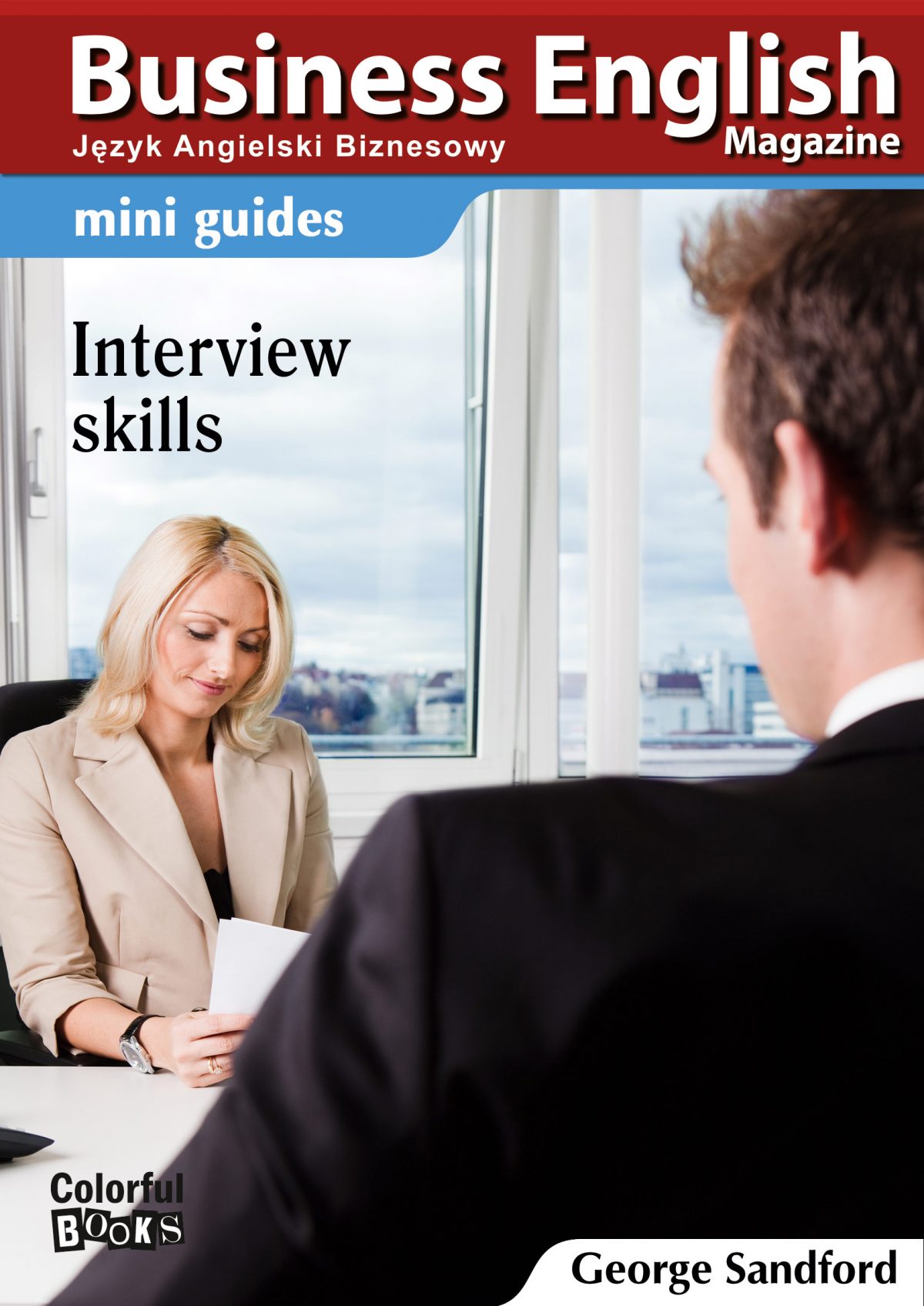
Mini guides: Interview skills - ebook
Mini guides: Interview skills - ebook
Seria kieszonkowych poradników językowo-biznesowych pomoże Ci poszerzyć słownictwo i wiedzę w różnych dziedzinach. Książeczki zawierają tematycznie zgromadzone pojęcia i zagadnienia, a także ich tłumaczenia. Bądź specjalistą w swojej dziedzinie, również w kręgach obcojęzycznych!
| Kategoria: | Angielski |
| Zabezpieczenie: |
Watermark
|
| ISBN: | 978-83-64340-17-8 |
| Rozmiar pliku: | 747 KB |
FRAGMENT KSIĄŻKI
George Sandford
English language guide to memory
1. An Introduction to Interview skills
An interview is an important life event because it can have a lasting impact on your future and direction in life. For most people, it’s something that only occurs once every few years and for this reason, they will not have had many opportunities to practice the skills. Add to this, the possibility of being interviewed in English and the task becomes quite daunting. Furthermore, an interview is a competitive event and you may be competing with many other capable candidates to land that dream job.
Luckily, an interview is a fairly standardised process and it is possible to predict what will happen, which questions will be asked and to prepare accordingly. The key is attention to detail and trying to make a positive impact on all of the factors that you can influence. This guide shows you how.
-------------- --------------------------------------------------
daunting frightening, overwhelming
land get
dream job the one you’ve always wanted, your ideal job
standardised made standard, to a regular format
predict anticipate
accordingly correspondingly, in accordance with requirements
-------------- --------------------------------------------------
Glossary
daunting – zniechęcający, przytłaczający
to land – załapać, zapewnić sobie
dream job – wymarzona praca
standardised – znormalizowany, standardowy
predict – przewidzieć
accordingly – stosownie, odpowiednio2. How good are you at being interviewed?
Tick which answers apply to you, then add up your score.
+-----------+-------------------------------------------------------------+-----------+-----------+-----------------+-----------------+
| | Question | Not at | To some | Quite good/well | Very good/ well |
| | | | | | |
| | | all | extent | 3 | 4 |
| | | | | | |
| | | 1 | 2 | | |
+-----------+-------------------------------------------------------------+-----------+-----------+-----------------+-----------------+
| 1 | I know how to find job opportunities | | | | |
+-----------+-------------------------------------------------------------+-----------+-----------+-----------------+-----------------+
| 2 | I know how to prepare for interview | | | | |
+-----------+-------------------------------------------------------------+-----------+-----------+-----------------+-----------------+
| 3 | I know what to wear | | | | |
+-----------+-------------------------------------------------------------+-----------+-----------+-----------------+-----------------+
| 4 | I know how to meet and greet people | | | | |
+-----------+-------------------------------------------------------------+-----------+-----------+-----------------+-----------------+
| 5 | I can manage my body language | | | | |
+-----------+-------------------------------------------------------------+-----------+-----------+-----------------+-----------------+
| 6 | I can talk about myself easily | | | | |
+-----------+-------------------------------------------------------------+-----------+-----------+-----------------+-----------------+
| 7 | I can describe my strengths | | | | |
+-----------+-------------------------------------------------------------+-----------+-----------+-----------------+-----------------+
| 8 | I can give examples of my skills and achievements | | | | |
+-----------+-------------------------------------------------------------+-----------+-----------+-----------------+-----------------+
| 9 | I know how to deal with difficult questions | | | | |
+-----------+-------------------------------------------------------------+-----------+-----------+-----------------+-----------------+
| 10 | I know how to deal with different selection tests | | | | |
+-----------+-------------------------------------------------------------+-----------+-----------+-----------------+-----------------+
| 11 | I am good at presenting for candidate selection purposes | | | | |
+-----------+-------------------------------------------------------------+-----------+-----------+-----------------+-----------------+
| 12 | I know how to make a good impression at interview | | | | |
+-----------+-------------------------------------------------------------+-----------+-----------+-----------------+-----------------+
| 13 | I can state my salary expectations | | | | |
+-----------+-------------------------------------------------------------+-----------+-----------+-----------------+-----------------+
| 14 | I know what questions to ask at interview | | | | |
+-----------+-------------------------------------------------------------+-----------+-----------+-----------------+-----------------+
| 15 | I have confidence in the level of my English for interviews | | | | |
+-----------+-------------------------------------------------------------+-----------+-----------+-----------------+-----------------+
Score
------- -------------------------------------------------------------------------------------------------
31-40 OK - you’ve got the job!
21-30 Pretty good but there is still some room for improvement. A little fine tuning is all you need.
11-20 There’s plenty of work to do to get you into to shape for interview - let’s get cracking!
0-10 Are you sure you are so bad? Oh boy - better get reading fast!
------- -------------------------------------------------------------------------------------------------3. Types of interview
One to one
This is perhaps the most common and obvious type of interview where there is just one interviewer. From a candidate point of view, it’s perhaps the easiest to manage. One the other hand, it becomes very important that you hit it off with the interviewer as there is nobody else to offer an alternative perspective on your suitability.
Two to one
This type of interview is also quite common and usually involves the manager that that the appointee will work for and a representative from the Human Resource department. Quite often, the HR department will do the short-listing and present the manger with three or four candidates for interview. It’s likely that the Manager will have some job specific questions whilst the HR representative may be more interested in your motivation level and overall suitability for the company. As the interviewee, you need to give attention and respect to both.
------------- -----------------------------------------------------------
hit it off get on well with sb.
appointee the person being appointed
short-list a reduced list of candidates from an original ‘long list’
interviewee the person being interviewed
------------- -----------------------------------------------------------
Glossary
to hit it off – przypaść sobie do gustu, zaprzyjaźnić się
appointee – przyjęty kandydat, mianowana osoba
to short-list – umieścić na liście kandydatów branych pod uwagę
interviewee – kandydat
Panel interview
Like talent shows, a panel interview involves a number of ‘judges.’ The panel may consist of anywhere from three to ten people and is usually used for senior appointments. So that each panellist can see the candidate clearly, the candidate’s chair is often placed at a distance from the main table which can make the candidate feel quite exposed and vulnerable. Frequently, each panellist will have a set time or number of questions which can lead to a disjointed interview that lacks continuity. It is likely to be more formal than the previously mentioned types of interview and requires confident presentation skills from the candidate. When answering, the candidate should address his/her remarks firstly to the questioner but then move their head and eyes to include other panel members.
Sequential interview
A sequential interview involves a number of interviews conducted one after the other, although, sometimes with small breaks in between. For example, a candidate may meet firstly with the HR Manager, then their functional Director and finally with the CEO. It can be very tiring and require a lot of mental stamina and concentration.
------------ --------------------------------
exposed out in the open
vulnerable weak and at risk
set time a limited, pre-determined time
disjointed broken up, not connected
stamina energy over a period of time
------------ --------------------------------
Glossary
exposed – wystawiony na widok publiczny
vulnerable – bezbronny
set time – ustalony czas
disjointed – chaotyczny
stamina – wytrzymałość, odporność
Stress interview
Unfortunately, the world of interviewing contains a number of amateur psychologists and people who use dubious interview techniques. One such method is the stress interview. In this, the candidate is deliberately put under pressure through aggressive questioning and creating a threatening environment. The aim is to see what the candidate is made of. It might be a suitable technique for a spy but for most jobs it is inappropriate. Even if a job is stressful, the stress created in such an interview is not the same and furthermore, it may create a very bad impression of the employing company. It is worth remembering that ultimately, an interview is a two-way process where the candidate is also assessing the employer.
Mechanical interview
Particularly in parts of the public sector in the UK, the mechanical interview is favoured. In this, the interviewer has a set list of questions which are asked to each candidate in the same way, in the same sequence. Answers are recorded and no feedback, verbal or non-verbal, is given and no supplementary questions are asked. The aim of this is to make the process as equal as possible by not giving any candidate an unfair advantage. The downside of such an approach is that it that it gathers little new information and rather defeats the object of holding an interview.
------------------------- --------------------------------
dubious questionable
see what sb. is made of test sb. through pressure
defeat the object fails to achieve its objective
------------------------- --------------------------------
Glossary
dubious – podejrzany, wątpliwy
see what someone is made of – sprawdzić co ktoś może osiągnąć, jaki jest naprawdę
downside – minus, wada
to defeat the object – udaremniać cel
English language guide to memory
1. An Introduction to Interview skills
An interview is an important life event because it can have a lasting impact on your future and direction in life. For most people, it’s something that only occurs once every few years and for this reason, they will not have had many opportunities to practice the skills. Add to this, the possibility of being interviewed in English and the task becomes quite daunting. Furthermore, an interview is a competitive event and you may be competing with many other capable candidates to land that dream job.
Luckily, an interview is a fairly standardised process and it is possible to predict what will happen, which questions will be asked and to prepare accordingly. The key is attention to detail and trying to make a positive impact on all of the factors that you can influence. This guide shows you how.
-------------- --------------------------------------------------
daunting frightening, overwhelming
land get
dream job the one you’ve always wanted, your ideal job
standardised made standard, to a regular format
predict anticipate
accordingly correspondingly, in accordance with requirements
-------------- --------------------------------------------------
Glossary
daunting – zniechęcający, przytłaczający
to land – załapać, zapewnić sobie
dream job – wymarzona praca
standardised – znormalizowany, standardowy
predict – przewidzieć
accordingly – stosownie, odpowiednio2. How good are you at being interviewed?
Tick which answers apply to you, then add up your score.
+-----------+-------------------------------------------------------------+-----------+-----------+-----------------+-----------------+
| | Question | Not at | To some | Quite good/well | Very good/ well |
| | | | | | |
| | | all | extent | 3 | 4 |
| | | | | | |
| | | 1 | 2 | | |
+-----------+-------------------------------------------------------------+-----------+-----------+-----------------+-----------------+
| 1 | I know how to find job opportunities | | | | |
+-----------+-------------------------------------------------------------+-----------+-----------+-----------------+-----------------+
| 2 | I know how to prepare for interview | | | | |
+-----------+-------------------------------------------------------------+-----------+-----------+-----------------+-----------------+
| 3 | I know what to wear | | | | |
+-----------+-------------------------------------------------------------+-----------+-----------+-----------------+-----------------+
| 4 | I know how to meet and greet people | | | | |
+-----------+-------------------------------------------------------------+-----------+-----------+-----------------+-----------------+
| 5 | I can manage my body language | | | | |
+-----------+-------------------------------------------------------------+-----------+-----------+-----------------+-----------------+
| 6 | I can talk about myself easily | | | | |
+-----------+-------------------------------------------------------------+-----------+-----------+-----------------+-----------------+
| 7 | I can describe my strengths | | | | |
+-----------+-------------------------------------------------------------+-----------+-----------+-----------------+-----------------+
| 8 | I can give examples of my skills and achievements | | | | |
+-----------+-------------------------------------------------------------+-----------+-----------+-----------------+-----------------+
| 9 | I know how to deal with difficult questions | | | | |
+-----------+-------------------------------------------------------------+-----------+-----------+-----------------+-----------------+
| 10 | I know how to deal with different selection tests | | | | |
+-----------+-------------------------------------------------------------+-----------+-----------+-----------------+-----------------+
| 11 | I am good at presenting for candidate selection purposes | | | | |
+-----------+-------------------------------------------------------------+-----------+-----------+-----------------+-----------------+
| 12 | I know how to make a good impression at interview | | | | |
+-----------+-------------------------------------------------------------+-----------+-----------+-----------------+-----------------+
| 13 | I can state my salary expectations | | | | |
+-----------+-------------------------------------------------------------+-----------+-----------+-----------------+-----------------+
| 14 | I know what questions to ask at interview | | | | |
+-----------+-------------------------------------------------------------+-----------+-----------+-----------------+-----------------+
| 15 | I have confidence in the level of my English for interviews | | | | |
+-----------+-------------------------------------------------------------+-----------+-----------+-----------------+-----------------+
Score
------- -------------------------------------------------------------------------------------------------
31-40 OK - you’ve got the job!
21-30 Pretty good but there is still some room for improvement. A little fine tuning is all you need.
11-20 There’s plenty of work to do to get you into to shape for interview - let’s get cracking!
0-10 Are you sure you are so bad? Oh boy - better get reading fast!
------- -------------------------------------------------------------------------------------------------3. Types of interview
One to one
This is perhaps the most common and obvious type of interview where there is just one interviewer. From a candidate point of view, it’s perhaps the easiest to manage. One the other hand, it becomes very important that you hit it off with the interviewer as there is nobody else to offer an alternative perspective on your suitability.
Two to one
This type of interview is also quite common and usually involves the manager that that the appointee will work for and a representative from the Human Resource department. Quite often, the HR department will do the short-listing and present the manger with three or four candidates for interview. It’s likely that the Manager will have some job specific questions whilst the HR representative may be more interested in your motivation level and overall suitability for the company. As the interviewee, you need to give attention and respect to both.
------------- -----------------------------------------------------------
hit it off get on well with sb.
appointee the person being appointed
short-list a reduced list of candidates from an original ‘long list’
interviewee the person being interviewed
------------- -----------------------------------------------------------
Glossary
to hit it off – przypaść sobie do gustu, zaprzyjaźnić się
appointee – przyjęty kandydat, mianowana osoba
to short-list – umieścić na liście kandydatów branych pod uwagę
interviewee – kandydat
Panel interview
Like talent shows, a panel interview involves a number of ‘judges.’ The panel may consist of anywhere from three to ten people and is usually used for senior appointments. So that each panellist can see the candidate clearly, the candidate’s chair is often placed at a distance from the main table which can make the candidate feel quite exposed and vulnerable. Frequently, each panellist will have a set time or number of questions which can lead to a disjointed interview that lacks continuity. It is likely to be more formal than the previously mentioned types of interview and requires confident presentation skills from the candidate. When answering, the candidate should address his/her remarks firstly to the questioner but then move their head and eyes to include other panel members.
Sequential interview
A sequential interview involves a number of interviews conducted one after the other, although, sometimes with small breaks in between. For example, a candidate may meet firstly with the HR Manager, then their functional Director and finally with the CEO. It can be very tiring and require a lot of mental stamina and concentration.
------------ --------------------------------
exposed out in the open
vulnerable weak and at risk
set time a limited, pre-determined time
disjointed broken up, not connected
stamina energy over a period of time
------------ --------------------------------
Glossary
exposed – wystawiony na widok publiczny
vulnerable – bezbronny
set time – ustalony czas
disjointed – chaotyczny
stamina – wytrzymałość, odporność
Stress interview
Unfortunately, the world of interviewing contains a number of amateur psychologists and people who use dubious interview techniques. One such method is the stress interview. In this, the candidate is deliberately put under pressure through aggressive questioning and creating a threatening environment. The aim is to see what the candidate is made of. It might be a suitable technique for a spy but for most jobs it is inappropriate. Even if a job is stressful, the stress created in such an interview is not the same and furthermore, it may create a very bad impression of the employing company. It is worth remembering that ultimately, an interview is a two-way process where the candidate is also assessing the employer.
Mechanical interview
Particularly in parts of the public sector in the UK, the mechanical interview is favoured. In this, the interviewer has a set list of questions which are asked to each candidate in the same way, in the same sequence. Answers are recorded and no feedback, verbal or non-verbal, is given and no supplementary questions are asked. The aim of this is to make the process as equal as possible by not giving any candidate an unfair advantage. The downside of such an approach is that it that it gathers little new information and rather defeats the object of holding an interview.
------------------------- --------------------------------
dubious questionable
see what sb. is made of test sb. through pressure
defeat the object fails to achieve its objective
------------------------- --------------------------------
Glossary
dubious – podejrzany, wątpliwy
see what someone is made of – sprawdzić co ktoś może osiągnąć, jaki jest naprawdę
downside – minus, wada
to defeat the object – udaremniać cel
więcej..