MENU
MENU
 Nasze ceny

 Przeczytaj fragment on-line

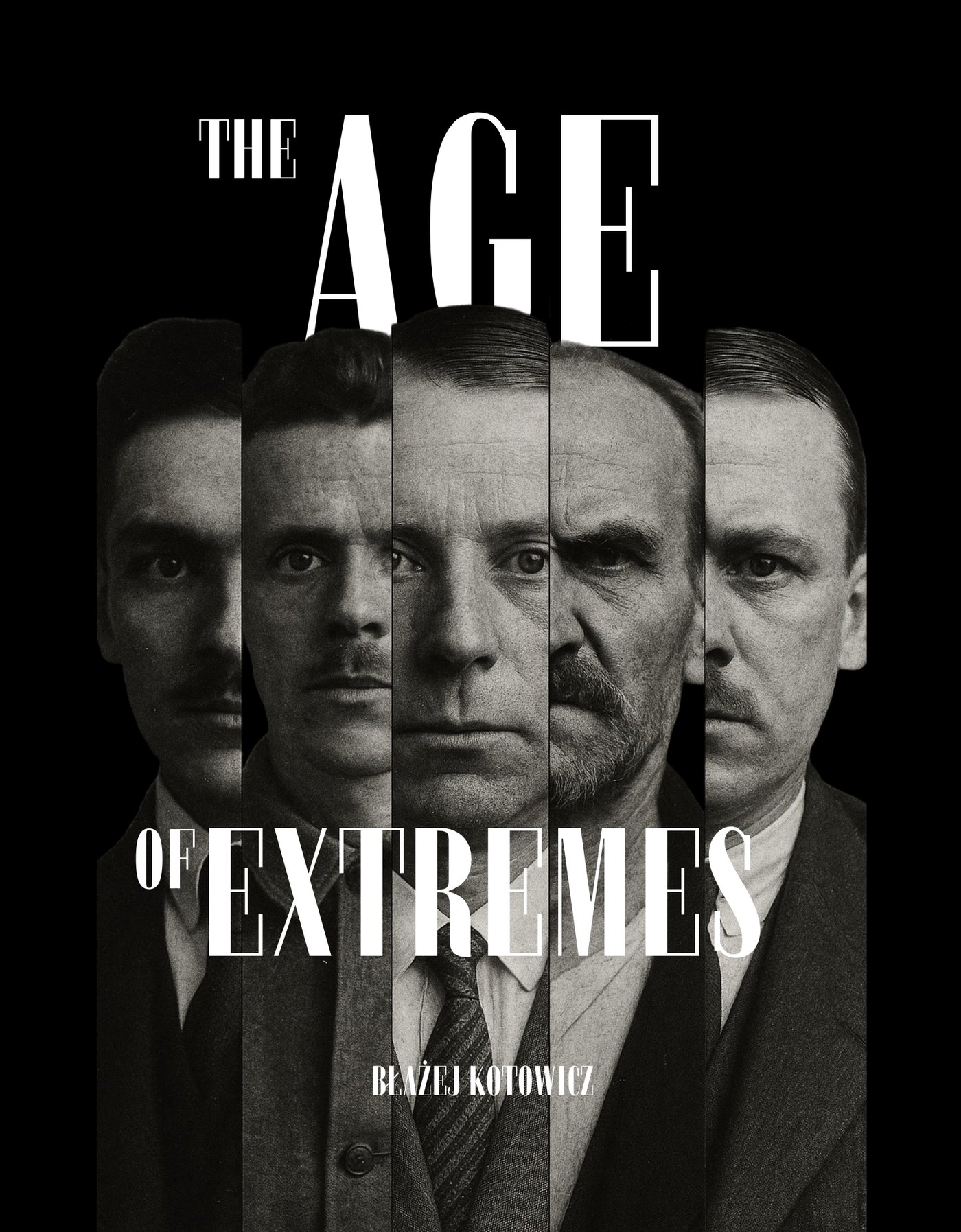
The age of extremes - ebook
"The Age of Extremes" by Błażej Kotowicz delves into the historical reportage and criminological analysis of serial murders during the Weimar Republic, highlighting infamous figures like Fritz Haarmann, Karl Denke, Peter Kürten, and Carl Großmann. Kotowicz places these crimes within the broader social and political context of interwar Germany, exploring how factors such as state instability, moral decay, inflation, wartime traumas, and media growth influenced the resonance of these heinous acts. The book not only examines the murderers but also delves into public reactions, the societal fascination with violence, and the impact of sensational trials on the German press. Through archival sources and scholarly research, the author paints a vivid picture of a society on the brink, where crime becomes a symptom of deeper societal issues. "The Age of Extremes" portrays a society grappling with its own decline, where crime thrives amidst a system that inadvertently nurtures evil.
| Kategoria: | True Crime |
| Język: | Angielski |
| Zabezpieczenie: |
Watermark
|
| ISBN: | 9788397279636 |
| Rozmiar pliku: | 57 MB |
FRAGMENT KSIĄŻKI
Of extremes
BŁAŻEJ KOTOWICZ
© Błażej Kotowicz 2025
Błażej Kotowicz
Legnica 59-220
Marcelina – with love
Table of Contents
Prologue .................................................. 9
Chapter 1: Fritz Haarmann – The Beast of Hanover
• Fritz Haarmann – The Beast of Hanover .............. 11
• Haarmann’s Activities ............................ 21
• Trial of the Beast of Hanover ..................... 40
• Posthumous Fate of Haarmann’s Head .............. 46
• Accomplice Hans Grans ............................. 49
Chapter 2: “Uncle” Denke – The Cannibal of Ziębice
• “Uncle” Denke – The Cannibal of Ziębice .......... 55
• Carl Denke’s Activities (Dr. Lucyna Biała) ...... 58
• Conclusion of Carl Denke’s Story and Aftermath . 65
Chapter 3: Peter Kürten – The Vampire of Düsseldorf
• Peter Kürten – The Vampire of Düsseldorf .......... 71
• The Vampire’s Crimes and Capture ................ 78
• Trial of Peter Kürten ............................. 88
Chapter 4: Carl Grossmann – “ZickenCarl!” / The Butcher of Berlin
• Carl Grossmann – “ZickenCarl!” .................... 97
• The Butcher of Berlin ........................... 101
Chapter 5: Friedrich Schumann – The Melancholy of Spandau / The Killer of Falkenhagen Lake
• Friedrich Schumann – The Melancholy of Spandau ... 109
• The Wounded One ................................. 116

Chapter 6: Fritz Heinrich Angerstein – “The Marked One” / Haiger in the Shadow of the Van der Zypen Villa
• Fritz Heinrich Angerstein – “The Marked One” .... 123
• Haiger in the Shadow of the Van der Zypen Villa . 129
Chapter 7: Friedrich Reindel .......................... 137
Chapter 8: Julius Krautz ............................... 145
Chapter 9: Lorenz Schwietz ............................ 153
Chapter 10: Carl Gröpler .............................. 163
Chapter 11: The Age of Extremes ....................... 171
Epilogue ................................................ 187
Bibliography .......................................... 189
Index .................................................. 204


Prologue
In the shadowy recesses of the Weimar Republic, where civilizational progress collided with social and moral crisis, stories emerged that still provoke reflection today. In those turbulent times, when hope mingled with the collapse of traditional values, individuals appeared who were capable of unimaginable brutality. Their deeds—born from personal tragedies and institutional weaknesses—became symbols of how easily a person can cross the boundary of humanity.
A look back at those years reveals how economic, cultural, and psychological circumstances created conditions ripe for the birth of crime. A daily existence filled with drama and tension led to moral decay, while individual stories exposed deeper problems within society as a whole.
This book is a journey through a labyrinth of the past, in which every memory, record, and act of violence uncovers how the uncertainty of the times shapes human decisions. Let us immerse ourselves in this history to understand the roots of evil and the price society pays when it forgets its own values.

Fritz Haarmann - the beast of Hanower
Fritz Haarmann—later infamously known as “the Vampire of Hanover”—was born on October 25, 1879, in Hanover, in an era that, though outwardly stable, concealed the seeds of chaos and contradiction that would shape his life. He was the sixth of seven children of Johanna and Ollie Haarmann—a couple whose relationship mirrored the emotional instability and conflicts that defined their household. The story of his early years is not just a tale of a childhood marked by personal dramas but also a deep study of a psyche that, under the influence of trauma, rejection, and societal pressures, gradually transformed into something dark and uncontrollable. To understand how Haarmann became one of Germany’s most terrifying serial killers, we must go back to his beginnings—moments that planted the seed of pathology, germinating in the shadow of Hanover’s streets.
Fritz was born into a working-class family at a time when the German Empire was experiencing an industrial boom and Hanover was rising as an important industrial center. Yet optimism found little room in the Haarmann household.

Johanna, his mother, a woman of gentle disposition, doted on Fritz, treating him almost as her beloved child who would compensate for the hardships of life with her husband. Ollie Haarmann, Fritz’s father, was, in contrast, a stern, hot-tempered, and unpredictable man—a locksmith by trade who later worked as a railroad laborer. He eventually opened a small cigar factory in Hanover employing around ten workers. Yet Senior Haarmann’s severity and outbursts of anger cast a long shadow over their home life. These two extremes—his mother’s overprotectiveness and his father’s brutality—created for Fritz a world full of contradictions, where love mingled with fear and security proved fleeting.
As a child, Fritz stood out for his calmness and reserve. Unlike his peers, who spent their days playing in the streets, he preferred solitude or the company of his sister, playing with her dolls and putting on her dresses. These behaviors, which today might be viewed as harmless expressions of individuality, were perceived in the conservative environment of the late 19th century as deviation from the norm. The boy in a dress quickly became the object of his classmates’ mockery, who ridiculed his “effeminacy” and excluded him from the group. That social rejection, though seemingly trivial, dealt the first blow to Fritz’s developing psyche—teaching him that being himself meant exclusion and shame.
The situation worsened at school, where Fritz—already labeled as “different”—fell victim to molestation by one of his teachers. This incident, though Haarmann never spoke of it openly, left deep scars.

The sexual violence he experienced was not only a physical violation, but also a betrayal of trust - the teacher, a figure of authority, took advantage of his isolation and vulnerability.
This experience may have planted in him both a hatred of authority and a distorted perception of sexuality, which later found an outlet in his crimes. He found no solace at home - his father, seeing weakness in his son, chastised him for his lack of masculinity, while his mother, unaware of the depth of his suffering, continued to surround him with excessive care. Fritz grew up in an emotional trap, where there was no room to express pain or find stability.
During his adolescence, Haarmann began to reveal dark tendencies that foreshadowed his later crimes. At the age of sixteen, he committed his first known sex crimes - luring younger boys into dark basements where he gave vent to his desires. These acts were not just a youthful experiment - they had an element of coercion and domination, indicating a developing psychopathy. Caught by the authorities, he was taken to a psychiatric hospital in Hildesheim in 1896, where doctors diagnosed him with a sexual mental disorder, deeming his condition incurable. The diagnosis, however, was only a temporary stopgap - Haarmann escaped from the institution, refusing to take on the role of patient or victim of the system.

After his escape, he tried to live the life of an ordinary citizen. At seventeen, he became engaged to a young woman named Erna, who became pregnant with his child. This relationship might have been his chance at stability, but it collapsed under the weight of his suspicion and conflicts with his father, who refused to accept his son’s fiancée.
Erna miscarried, and Fritz—deprived of support and prospects—returned to the streets of Hanover. He sought a place in the military: in 1897, he enlisted, seeing it as an opportunity to bring discipline into his life. However, his fragile health—epileptic seizures and severe headaches—forced him to resign after only a year of service. He was granted a disability pension, which offered temporary financial relief but did nothing to resolve his inner turmoil.
Back in civilian life, Haarmann sank into petty crime—petty thefts and frauds became his means of survival. In 1900, he was arrested for theft and sentenced to several months in prison, initiating a spiral of conflicts with the law. Losing his pension once his crimes were revealed only deepened his sense of alienation. During this period, his relationship with his father reached a breaking point: Ollie, frustrated by his “failed” son, threatened to disown him and publicly humiliate him. Feeling betrayed by both family and society, Fritz withdrew further into himself, his anger and frustration seeking an outlet.


To understand how Fritz Haarmann crossed the boundary from man to murderer, we must examine his psyche and the influences that shaped him. His childhood and youth were marked by three key factors: trauma, social rejection, and emotional instability. Each of these elements played a role in molding a personality that, over time, became capable of unimaginable brutality.
The school molestation was one of the heaviest blows Haarmann received in childhood. Sexual violence—especially at the hands of an authority figure—could distort his perception of intimacy and power, planting within him a mixture of shame, anger, and a desire to regain control. In his later crimes—when he lured victims, earned their trust, and then brutally killed them—you can detect an echo of that dynamic: first he would assume the role of caretaker, only to betray and destroy. Biting the throat, a signature element of his modus operandi, may have been a perverse inversion of the victim’s role—now he was the one inflicting pain, seizing the power that once was denied him.
Equally significant was his relationship with his father. Ollie Haarmann’s severity and violence taught Fritz that love was conditional and weakness punishable. This may have sown in him a hatred of masculinity—both the kind expected of him and the kind he saw in others. His victims, young boys, were in a way symbols of that reviled “masculinity”—innocent, defenseless, yet representing the world that rejected him. By killing them, Haarmann symbolically destroyed what he could not achieve or accept.

Childhood play with dolls and dresses, though innocent, made Fritz an outsider in the eyes of his peers. In the conservative society of the German Empire, where gender roles were rigidly defined, his “effeminacy” was perceived as a threat to the social order. Taunts and exclusion taught him that being himself meant suffering—a lesson that could easily turn into deep distrust and hostility toward others. In adulthood, Haarmann often selected his victims from society’s margins—homeless boys, some of whom prostituted themselves—perhaps seeing in them a reflection of his own isolation, while also finding someone he could control and destroy.
His failures in forming lasting relationships, such as his engagement to Erna, only deepened this sense of alienation. The failed relationship, ending in miscarriage and a broken engagement, may have reinforced his belief that he was destined for loneliness. The military—his hoped-for escape—also rejected him, leaving him without purpose or belonging. As a result, Haarmann began to view the world as hostile and himself as someone who had to fight for survival—even if that meant crossing moral boundaries.
The schism between his overprotective mother and his brutal father meant that Haarmann never developed a healthy sense of identity or coping mechanisms. His mother, shielding him from the world, failed to prepare him for its harshness, while his father, punishing any sign of weakness, sowed in him a profound sense of inadequacy.

This emotional instability manifested in his impulsiveness—from petty thefts to acts of sexual violence. The epileptic seizures, which began in his youth, may have further disrupted his self-control, deepening the chaos in his mind.
In the psychiatric hospital where he ended up as a teenager, Haarmann encountered a system that labeled him “incurable.” His escape was an act of rebellion but also confirmation of his distrust of authority. He did not seek help, because he did not believe he could receive it—instead, he began to build his own world, one in which he alone set the rules. This absence of support from family, society, or institutions created a vacuum that his worst instincts filled.
The beginnings of Fritz Haarmann’s life did not directly determine his later crimes, but they created the ground in which those crimes could sprout. Childhood trauma taught him that trust leads to betrayal and weakness to suffering. Social rejection convinced him there was no place for him in the normal world, while emotional instability robbed him of moral restraints. With his entry into adulthood—marked by crime, prison, and alienation—these elements began to crystallize into something far more dangerous
.

JHis early sexual offenses were a harbinger of what was to come—a bid to regain control in a world that denied it to him. When, after World War I, he found himself in the chaos of the Weimar Republic, poverty, unemployment, and social collapse provided him with ideal conditions for his actions. Young boys, lost on the train platforms, became easy targets for a man who saw in their vulnerability a reflection of his own pain—and a chance to extinguish it through violence.
Fritz was not born a monster but was shaped into one by an environment that broke him. His story is a tragic testament to how trauma and rejection, left unaddressed, can transform innocence into evil. Before he became the “Vampire of Hanover,” he was a boy playing with dolls—and what followed was a dark dance on the edge of humanity that ended in the shadow of the guillotine.


Haarmann's activities
Hanover, the 1920s. A city resonating with the clatter of horse hooves and automobiles traversing cobblestone streets. The air carried the scent of damp smoke from chimneys and railway grease. In the grim alleyways, between cellar doors and peeling building façades, a darkness lurked—one that would swallow dozens of young lives.
Fritz Haarmann chose each victim with chilling precision. His crimes were neither random nor impulsive but methodical and calculated. The indictment listed twenty-seven names—twenty-seven lives that ended within the confines of the murderer’s small room. Yet the actual number of victims may have been far greater.
Haarmann’s murder spree began during World War I, in September 1918, when hunger ravaged German cities. The first documented victim was a seventeen-year-old student named Friedel Rothe. According to witness testimony, the boy met an “elegant gentleman” in a café who introduced himself as a “criminal investigator.” The description matched Haarmann perfectly, although at that time nothing could be proven. During a later interrogation, Haarmann admitted that when the police searched his apartment, the boy’s head had been hidden “in a newspaper behind the stove.”

After that murder, there was a five-year hiatus. It may have been due to Haarmann’s living conditions, which prevented him from bringing victims home, or perhaps because he was serving a prison sentence during that time. Whatever the reason, the murder spree resumed in 1923 and continued until his arrest.
Fritz Haarmann—a man with piercing dark eyes and a disarming smile—walked the streets, appearing no different from other men clad in long coats and hats. His slightly stooped figure blended into the crowd, and when he stopped at street corners, he seemed almost part of the scenery. But there was something else in him—something that evoked an undefined, unsettling feeling in people, which quickly vanished once he spoke. His tone carried warmth and the promise of safety.
It was that very voice that served as the first hook to catch his victims.
Each of his victims was different, but they all shared one trait—they were young, alone, and defenseless. They had run away from home, come to Hanover in search of a better life, looking for a roof over their heads or even a bit of warmth. Haarmann knew these needs and understood how to exploit them.
The encounters between the murderer and his victims likely unfolded as follows. Evening. The glow of street lamps cast long shadows across the cobblestones. The last passersby hurried home, wrapped in coats against the chill that crept in with the onset of dusk.

At the train station, young boys lingered—some selling newspapers, others simply waiting for who knows what. Fritz chose them carefully, his gaze sliding over their faces until it landed on the right one—malnourished, pale, full of hope yet exhausted.
“You seem lost, boy,” he asked one time of a young lad who looked as if he had just arrived in the city.
The boy, uncertain but grateful for the attention, nodded.
“I’m a police officer,” Haarmann said, reaching into his pocket and showing a badge he had stolen years before. “Perhaps I should help you?”
That single sentence opened the door. In those days, uniform and authority commanded respect. With no better option, the boy allowed Haarmann to place an arm around him and lead him toward his apartment.
Haarmann’s room was cramped and stuffy, filled with the smell of dampness and tobacco smoke. Old furniture lined the walls, and newspapers lay scattered across the table. On the shelves, a few books could be seen, their spines dust-covered as though untouched for a long time.
Haarmann poured tea, and his victim—often cold and hungry—warmed her frozen hands on the cup. For a moment, she felt comfortable. Safe.

This moment was the most dangerous. When the tension subsided, when the boy began to believe he had been lucky enough to meet someone who truly wanted to help him, that was when the strike came.
Haarmann, known for his brutal strength, would pounce on his victim, clamping his hands around their throat. Sometimes he did it suddenly; other times, he let the victim sense that something was wrong—that this kindness was merely a mask.
Some of his victims had time to feel fear. To realize they were trapped in a room with no way out. Haarmann took pleasure in that moment of awareness, in the instant when the boy’s eyes widened in terror.
“Quiet,” he would whisper, then his teeth would clamp down on the victim’s throat.
This killing technique was later called “the wolf bite.” Haarmann literally tore at his victims’ throats with his teeth, their own blood choking them before their bodies went limp in his arms.
When it was all over, Haarmann would sit in a chair, breathing heavily. The boy’s body lay lifeless on the floor, and he would look at it with a mixture of satisfaction and calm.

Then came the routine. He stripped the clothes from the lifeless body, folded them carefully, and then set about dismembering the corpse. At the sink, with a knife and a saw, he cut the body into pieces, which he later dumped into the Leine River. He often boiled the bones to remove any remnants of flesh.
Some rumors claimed that Haarmann sold his victims’ flesh as meat. Neighbors recalled that he frequently had supplies of “good meat,” which he would give away or sell on the black market. He insisted he got it from a butcher.
No one asked questions.
Weeks turned into months while Haarmann continued to hunt. Each evening repeated the last: meeting made at the station, warm tea, the murder in silence, dismemberment, disposal of remains into the river.
Haarmann’s victims came from various backgrounds, but they shared certain characteristics—they were all young men, most often teenagers or in their early twenties, many of them apprentices, students, or young laborers. The indictment listed:

1. Friedel Rothe, Student – September 1918
1. Fritz Franke, Trainee – February 1923
1. Wilhelm Schulze, Trainee – March 1923
1. Roland Huch, Student – May 1923
1. Hans Sonnenfeld, Worker – May 1923
1. Ernst Ehrenberg, Student – June 1923
1. Heinrich Struß, Office assistant – August 1923
1. Paul Bronischewski, Trainee – September 1923
1. Richard Gräf, Worker – October 1923
1. Wilhelm Erdner, Trainee – October 1923
1. Hermann Wolf, Worker – October 1923
1. Heinz Brinkmann, Student – October 1923
1. Adolf Hannappel, Carpenter – November 1923
1. Adolf Hennies, Worker – December 1923
1. Ernst Spicker, Locksmith – January 1924
1. Heinrich Koch, Worker – January 1924
1. Willi Senger, Worker – February 1924
1. Hermann Speichert, Trainee – February 1924
1. Alfred Hogrefe, Trainee – April 1924
1. Hermann Bock, Worker – April 1924
1. Wilhelm Apel, Trainee – April 1924
1. Robert Witzel, Trainee – April 1924
1. Heinz Martin, Trainee – May 1924
1. Fritz Wittig, Salesman – May 1924
1. Friedrich Abeling, Student – May 1924
1. Friedrich Koch, Trainee – June 1924
1. Erich de Vries, Baker's journeyman – June 1924


Over time, Haarmann became increasingly ruthless and brazen. In April 1924 alone, he murdered as many as four people. With his confidence growing, his appetite for killing intensified. A month before his arrest, in May 1924, he also took three lives.
Haarmann’s last victim was Erich de Vries, a journeyman baker seeking work, who disappeared on June 14, 1924. According to his sister’s testimony, her brother was bathing in the Ohe River while a man matching Fritz Haarmann’s description watched his belongings. De Vries’s remains were later found in the castle gardens.