MENU
MENU
 Nasze ceny

 Przeczytaj fragment on-line

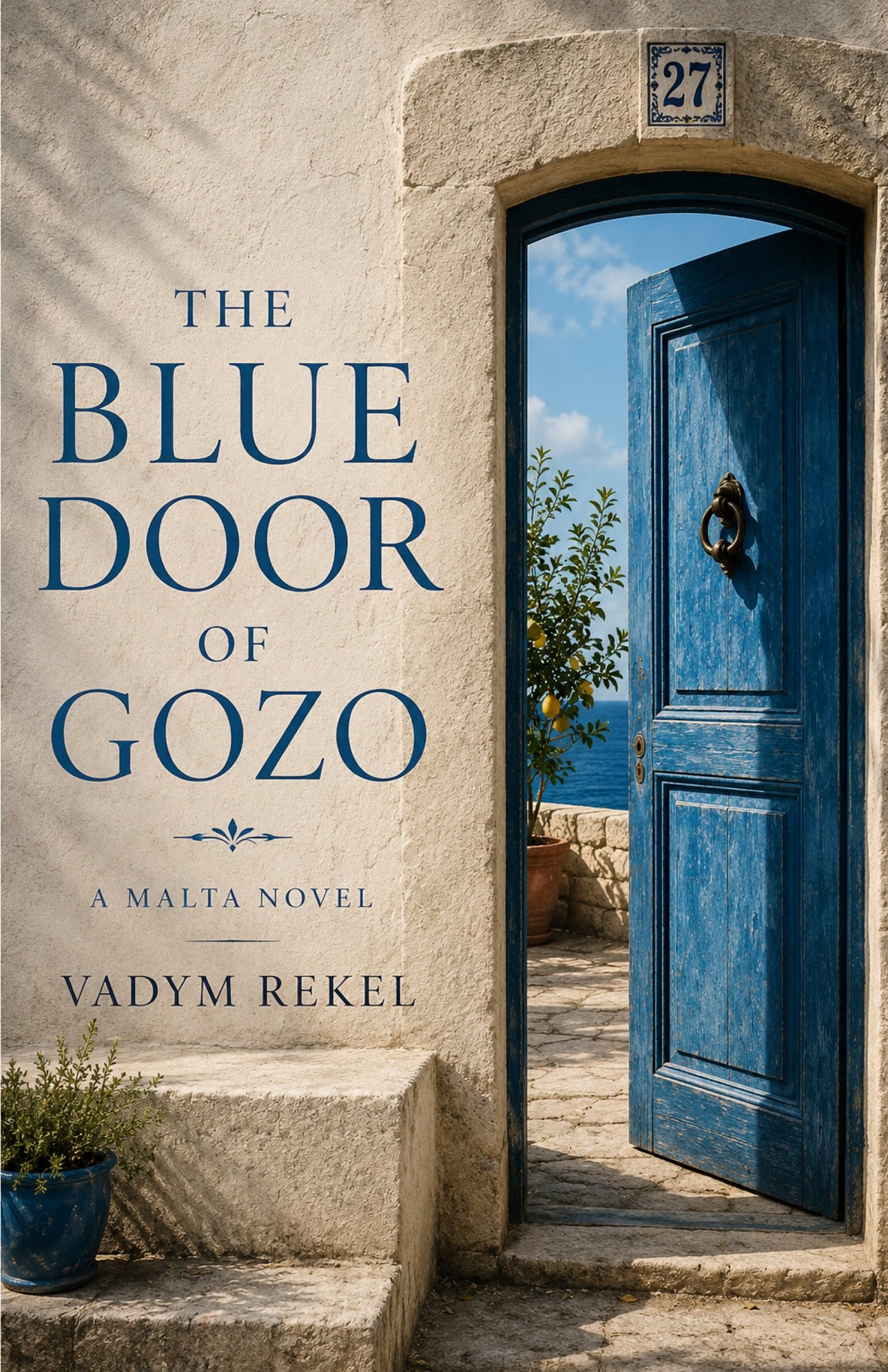
The Blue Door of Gozo. A Malta Novel - ebook

The Blue Door of Gozo. A Malta Novel - ebook
Set between Gozo, Malta and London, The Blue Door of Gozo is a literary family saga about inheritance, silence, memory and the difficult ethics of care. When a legally inconvenient house in Gozo re-enters the lives of the Vella family, old papers, altered records and a dead young woman’s restricted voice disturb the polished order of inherited wealth. What first appears to be a property matter becomes a record of family failure, legal concealment and practical courage. At the centre of the novel is Dar il-Bieb, a house that becomes neither a monument nor a charity performance, but a living institution of ordinary protection. The Blue Door of Gozo is a restrained Mediterranean novel about the cost of doing good without claiming ownership of those one tries to help.
Ta publikacja spełnia wymagania dostępności zgodnie z dyrektywą EAA.
| Kategoria: | Literature |
| Język: | Angielski |
| Zabezpieczenie: |
Watermark
|
| ISBN: | 9788393658480 |
| Rozmiar pliku: | 1,1 MB |
FRAGMENT KSIĄŻKI
Before anyone called it Dar il-Bieb, the house had already learned to refuse.
It refused weather first. Not successfully, not always, not in any way an engineer would have respected. Rain came through the roof in thin determined lines and found bowls, mattresses, books, shoes, the edge of a table, the place beneath a child’s bed where secrets had been trusted more than adults. Damp entered the walls and stayed with the patience of debt. Wind worried the shutters until their blue paint lifted and salted white. The house refused collapse only because old stone had a discipline people mistook for strength.
It refused men differently.
Some men arrived with keys. Some with invoices. Some with family names, careful shoes, apologies, tools, priestly voices, police questions, flowers, bread bought too late, money written under the wrong word. They stood at the door and believed arrival was a kind of authority. The house did not agree. Its door opened only when someone inside decided that opening was safer than silence, and even then the house kept count. It counted footsteps in the passage. It counted pauses before names were spoken. It counted the difference between a knock and a hand already on the handle.
Lucia Sant knew this before she had language for it.
She had not built the house. She had inherited use of it, which was less clean and more binding. She knew which stair complained in rain, which window could be left open without inviting the lane, which neighbour would ask too much and which would ask nothing but remember everything. She knew bread worked faster than advice. She knew a kettle could save a conversation from becoming interrogation. She knew a locked door could protect a girl, and also trap her, and that adults preferred whichever meaning made them appear responsible afterward.
She wrote lists because memory was too easy for others to edit.
Doors.
Food.
Names.
Money.
Roof.
Not philosophy. Not charity. Not hope. Hope was what people said when they had not brought a blanket. Lucia preferred objects. A working lock. A dry mattress. A bus fare hidden in a tin. A plate left near enough to reach and far enough not to watch. A rule that a woman who gave a false name should be called by the false name until another became safer. A note that police were not always first, and priests were not always alone, and doctors could help or harm depending on the room and who paid for the visit.
Marisa hated some of Lucia’s rules because children hate being governed by the fear adults cannot confess.
She hated the blue shutters and loved the sound rain made against them. She hated being told not to write on paper that might be found and therefore wrote on walls, margins, scraps, school books, the inside of cupboards, the back of envelopes, once in flour across the table until Lucia made her clean it and then laughed when the word stayed faintly in the grain. She recorded bells, cats, arguments, cars arriving, bread burning, Lucia telling her to stop, and herself saying things no one had asked her to say. She understood doors as insults before she understood them as law.
On the inside of the front door, she wrote:
Bieb miftuħ biss jekk taf tħabbat.
Lucia corrected the letters later, not the sentence.
Door open only if you know how to knock.
It was not a welcome. It was not wisdom. It was a condition.
Long before the lawyers, before the court, before the trust, before board minutes, before refusal funds and property schedules, the house was used in ways that did not fit forms. A girl from Nadur slept there one night and left before dawn. A woman with a split lip sat in the kitchen and said nothing until after soup. A cousin came twice and was refused the second time because the first refusal had not been believed. A teacher brought shoes and talked too much. A doctor came once and was useful. A priest came once and was not left alone. A neighbour held a key and pretended not to. Mara Grech, still young enough to think age would one day explain cowardice, watched more than she acted and remembered more than she wanted.
Money entered as money always does: late, named badly, carrying its own chair.
Rafael Vella did not arrive as a villain. Villains are convenient because they make rooms easier to arrange. He arrived as a man who thought payment could be made precise after feeling had made everything untidy. School. Roof. Assistance. Fees. Repair. Gift. Debt. Favour. Obligation. He knew some words were wrong and used them anyway when wrong words protected him from clearer ones. He looked at shoes when he should have looked at ceilings. He believed that not asking for thanks made money cleaner. He did not yet understand that money can ask without speaking.
Lucia understood.
If the roof is repaired, write roof.
If school is paid, write school.
If a child needs shoes, write shoes.
Do not write kindness where there is cost.
Do not write help where there is delay.
Do not write charity where a door was already owed.
The roof was not repaired in time.
This is not the whole story, but it is one of the stones under it.
After Marisa died, people preferred the sentence “what happened” because it gave grief a corridor. What happened could be investigated, narrowed, misfiled, regretted, whispered, sealed. What happened could be spoken in low voices by adults who then went home to rooms with dry ceilings. Lucia did not refuse the question, but she distrusted its appetite. Adults liked what happened because then they could be sad and go home. A house needed more stubborn questions.
Who had keys?
Who paid whom?
Why was the roof still open?
Who wrote the room as empty?
Who moved the papers?
Who called restraint preservation?
Who made a girl into a room?
Who decided a house used for safety became an asset because the person who knew otherwise was dead?
The transfer came dressed as settlement.
The documents were cleaner than the house. Documents often are. They did not smell of damp. They did not show the bowls under the bed, the loose floorboard, the school shoes, the women who had sat at the table without becoming records. They carried signatures, dates, consent, schedules, asset language, references to debt and property, the dry confidence of paper handled by people who knew where margins ended. Lucia signed what she had to sign and added what the document did not want.
The house was not to be sold.
Not emptied of personal papers.
Not renamed for charity.
Not used to make any man appear generous.
The key was to remain available for lawful need and for those who knew why the door was written on.
This consent did not include Marisa’s room.
If they say this is too much, then they have understood it.
They understood it and filed it badly.
Years passed.
The house stood. Empty, people said, because people often call a room empty when they have decided not to count what remains. The door faded. The roof worsened. The shutters lost colour. A key lay in a place it should not have lain. Papers moved from one cupboard to another, from memory to archive, from guilt to estate schedule. The Vella children grew in a London house where their heights were marked on a back stair and one name was not. Helena Vella learned the violent uses of politeness. Julian learned documents. Nico learned humour before silence could close properly. Rafael learned to live beside a locked part of himself and called it endurance.
The house waited, but waiting is too gentle a word.
It held.
It held the inscription, the damp, the marked wall, the missing books, the ugly conditions, the debt, the room that was not only Marisa’s, the kitchen that had fed women without becoming generous, the roof that remembered delay, the door that had never belonged to the man who kept the key.
Then, many years later, a letter arrived in London about a property in Gozo.
It spoke of regularisation, disposal, retention, title, deadline.
It did not mention bread.
It did not mention the door.
It did not mention the roof except as condition.
It did not mention Marisa except through the silence around a room.
It did what documents do when they think a house is finished with its dead.
The house was not finished.
It had only been waiting for someone to knock badly enough that the old sentence could be read again.CHAPTER 1 — THE HOUSE BEFORE THE DOOR
The first letter about the house arrived in London on a Wednesday when Helena Vella had decided the dining-room curtains were becoming vulgar.
They were not vulgar in any way a visitor could have named. They were Belgian linen, the colour of weak tea, heavy enough to fall well and expensive enough to make argument tasteless. Their offence was age. Sun had paled the outer folds by half a shade, and in Helena’s house that half-shade carried accusation. It suggested neglect. It suggested that something once chosen with authority had continued without permission.
She stood on the ladder herself because the housekeeper had a poor habit of treating curtains as fabric rather than architecture. Below her, on the walnut table, lay a silver paper knife, two unopened invitations, a catalogue from an auction house in St James’s, and the letter from Valletta.
Helena did not pick it up at once. She knew the firm. Camilleri, Briffa & Spiteri had written to Rafael twice already that spring, both times in language so bland that only the unnecessary courtesy revealed pressure. The first letter had asked for clarification of “the client’s continuing intention” regarding a Gozo property. The second had referred to “valuation conditions” and “time-sensitive instructions”. This third envelope was thicker. The paper bent differently when she touched it.
She came down from the ladder, removed her cotton gloves and opened the letter with the silver knife. Helena still opened letters properly. It was one of the lesser ways in which she refused the century.
Dear Mr Vella, further to our recent correspondence and in light of the pending estate review, we must now request written instructions by 30 June regarding the continued retention, disposal or regularisation of the property situated in Triq il-Bieb, Għarb, Gozo, as identified in the late Paolo Sant’s papers and subsequently referenced in the consolidated family asset schedule.
Helena read the sentence twice, not because she failed to understand it, but because she disliked the way the place name had entered the room without waiting downstairs.
The clock on the mantelpiece gave a soft dry click. Outside, Kensington rain moved across the glass in disciplined lines. The London house held itself with the private composure money acquires after two generations: no visible excess, no urgent colours, no sentimental photographs in public rooms. There were, in the passage by the back stairs, pencil marks on the painted wood from when Julian and Nico had been measured as children. Helena had allowed those marks to remain because they were controlled evidence. J.V. 8 yrs. N.V. 6 yrs. A little crooked, because boys had wriggled, but not embarrassing. Growth, properly annotated.
No mark existed in this house for Marisa Lucia Sant.
There had once been a photograph, not on display but kept in a blue archival box Rafael never asked for and never threw away. It showed a girl on a limestone step with one knee dirty, hair cut badly at the chin, an expression almost hostile with sunlight. On the back, in Lucia Sant’s narrow hand, there was no date. Only: Marisa, after the rain.
Helena had found it years ago when moving Rafael’s papers from one study cabinet to another. She had not shown it to the boys. She had not hidden it either. She had placed it in the box beneath tax correspondence and an old insurance certificate for a boat Rafael had hated and sold too late. In Helena’s domestic system, concealment was rarely dramatic. It was a matter of depth.
She folded the letter along its original crease and placed it beside Rafael’s coffee cup. Then she rang for the housekeeper and said the curtains would not be replaced yet after all.
When Rafael came in, he was still wearing his coat.
This annoyed her. Rafael had been born in Malta and educated into London restraint, yet he retained, in private, the habit of bringing weather into a room. His hair, white now at the sides, was damp at the temple. He had the look of a man who had carried several thoughts from the car and found none of them improved by arrival.
“There’s a letter,” Helena said.
He looked at the table. “From whom?”
She allowed him the discourtesy of the question. “Malta.”
Rafael did not remove his coat. He picked up the letter, stood with it by the window and read. Helena watched his left hand, not his face. Faces had been overvalued by those who needed theatre. Rafael’s hand tightened at the word Għarb.
“The lawyers want instructions,” she said.
“I can read.”
“Yes. I know.”
He read the letter again. The rain continued neatly. Somewhere below, a kitchen drawer opened and closed. Rafael’s silence was not empty; it was crowded, but none of its contents had labels Helena was willing to use.
“They’re forcing the question,” she said.
“They’re doing what lawyers do when they wish to be paid before being blamed.”
“There is a date.”
“I saw the date.”
“Thirty June.”
“I saw that too.”
Helena went to the mantelpiece and adjusted a porcelain dish by less than an inch. It had belonged to Rafael’s mother, a woman who had used religious medals as if they were small administrative threats.
“Sell it,” Helena said.
Rafael’s eyes moved from the letter to her.
She did not soften the instruction. “If it is still in the schedule, sell it. Or regularise whatever needs regularising and then sell it. The boys have no connection to it.”
“That is not exactly true.”
“Connection is not the same as usefulness.”
He gave a short laugh without pleasure. “You should have been the lawyer.”
“No,” she said. “I have always preferred rooms.”
It was not a joke, and he did not treat it as one.
The house in Gozo had been discussed in the family only by indirection. It was “the place in Għarb”, “Paolo’s old thing”, “the Gozo problem”, “Lucia’s house”, depending on who needed distance and who needed claim. Julian, when young, had believed it was a farmhouse with bad plumbing and no proper reason to visit. Nico had once asked whether there were goats. Helena had said there were files. That had ended his interest for several years.
Rafael put the letter down.
“We will need Julian to look at it.”
Helena turned. “Why?”
“Because it involves title.”
“It involves memory.”
“That is not a legal category.”
“No,” Helena said. “It is what enters legal categories when men have delayed too long.”
Rafael’s jaw moved once. He was still handsome in the way wealthy men sometimes remain handsome past the point of innocence: well cut, well lit, preserved by dentistry, tailoring and the absence of public defeat. Yet age had made something visible in him that good suits could not manage. His caution had become physical. He crossed rooms more slowly now, not because he was weak, but because every door seemed to have someone behind it.
“I’ll call Malta,” he said.
“You will call Julian first.”
“Helena.”
“You will call Julian first because if you call Malta, you will ask them how to make this tidy. Julian will ask what untidiness is being tidied.”
For a moment, the room forgot its manners.
Then Rafael removed his coat and placed it over the back of a chair, which Helena hated. She said nothing. In marriage, one measured the seriousness of a subject by the small corrections one left unmade.
Julian Vella received his father’s call in chambers between a trust dispute and a meeting about a woman whose brothers had discovered, too late, that informal family arrangements were still arrangements when money became frightened.
His room in Lincoln’s Inn was narrow, high-windowed and severe in a way he liked more than he admitted. Files made sense to him. They misbehaved, but they did so within systems. Paper could be compelled. Dates could be checked. Signatures could be compared. Even lies had habits. Human beings, by contrast, favoured atmosphere and injury.
He had inherited Rafael’s face and Helena’s intolerance for imprecision. This combination had not made him easy to love, though it had made him useful in rooms where people confused grief with entitlement. At forty-two, Julian had become professionally expert at detecting the moment when a family story began to avoid its own documents.
His clerk put Rafael through with a tone that implied both discretion and inconvenience.
“Your mother says you should look at something,” Rafael said.
“My mother says many things should be looked at. Usually by someone else.”
“This is about Gozo.”
Julian leaned back. Through the glass, a junior tenant was walking too quickly with a bundle of authorities held like a shield. “The house?”
“Yes.”
“I thought it was already dealt with.”
There was a pause. Julian marked it. He had been trained to mark pauses, but this one was older than training.
“It was retained,” Rafael said.
“That is not the same as dealt with.”
“No.”
Julian took a pen and wrote Gozo — retained? on his pad. “What has happened?”
“Estate review. The Maltese lawyers require instructions by the end of June.”
“Instructions to do what?”
“Retain, dispose of, or regularise.”
“Regularise what?”
“That’s what I need you to establish.”
Julian looked at the clock. He had fourteen minutes before the trust dispute returned with its clean greed and manageable pleadings. “Send me the correspondence and the asset schedule.”
“I will.”
“And anything else.”
Another pause.
“Father.”
“Yes.”
“What does ‘anything else’ mean here?”
Rafael exhaled. The sound was almost irritation. Almost relief. “There may be papers from Paolo Sant.”
“The previous owner?”
“Something like that.”
Julian disliked “something like that” in any language. “Was he the previous owner or not?”
“He was Lucia’s father.”
“And Lucia was?”
Rafael did not answer quickly enough.
Julian wrote Lucia Sant beneath Gozo. Then, after a space, he wrote Marisa. He did not know why he wrote the second name except that it had stood for years in the family air like a door no one used but everyone dusted around.
“Father,” he said, “I have a conference in twelve minutes. Send everything today.”
“There are sensitivities.”
“There always are when a file arrives late.”
“This is not merely a file.”
Julian looked at the names on the pad. His handwriting, usually controlled, had narrowed.
“Then send it before it becomes one.”
After the call, he remained still for a moment. Rain had darkened the stone sill. London traffic hissed below, expensive and indifferent.
His pupil, waiting in the doorway with a marked-up skeleton argument, said, “Is now a bad time?”
Julian capped his pen. “That depends on whether you have discovered a new disaster or only better understood the existing one.”
“Existing, I think.”
“Good. We are making progress.”
By four o’clock, Rafael’s assistant had sent three scanned attachments and one apology. The apology was for the quality of the scans. Julian opened them after court, in his room, with the particular resentment he reserved for documents that had been treated as family possessions before being asked to behave as evidence.
The first attachment was the current family asset schedule. It was too elegant: headings, valuations, notes, dates of acquisition where convenient, omissions where not. The Gozo property sat near the end under Miscellaneous Retained Non-UK Assets. Triq il-Bieb, Għarb, Gozo. Approximate condition: poor. Occupancy: vacant. Current use: none. Origin: Sant family transfer, 1998.
Origin was not a word Julian trusted when ownership was available.
The second attachment contained correspondence from Camilleri, Briffa & Spiteri. The Maltese lawyers wrote in English with the old courtesy of a profession that preferred not to say alarm until alarm had become billable. They referred to “inconsistencies between the late Mr Paolo Sant’s papers and subsequent internal memoranda”. They requested confirmation of whether the Vella family wished to proceed with sale enquiries initiated by “Mr N. Vella’s informal conversation with a third-party agent”.
Julian stopped.
Nico.
He rang his brother without checking the time.
Nico answered from somewhere noisy. “If this is about Mother’s birthday, I have already ordered something that looks thoughtful from a distance.”
“Did you speak to an estate agent about the Gozo house?”
The noise behind Nico altered. A door closed. “Good evening to you too.”
“Did you?”
“I spoke to a man who knew a man who said old places in Gozo are moving quickly if foreigners can be persuaded the damp is authenticity.”
“Why?”
“Because Dad mentioned selling. Or Mother mentioned selling. Or the room mentioned selling. In our family, objects have opinions before people do.”
“Nico.”
“It was informal.”
“The Maltese lawyers know about it.”
“Then the man who knew a man had paperwork ambitions.”
Julian opened the third attachment. An inventory. Scanned sideways. He rotated it with unnecessary force. “You had no authority.”
“I didn’t sign anything.”
“That is not the only way to create trouble.”
“I was trying to help.”
Julian said nothing.
Nico laughed softly. “Ah. We are there already.”
“Where?”
“The room where helpfulness becomes evidence against me.”
Julian rubbed his forehead. “There is a deadline. Thirty June. Title may be irregular.”
“Irregular how?”
“I don’t know yet.”
“Then say that.”
“I just did.”
“No, you said it in lawyer. Say it as if the house might actually fall on someone.”
Julian looked again at the inventory. Furniture, kitchenware, religious items, books, linens. Then, near the bottom: Blue room: child’s bed frame, wardrobe, two shutters requiring repair, marked wall not to be painted, box marked M.L.S. retained, shoes blue, one pair.
He read the line twice. Shoes blue, one pair. Not blue shoes. Not child’s shoes. Shoes blue, one pair. The inventory had the flattened diction of someone trying to make objects harmless by putting them in the wrong order.
“What is it?” Nico asked.
Julian had not realised his breathing had changed.
“There’s a room listed.”
“In a house, that is traditional.”
“Blue room. Box marked M.L.S.”
Nico was quiet now. The performance fell away so abruptly that Julian heard the younger brother he had once found asleep on the stairs during a party because he had wanted to know whether adults became honest after midnight.
“Marisa Lucia Sant,” Nico said.
“You know the initials?”
“Everyone knows things in this family. We simply take turns pretending not to.”
Julian closed the inventory. Then opened it again because closing it had changed nothing.
“Where are you?” he asked.
“Malta.”
“What?”
“Valletta. I came yesterday. Dad asked me to look at a painting in the flat.”
“Of course he did.”
“That tone suggests I invented the painting.”
“No. It suggests the painting is less urgent than the title of a house you nearly placed in circulation.”
Nico let that pass, which was unusual enough to be apology.
“I can go to Gozo tomorrow,” he said.
“No. Don’t enter the property.”
“Julian.”
“I mean it. Until I see the documents, no one touches that room.”
“That room has been untouched for twenty-eight years, if the dust in our family stories is accurate.”
“All the more reason not to turn up with an estate agent and a mood.”
“You think I travel with moods? I pack them locally.”
“Nico.”
“All right.” He sighed. “Send me the inventory.”
“I will send you nothing until I know whether you are entitled to see it.”
This time Nico’s laugh was sharp. “Entitled. Beautiful. The family crest.”
Julian regretted the word but not enough to retract it. “I’ll call you later.”
“Do that. And Julian?”
“What?”
“If the box is still there, don’t let Dad decide first.”
The line went dead.
Julian sat with the sideways inventory open on his screen. Blue room. Marked wall not to be painted. Box marked M.L.S. retained. Shoes blue, one pair.
In the corridor outside, someone spoke about costs. A printer jammed and was struck with professional restraint. The building carried on with the little violences of work.
He printed the inventory, though he disliked paper when digital search was easier. Some documents needed to be handled before they were understood; others needed to be handled because the person reading them did not yet trust himself with what he had seen.
At seven, Helena called.
“Your father says you have the papers.”
“I have some papers.”
“Is there a difference?”
“There is usually a difference.”
She made a small sound that was not quite approval. “And?”
“Why is there a box marked M.L.S. in the inventory?”
Helena did not ask who M.L.S. was. She did not ask which inventory. Her failure to ask confirmed more than any answer could have done.
“That house contained many things,” she said.
“Mother.”
“Yes.”
“Do not do that.”
The silence became furnished. Julian could picture her in the London drawing room, one hand at the back of a chair, standing rather than sitting because sitting would concede duration.
“Marisa was Lucia Sant’s daughter,” Helena said.
“I know that much.”
“No. You know the sentence.”
“Then give me the paragraph.”
“It is not mine to give.”
He almost smiled. “That has never stopped you with any other paragraph.”
“Careful, Julian.”
There it was: the family phrase, polished by long use. Careful did not mean avoid error. It meant do not touch what has been arranged for your comfort. It meant do not make speech expensive. It meant there is a door here and I am standing in front of it with flowers.
He wrote careful on his pad.
Helena noticed the silence. She always noticed when the room changed shape, even by telephone.
“Your father knew Lucia before I did,” she said.
“How well?”
“Well enough that the question became impolite.”
“Was Marisa his child?”
“No.”
The answer came too quickly.
Julian stared at the word careful. “Are you certain?”
“I am certain that if you ask that question first, you will misunderstand all the answers after it.”
“That is not a denial.”
“It was exactly a denial. It was also a warning against vulgar sequencing.”
“Vulgar sequencing,” he repeated.
“Yes.”
“Did something happen to Marisa in that house?”
Helena’s breath touched the receiver, controlled but audible. “Many things happen to girls in houses where adults think provision is the same as attention.”
It was the first ungroomed sentence she had spoken in months, perhaps years. Julian did not know what to do with it.
“Mother.”
“No. I have said that badly.”
“You have said it at last.”
“Do not become pleased with yourself. It is unattractive in barristers and fatal in sons.”
He looked at the inventory again. “I need the original papers.”
“Your father has some. Malta has some. There may be an old box here.”
“Where?”
“In the small cupboard behind the back-stair marks.”
The back-stair marks. Julian saw them at once: his own height at eight; Nico’s at six; a line from one summer when their father had measured them in a hurry before leaving for Luqa, Helena saying Rafael, the pencil is blunt, Rafael saying it will do. Family, recorded as if recording were love.
“Why there?”
“Because nobody opens that cupboard unless something leaks.”
“Is something leaking?”
Helena paused. “Not in the way you mean.”
He closed his eyes. “I’m coming over.”
“Tonight?”
“Yes.”
“I have dinner.”
“Cancel it.”
“I do not cancel dinner because a cupboard has become interesting.”
“Then do not cancel. Leave the key.”
“That would be discourteous to our guests.”
Julian laughed once, unwillingly. “You are protecting a cupboard with hospitality.”
“I have protected larger things with less.”
The line quietened. He could hear, faintly, the old clock in the London hall.
“Come at nine-thirty,” she said. “They will have left by then, unless your father talks about wine.”
“Mother.”
“Yes?”
“Was the Gozo house ever ours cleanly?”
Helena did not answer for so long that Julian thought the call had failed.
Then she said, “Cleanly is a word people use when they want the dirt to have been elsewhere.”
At nine-thirty-three, Julian let himself into the London house with the key he still carried though he had not slept there for twelve years.
The hall smelled of wax, raincoats and lilies, which Helena ordered weekly with the persistence of a woman denying decay through invoices. Voices came from the dining room: the late bloom of guests refusing to leave. Julian stood beneath the back-stair marks and waited. There he was at thirteen, measured reluctantly after a school term in which he had learned to appear less clever than he was and failed. There was Nico at eleven, an extravagant line Rafael had drawn too high because Nico had stood on his toes and everyone had pretended not to see.
No Marisa.
The cupboard behind the marked panel had a brass latch stiff with disuse. Julian opened it and found, as promised, the domestic archaeology of a house that forgot nothing and confessed less: spare bulbs, old keys without tags, a cracked vase wrapped in newspaper, a rolled carpet sample, a tin of picture hooks, and at the back a blue archival box.
He carried it to the small morning room because the dining room still had witnesses.
The box was heavier than he expected. Dust had gathered at the lid seam but not on the top, which meant it had been moved, if not opened. He placed it on the table beside a lamp with a green shade and sat down.
Inside were papers arranged with Helena’s unmistakable partial order. Tax letters. An insurance certificate. Two photographs. A bundle tied with grey ribbon. A small envelope containing a key. At the bottom, a school exercise book with a Maltese stationer’s label, edges swollen by damp and later dried badly.
Julian touched the photographs first.
The girl on the limestone step looked at him with an expression that refused the service photographs usually perform for strangers. She did not invite tenderness. She had one hand on the step beside her, fingers spread against wet stone; the other hand held something cropped out by whoever had printed or cut the image. Her shoes were blue. Cheap canvas, perhaps once bright, darkened at the toes.
Marisa, after the rain.
The second photograph showed the Gozo house from the lane: blue shutters closed, roofline uneven, a narrow door with old paint blistering around the lock. On the reverse, in a different hand: valuation? ask R.
Ask R.
He did not need to wonder who R was.
From the dining room came laughter. Nico’s laugh would have ruined that room usefully; Rafael’s had once filled it too well. Tonight the laughter was another man’s, broader and less implicated.
Julian untied the ribbon. The first document was a copy of a transfer agreement dated 1998. He read quickly, then again more slowly. The Sant property had passed not directly to Rafael Vella, but through a debt arrangement involving Paolo Sant, an entity Julian did not recognise, and a note of “private settlement” not appended.
He felt the clean professional irritation that arrives before fear. Missing schedules. Undefined consideration. A private settlement. A vulnerable chain of title dressed for dinner.
Beneath it lay a letter from Lucia Sant to Rafael.
It began without Dear.
You will say this is generous because money prefers that word. It is not generous. It is late. If the roof is repaired, write roof, not help. If school is paid, write school, not kindness. If you keep the house empty, do not tell anyone you preserved anything. Empty rooms also damage children.
Julian stopped reading.
The room seemed suddenly too arranged. The lilies in the hall, the polished brass, the chair in which no one had ever been permitted to sit with wet hair. He read the lines again, and their force did not increase. It did not need to. Lucia Sant’s handwriting was narrow, controlled and practical, the handwriting of someone who had no spare paper for performance.
He heard footsteps and placed the letter flat on the table.
Helena stood in the doorway. She had changed nothing after dinner except her earrings. Smaller pearls. Less public.
“You found it,” she said.
“Yes.”
“Your father’s guests have gone.”
“Were they his guests or your witnesses?”
She looked at him with a weariness she would not have shown in company. “Tonight they were furniture.”
Julian lifted Lucia’s letter. “Have you read this?”
“Yes.”
“When?”
“Years ago.”
“And you left it in a cupboard.”
“I left it where your father could find it without being accused of being shown it.”
The distinction was grotesque. It was also pure Helena.
“Did he find it?”
“I don’t know.”
“Of course you know.”
“No,” she said. “I know only that he did not speak of it.”
“That is often your family’s definition of ignorance.”
“My family?”
He let the correction stand between them. It was not fair. It was not entirely false.
Helena came into the room and stood across from him. She did not sit. On the table, Marisa’s photograph lay beside the transfer agreement. The girl’s cropped hand seemed to reach towards the legal paper and stop short of it.
“You were children,” Helena said.
“That is not an answer to any question I am asking.”
“It is the answer to one you will ask later.”
He turned back to the box. The small envelope with the key had no label. He opened it. The key was old, dull, ordinary, with a blue thread tied through the bow.
“Is this for the house?”
“I assume so.”
“You assume?”
“I have never used it.”
“Why keep it?”
Helena’s mouth tightened. “Because throwing away a key is a decision.”
There was another sound then: Rafael in the hall. He did not enter immediately. He saw the open box from the doorway and stopped as if the room had become weather.
Julian held up the key. “Does this open Triq il-Bieb?”
Rafael’s eyes moved from the key to the photograph, then to Lucia’s letter.
“Yes,” he said.
The answer was small. Not evasive. Worse: tired.
“Why do we have it?”
“Lucia gave it to me.”
“When?”
“After Marisa died.”
No one moved.
There it was, at last, not as family rumour or initial or box, but as a sentence with a dead girl inside it.
Helena closed her eyes for less than a second. Julian saw the cost of that second and disliked himself for seeing it. Rafael came further into the room. He looked older away from guests. His shirt collar had softened. One cuff was unbuttoned.
“Why?” Julian asked.
Rafael sat down without being invited. Helena noticed; Julian saw her notice and not correct it.
“She wanted the roof repaired,” Rafael said.
“That is not why she gave you the key.”
“No.”
“Then why?”
Rafael touched the edge of the transfer agreement but did not pick it up. “Because Paolo had made a mess. Because there were debts. Because Lucia needed money and refused to call it rescue. Because I was already involved enough to be blamed and not honest enough to be useful.”
“That explains nothing.”
“It explains the shape.”
“I need facts.”
Rafael looked at him then. “You always think facts arrive innocent.”
Julian felt anger, and beneath it something less usable. “I am asking whether our family owns a house because a woman with a dead daughter was forced into a settlement she could not refuse.”
Rafael flinched. It was slight, but it was there.
Helena said, “Julian.”
“No. That is the question.”
“It is one question,” she said. “Do not become faithful to it too quickly.”
Rafael rubbed his face with both hands, a gesture Julian associated with boyhood mornings after his father had returned late from flights and smelled faintly of aircraft, cigarettes and foreign soap.
“I did not force Lucia,” Rafael said.
“Did you benefit from the fact that she had fewer choices than you?”
This time he did not answer.
The clock in the hall sounded ten. The house accepted the hour with polished indifference.
From his pocket, Julian’s phone vibrated. Nico. He ignored it. A moment later it vibrated again, then again. On the third time, he answered without leaving the room.
“What?”
Nico said, “I’m outside the Gozo house.”
Julian stood. “You said you wouldn’t go.”
“I said I wouldn’t enter.”
“Nico.”
“It’s raining here. Not London rain. Actual rain. The lane is running like a gutter and there’s a cat judging me from a wall.”
“Leave.”
“I can’t.”
“You can.”
“No. I mean the door is open.”
The room in London contracted.
Rafael rose too quickly and knocked the chair against the table. Helena’s hand went to the back of another chair, not for support exactly, but to prevent herself from doing anything less precise.
“What do you mean, open?” Julian said.
“I mean the door is not shut. The blue one. Or it was blue. It’s mostly weather now.”
“Do not go inside.”
“I haven’t.”
“Do not touch anything.”
“I am standing in the rain being morally obedient. It is unpleasant and I would like it recorded.”
Julian closed his eyes. “Is anyone there?”
“No lights. No voices. One cat. A smell of damp that may have legal standing.”
“Call the Maltese lawyers. Ask them to send someone with authority.”
“I already called the number on Dad’s letter. A woman said the partner is at a wedding in Mdina and asked whether the house was on fire.”
“Is it?”
“No.”
“Then wait.”
“In the rain?”
“Yes.”
Nico was quiet for a beat. “There’s something on the inside of the door.”
“What?”
“I can only see it when the wind moves the door. Chalk, maybe. Or scratched paint.”
“Can you read it?”
“Not all.”
“Nico.”
“I can read one word.”
Julian’s grip tightened around the phone.
“Bieb,” Nico said. “Door.”
Rafael put both hands on the table as if the London house had shifted under him. Helena looked at the key lying in Julian’s palm, blue thread dark against his skin.
On the table, Lucia Sant’s letter remained open at the line Julian had not yet answered: Empty rooms also damage children.
In Gozo, rain moved through a door that should have been locked. In London, three living people stood around a box arranged by the dead and the careful, each waiting for someone else to say whether the house was still property.
No one did.