MENU
MENU
 Nasze ceny

 Przeczytaj fragment on-line


The City Game - ebook
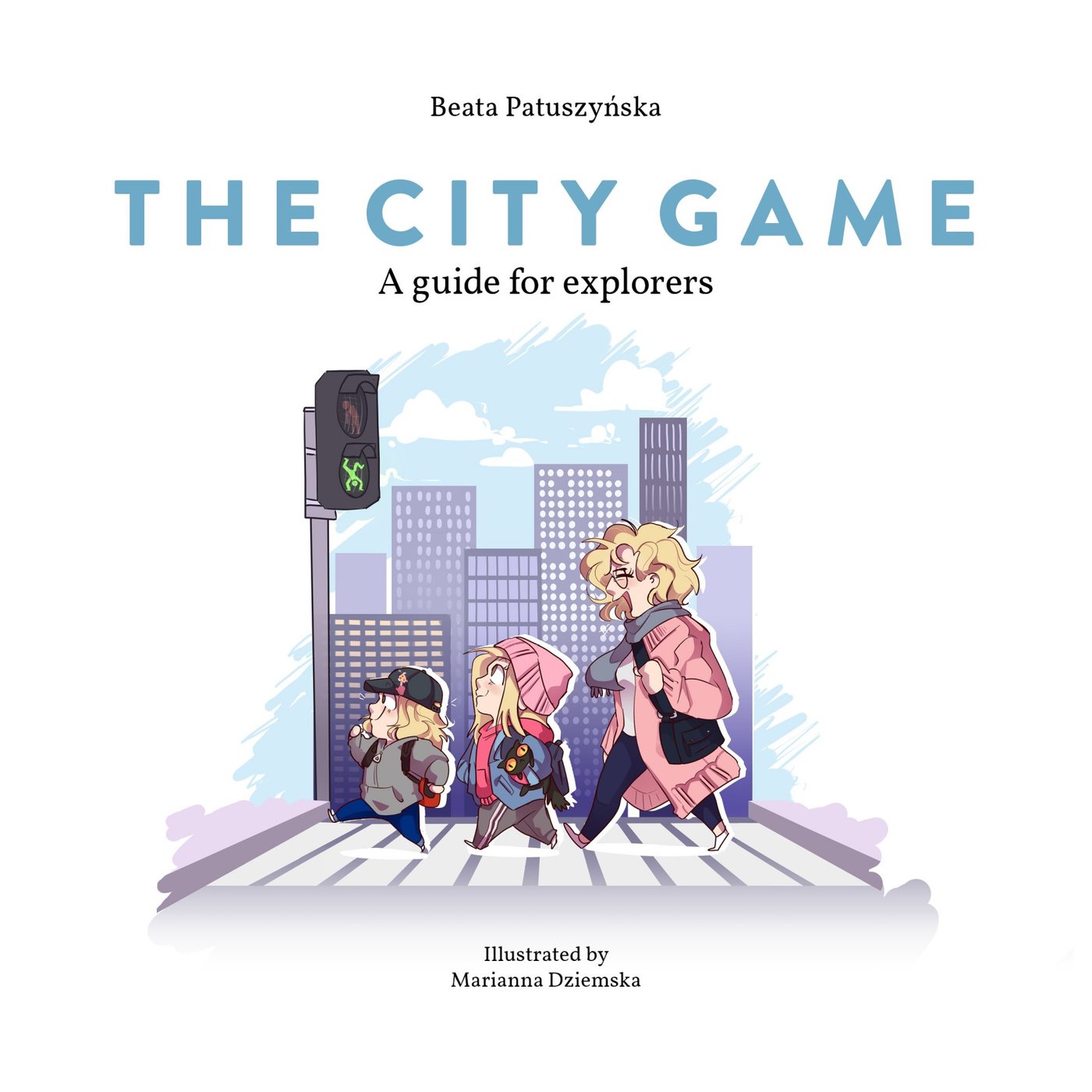
THE CITY GAME is a unique guide to city life seen through the eyes of a child preparing for independence. Hugo, a seven-year-old boy, walks to school every day with his mother, Mimi. He treats it as a city game. Step by step he learns, with his mum’s guidance, about the functions of different places and the incredible possibilities for shaping urban spaces. Along with Hugo, his sister Jana, and his friends, readers will uncover the secrets of the city. They will learn how to navigate challenges, understand why children’s maps diff er from adults’ maps, and recognize that some worlds in the game are unique. They will also encounter adults with superpowers capable of transforming cities. This story, co-created with children, emphasizes that our greatest strength in overcoming obstacles comes from our relationships and connections with others. Although cities are made up of buildings and streets, it is the people who give them their meaning.
| Kategoria: | Dla dzieci |
| Język: | Angielski |
| Zabezpieczenie: |
Watermark
|
| ISBN: | 9788397523258 |
| Rozmiar pliku: | 8,0 MB |
FRAGMENT KSIĄŻKI
Tim Gill
independent scholar and author of
“Urban Playground”Hi, I’m Hugo and I’m 7 years old. Even though I could already go to school on my own, my mum walks me there every day. I like it very much. We always play an urban game along the way: with other people, traffic lights, trams, bottle tops and stones on the pavement as part of it.
I call my mum Mimi. She’s the first woman to win three Nobel Prizes: one for loving me and my sister, one for saving Batty (a pancake), and one for helping us build a ferry for our teddy bears – Eddy and Ms. Sheepish. My mother seems to know everything about the city, teaching me the rules so that I can start playing the game on my own. You see, at the moment, I don’t go out and about without an adult.
Only once, when Mimi was sick, did I go to school only with Jana, my older sister. I was a little bit afraid and I was hoping that at the tram stop we would meet one of my friends and his mother. It didn’t happen though, and Jana managed very well. She’s already 10 years old and knows all about how to get to school. She was only a bit upset because there was a little confusion, and we ended up missing the tram she usually takes. She likes, you see, to be prepared for everything. Later in the evening she talked about it with mum, as she always does when something unexpected happens along the way. Mimi said we’d done the right thing waiting for the next tram and told Jana that if she ever misses a tram again, she can go one stop on another number and change, because there are more trams to school from the next stop.
Mum would like me to travel on my own next year. Luckily, because I’m in no rush, next year is after the summer holidays. Jana, even though she is already quite big, also prefers to go to school with Mimi and me. It’s because she gets bored alone. Even mum, and she has been travelling around the city for ages, admits that when we all are together it’s a lot more fun. We talk. We point out interesting things to each other. And we tell a lot of different stories.
At work, Mimi studies how cities are organized and why people don’t always feel good in them. Me and Jana help her. Mum talks a lot to us and other children. She hears from us that adults don’t always listen to us, which is something she reports back to the adults. She would like children to be happy in the city, which is why she wrote this book.1. Mum is talking to Jana
It all started when I was still in kindergarten.
“Would you be able to go to school alone?” mum asked Jana.
“Yes, it’s easy,” my sister replied confidently. She was 8 years old then, and for several weeks she had been practicing the trip the whole way with Mimi, just like I am now. Jana knew which tram she should take and where to get off. Mum told her what to do if the tram turned earlier. She told her which pedestrian crossing she should take special care at, because when the first man turns green, the one across the little pedestrian island is still red. Adults themselves don’t always remember this. Even Mimi herself makes the same mistake sometimes.
“Maybe you can go by yourself tomorrow then?” mum went on.
“No,” said Jana. Mum was surprised by the answer, and a little curious about the reasons why.
The two of them started walking the streets together, riding trams, buses and bicycles to find out more. Jana pointed out what she was comfortable with and what she didn’t like about traveling around the city. She had a camera with her and took pictures of things she thought were important. Then she showed them to mum. All children know the view shown in those photos, but Mimi was a touch surprised to see the world the way we do. The photos included adults’ bums, car bumpers and the steeps steps up onto the trams. Listening to Jana, Mimi also realized that adults rarely care about what children think. They often pay no attention to us, and some even act as if children are just there to bother them.
It was at this point that mum thought that she might prefer the city and adults to look different through the eyes of children. She started telling other adults about what we were seeing. Sometimes, mum goes very far from home to do it. At first, we wanted to travel with her on these trips because, obviously, we are part of the team. Mum told us, however, that there are no children where she goes. There are only adults.
“I’d rather go to school, at least I’ll be with my mates,” I said. Of course I’ll miss mum a little, but it’s better than being bored. Mimi can tell us everything when she gets back. And there’s sure to be a few presents, I thought to myself.