MENU
MENU
 Nasze ceny

 Przeczytaj fragment on-line

-
 W empik go
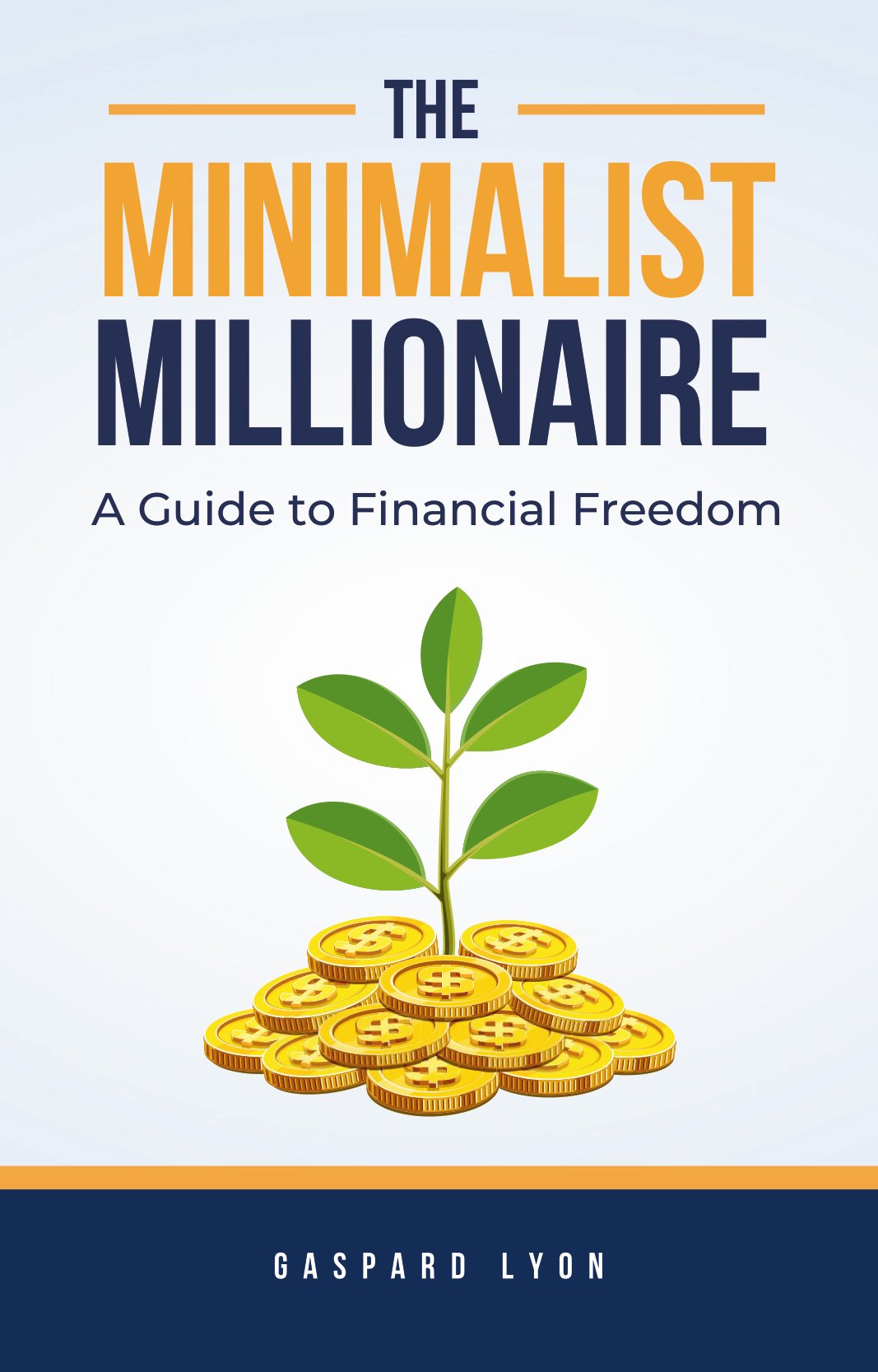
The Minimalist Millionaire. A Guide to Financial Freedom - ebook

The Minimalist Millionaire. A Guide to Financial Freedom - ebook
In a world often overshadowed by consumerism and financial complexity, "The Minimalist Millionaire: A Guide to Financial Freedom" invites you to embrace a refreshingly simple yet profoundly effective approach to achieving wealth and financial independence. This book serves as your trusted companion on a journey that promises not only financial prosperity but a more meaningful, unburdened, and fulfilling life. "The Minimalist Millionaire: A Guide to Financial Freedom" is more than just a financial guide; it's an invitation to simplify your financial life, reduce stress, and find contentment in the pursuit of wealth. Join the ranks of those who have unlocked the secrets of a simpler, wealthier, and more meaningful life. Ready to embark on the minimalist path to financial liberation? Start your journey here.
| Kategoria: | Careers |
| Język: | Angielski |
| Zabezpieczenie: |
Watermark
|
| Rozmiar pliku: | 121 KB |
FRAGMENT KSIĄŻKI
The information provided in this response and any content associated with it is intended for general informational purposes only. It should not be considered as personalized financial or investment advice. The financial landscape is complex and can vary greatly depending on individual circumstances, financial goals, and risk tolerance.
Before making any financial decisions, investments, or financial planning, it is essential to consult with a qualified financial advisor or professional who can take into account your unique situation and provide tailored advice. All investments and financial decisions carry inherent risks, and individuals should conduct their own research and exercise caution when making financial choices.
The information provided here is not a substitute for professional financial advice, and we do not endorse any specific investment products or strategies. We disclaim any liability for financial losses or other adverse outcomes resulting from actions taken based on the information provided. Individuals are encouraged to do their due diligence, seek expert guidance, and carefully consider their own financial circumstances when making financial decisions.
1
Are you ready to embark on a journey to financial freedom, wealth, and security? "The Minimalist Millionaire. A Guide to Financial Freedom" is your comprehensive guide to transforming your financial life. This book is not just about wealth; it's about empowering you to take control of your financial destiny and create a life of abundance and fulfillment.
Unlock a World of Benefits:
1. WEALTH CREATION: Discover proven strategies and insights to build your wealth
systematically, regardless of your current financial situation.
2. FINANCIAL INDEPENDENCE: Gain the knowledge and tools to break free from the
shackles of financial dependence, paving the way for a life of choices and autonomy.
3. CONFIDENCE AND PEACE OF MIND: Say goodbye to financial anxiety as you develop a
deep understanding of money management, investment, and risk mitigation.
4. HOLISTIC WELL-BEING: Learn how wealth extends beyond money and delve into the
connections between financial success, health, relationships, and overall life satisfaction.
5. LIFE-LONG LEARNING: Benefit from a wealth of knowledge on financial literacy and
personal development, empowering you to make informed decisions throughout your lifetime.
6. ENTREPRENEURIAL SUCCESS: For aspiring business owners, gain invaluable insights into
starting, growing, and managing a successful business while balancing financial well-being.
7. RISK MANAGEMENT: Equip yourself with the skills and strategies to navigate the
unpredictable financial landscape with confidence and poise.
8. TAX EFFICIENCY: Learn how to optimize your tax situation, potentially saving you
significant amounts of money over the long term.
9. LEGACY BUILDING: Understand the significance of estate planning and leave a lasting
legacy for future generations.
10. INSPIRATION FROM REAL STORIES: Explore real-life success stories of individuals who
have followed the roadmap, achieving financial independence and turning their dreams into reality.
"The Minimalist Millionaire. A Guide to Financial Freedom" is not just a book; it's a mentor, guiding you through every financial aspect of life.
2
Whether you're looking to pay off debt, secure your retirement, or embark on entrepreneurial ventures, this book provides the knowledge and motivation you need to succeed.
Begin your journey to financial freedom today. Empower yourself with the tools, strategies, and wisdom to create the wealth and security you desire. By the time you finish reading this book, you'll be equipped with a practical roadmap to navigate the world of finance confidently and embark on your path to a life of abundance and fulfillment.
3TABLE OF CONTENTS
INTRODUCTION
CHAPTER 1: BUILDING A WEALTH MINDSET
1.1 The Psychology of Wealth
1.2 Overcoming Limiting Beliefs
1.3 Cultivating a Growth Mindset
1.4 Developing a Positive Relationship with Money
CHAPTER 2: CREATING A FINANCIAL PLAN
2.1 Setting Clear Financial Goals
2.2 Budgeting and Managing Your Money
2.3 Building an Emergency Fund
2.4 Tackling Debt
CHAPTER 3: INCOME GENERATION
3.1 Maximizing Your Current Income
3.2 Exploring Additional Income Streams
3.3 Investing in Your Career and Skills
4INTRODUCTION
In a world often overshadowed by consumerism and financial complexity, "The Minimalist Millionaire: A Guide to Financial Freedom" invites you to embrace a refreshingly simple yet profoundly effective approach to achieving wealth and financial independence. This book serves as your trusted companion on a journey that promises not only financial prosperity but a more meaningful, unburdened, and fulfilling life.
UNLOCK A WORLD OF BENEFITS:
1. STREAMLINED WEALTH CREATION: Discover how minimalism can simplify your
financial life and accelerate your path to wealth. This book reveals how making intentional choices and living with less can lead to financial abundance.
2. EFFORTLESS MONEY MANAGEMENT: Learn how to declutter your finances, eliminate
unnecessary expenses, and design a minimalist budget that aligns with your wealth goals. This minimalist approach to money management minimizes stress and maximizes your financial well-being.
3. EMBRACING ESSENTIALISM: Understand the power of prioritizing the essential over the
excessive. Discover how to focus on what truly matters in your financial journey and life, leading to more clarity and purpose.
4. FRUGAL LIVING, ABUNDANT SAVINGS: Explore the art of frugal living and the practical
steps to reduce wasteful spending. Save more, spend less, and watch your wealth grow.
5. DEBT-FREE LIVING: This book provides a roadmap to debt elimination, helping you
break free from the chains of financial indebtedness, and experience the freedom of a debt-free life.
6. INVESTING WITH PURPOSE: Learn how to invest your money wisely and intentionally.
Minimalist investing strategies help you grow your wealth without unnecessary complexities.
7. EARLY RETIREMENT: "The Minimalist Millionaire" unveils the secrets of achieving
early retirement by living intentionally and making smart financial choices. It offers a blueprint for those looking to escape the daily grind and pursue their passions.
10
8. HOLISTIC WEALTH: This book emphasizes the interconnectedness of financial freedom with overall well-being, encouraging you to embrace a more fulfilling life beyond just money.
9. SUSTAINABLE WEALTH CREATION: Discover how minimalism can lead to more
sustainable and environmentally responsible financial choices, contributing to a healthier planet.
10. MINDFUL LEGACY BUILDING: The book offers insights into creating a legacy that
reflects your values and principles, ensuring that your wealth has a positive impact on future generations.
"The Minimalist Millionaire: A Guide to Financial Freedom" is more than just a financial guide; it's an invitation to simplify your financial life, reduce stress, and find contentment in the pursuit of wealth. By the time you finish reading this book, you'll have the knowledge and inspiration to transform your financial future while embracing the liberating philosophy of minimalism. Join the ranks of those who have unlocked the secrets of a simpler, wealthier, and more meaningful life.
Ready to embark on the minimalist path to financial liberation? Start your journey here.
11CHAPTER 1: BUILDING A WEALTH MINDSET
1.1 The Psychology of Wealth
"The Psychology of Wealth" refers to the study and understanding of how individuals' psychological and emotional factors are related to their financial well-being, income, and wealth accumulation. This field explores the complex interplay between human behavior, attitudes, beliefs, and financial success. Here are some key points and concepts related to the psychology of wealth: 1. MONEY MINDSET: People often have deeply ingrained beliefs and attitudes about
money. These beliefs can be either empowering or limiting. For example, some individuals may believe that wealth is attainable through hard work and wise financial decisions, while others may hold limiting beliefs that wealth is reserved for a select few.
2. FINANCIAL BEHAVIOR: The way people manage their money, make financial decisions,
and invest is influenced by their psychological makeup. This includes factors like risk tolerance, impulsivity, and financial goal-setting.
3. EMOTIONAL ASPECTS: Emotions play a significant role in financial decisions. Fear,
greed, overconfidence, and impatience can lead to irrational financial choices. Understanding and managing these emotions is crucial for long-term financial success.
4. SAVINGS AND SPENDING HABITS: How individuals allocate their income, save, and
spend are influenced by psychological factors. Some people struggle with overspending, while others may have difficulty saving or investing for the future.
5. PERCEPTION OF WEALTH: People often compare themselves to others when assessing
their financial status. This social comparison can lead to feelings of inadequacy or superiority, influencing one's financial decisions.
6. BEHAVIORAL ECONOMICS: This interdisciplinary field combines insights from
psychology and economics to understand how people make decisions in the real world. It recognizes that humans are not always rational economic actors and that psychological biases can influence choices.
12
7. FINANCIAL LITERACY: Understanding financial concepts and principles is a key component of financial well-being. Many people lack basic financial literacy, which can lead to poor financial decisions.
8. WEALTH INEQUALITY: The psychology of wealth also addresses issues of wealth
inequality and the impact it has on individuals and society. The psychological effects of living in a highly unequal society can be significant.
9. WEALTH AND HAPPINESS: Research in this field also explores the relationship between
wealth and happiness. While money can provide security and comfort, it doesn't necessarily guarantee happiness, and the pursuit of wealth can have its own psychological challenges.
10. FINANCIAL THERAPY: Some individuals seek the help of financial therapists or
psychologists to address their money-related issues, including money-related stress, compulsive spending, and financial conflicts within relationships.
Understanding the psychology of wealth is essential for individuals looking to improve their financial well-being and for professionals, such as financial advisors, who want to better assist clients in making sound financial decisions. It also has broader implications for policy-makers and economists as they consider the social and economic impacts of financial behaviors and attitudes on a larger scale.
1.2 Overcoming Limiting Beliefs
Overcoming limiting beliefs is a crucial step toward personal growth, success, and achieving one's goals. Limiting beliefs are negative or self-sabotaging thought patterns that can hinder your progress and limit your potential. Here are some steps to help you overcome limiting beliefs: 1. IDENTIFY YOUR LIMITING BELIEFS:
○ The first step is to become aware of your limiting beliefs. Pay attention to your
thoughts, especially those that consistently undermine your confidence or goals.
○ Write down these beliefs. This makes them more tangible and easier to work
with.
13
2. QUESTION YOUR BELIEFS:
○ Challenge the validity of your limiting beliefs. Ask yourself, "Is this belief
based on facts, or is it just a negative assumption?"
○ Consider the source of these beliefs. Are they rooted in past experiences,
upbringing, or societal conditioning?
3. SEEK EVIDENCE TO COUNTER BELIEFS:
○ Look for evidence that contradicts your limiting beliefs. Find examples of
people who have succeeded despite facing similar challenges.
○ Consider your own past successes and achievements. How have you proven
your limiting beliefs wrong before?
4. REFRAME YOUR BELIEFS:
○ Once you've challenged your limiting beliefs, reframe them into positive,
empowering statements.
○ For example, if your limiting belief is "I'm not good enough," reframe it as "I
am capable of growth and improvement."
5. AFFIRMATIONS AND POSITIVE SELF-TALK:
○ Use positive affirmations to reinforce your new, empowering beliefs.
Repeatedly tell yourself these affirmations to replace negative self-talk.
○ For example, if your new belief is "I am confident and capable," repeat it
daily.
6. VISUALIZATION AND MENTAL IMAGERY:
○ Visualize yourself succeeding and achieving your goals. This helps rewire
your subconscious mind and makes your new beliefs more tangible.
○ Imagine the feelings of success and fulfillment that will come with
overcoming your limiting beliefs.
7. SET REALISTIC GOALS:
○ Break down your goals into smaller, manageable steps. Achieving these
smaller goals can boost your confidence and demonstrate your capabilities.
○ Celebrate your successes along the way.
8. SURROUND YOURSELF WITH POSITIVE INFLUENCES:
○ Spend time with people who support and encourage your growth. Positive
relationships can help counteract the impact of limiting beliefs.
○ Seek out mentors or role models who can inspire and guide you.
14
9. SELF-COMPASSION:
○ Be kind and compassionate toward yourself. Remember that everyone has
their own struggles and limiting beliefs.
○ Treat yourself with the same kindness and understanding you would offer a
friend.
10. CONTINUOUS LEARNING AND PERSONAL DEVELOPMENT:
○ Invest in your personal growth through education, self-help resources, and
self-improvement practices.
○ Learning new skills and gaining knowledge can boost your confidence and
dispel limiting beliefs.
11. PROFESSIONAL HELP:
○ If your limiting beliefs are deeply ingrained or causing significant distress,
consider seeking the help of a therapist, counselor, or coach who specializes in personal development and mindset.
Overcoming limiting beliefs is an ongoing process. It requires self-awareness, dedication, and patience. As you work on changing your beliefs and thought patterns, remember that setbacks may occur, but they are part of the journey. With persistence and a positive mindset, you can gradually replace limiting beliefs with empowering ones and achieve your personal and professional goals.
1.3 Cultivating a Growth Mindset
Cultivating a growth mindset is a powerful concept developed by psychologist Carol Dweck. It's the belief that one's abilities and intelligence can be developed and improved through dedication, effort, and learning. A growth mindset can have a significant impact on personal development, resilience, and success. Here's how you can cultivate a growth mindset:
15
1. EMBRACE CHALLENGES:
○ View challenges as opportunities to learn and grow. Rather than avoiding
difficult tasks, confront them with the belief that you can improve and develop your abilities.
2. PERSIST IN THE FACE OF SETBACKS:
○ Instead of giving up when you encounter failure, see it as a chance to learn and
develop. Understand that setbacks are part of the learning process.
3. SEE EFFORT AS THE PATH TO MASTERY:
○ Believe that effort is the way to mastery. Recognize that hard work and
dedication are key factors in achieving your goals.
4. LEARN FROM CRITICISM:
○ Accept constructive criticism as a means to improve, not as a personal attack.
Use feedback to make necessary adjustments and become better.
5. FIND INSPIRATION IN OTHERS' SUCCESS:
○ Instead of feeling threatened or envious of others' achievements, see them as a
source of inspiration. Learn from their success and understand that you can achieve similar results with dedication.
6. EMBRACE LEARNING AND CONTINUOUS IMPROVEMENT:
○ Develop a love for learning and a curiosity about the world. Continuously seek
new knowledge and skills to foster personal and professional growth.
7. CULTIVATE RESILIENCE:
○ Develop the ability to bounce back from adversity. A growth mindset helps
you see challenges as opportunities for resilience and adaptation.
8. FOSTER A POSITIVE ATTITUDE:
○ Maintain a positive outlook even in the face of difficulties. Your attitude plays
a significant role in your ability to overcome obstacles.
9. BELIEVE IN YOUR ABILITIES:
○ Have confidence in your capacity to improve and adapt. Trust in your ability
to learn and grow over time.
10. SET GOALS AND WORK TOWARD THEM:
○ Establish clear, achievable goals and create a plan to work toward them. Break
down larger objectives into smaller, manageable steps.
16
11. SEEK OUT CHALLENGES:
○ Step out of your comfort zone and take on new challenges. This is where the
most significant growth occurs.
12. CELEBRATE EFFORT AND PROGRESS:
○ Celebrate the effort you put into your work and the progress you make, even if
you haven't reached your final goal yet.
13. MODEL A GROWTH MINDSET FOR OTHERS:
○ Encourage a growth mindset in those around you, such as your family, friends,
and colleagues, by being a positive example.
14. SEEK FEEDBACK AND SELF-REFLECT:
○ Regularly ask for feedback and engage in self-reflection. Use this feedback to
guide your growth and improvement.
15. PRACTICE PATIENCE:
○ Understand that personal development and growth take time. Be patient with
yourself and stay committed to the process.
Cultivating a growth mindset is a continuous journey that can lead to personal and professional development. It can help you become more resilient, adaptable, and open to new opportunities. By embracing the belief that you can learn and improve, you open the door to a world of possibilities and self-discovery.
1.4 Developing a Positive Relationship with Money
Developing a positive relationship with money is essential for financial well-being and overall life satisfaction. Here are some strategies to help you build a healthier and more constructive connection with money: 1. SELF-AWARENESS:
○ Begin by reflecting on your current beliefs and attitudes towards money.
Identify any negative or limiting beliefs that may be affecting your financial decisions.
17
2. FINANCIAL EDUCATION:
○ Invest time in learning about personal finance, budgeting, saving, investing,
and other financial topics. The more you understand, the more confident and in control you'll feel.
3. SET CLEAR FINANCIAL GOALS:
○ Establish specific and achievable financial goals. Having a sense of purpose
and direction with your money can make it easier to manage and save.
4. BUDGETING:
○ Create a budget to track your income and expenses. A budget can help you
manage your money effectively, avoid overspending, and save for the future.
5. EMERGENCY FUND:
○ Build an emergency fund to provide a safety net for unexpected expenses.
Knowing you have financial security in place can reduce stress and anxiety.
6. INVEST IN YOURSELF:
○ Consider investments in your education, skills, and personal development.
This can lead to increased earning potential and financial stability.
7. AVOID IMPULSE SPENDING:
○ Before making a purchase, take a moment to consider if it aligns with your
financial goals and priorities. Avoid impulse buying and focus on mindful spending.
8. DEBT MANAGEMENT:
○ Develop a plan to manage and reduce any existing debt. High-interest debt can
be a significant source of financial stress.
9. AUTOMATE SAVINGS:
○ Set up automatic transfers to a savings or investment account. This ensures
that you consistently save a portion of your income.
10. INVEST WISELY:
○ Learn about different investment options and consider long-term investments
that align with your goals, such as retirement accounts or diversified portfolios.
11. FINANCIAL BOUNDARIES:
○ Set clear financial boundaries in your personal relationships. Be open and
honest about financial expectations, whether with family, friends, or a partner.
18
12. GRATITUDE AND ABUNDANCE MINDSET:
○ Practice gratitude for what you have and cultivate an abundance mindset.
Focus on what you can achieve with your resources rather than what you lack.
13. FINANCIAL PLANNING:
○ Consider working with a financial advisor to create a comprehensive financial
plan that aligns with your goals and helps you make informed decisions.
14. REGULARLY REVIEW YOUR FINANCES:
○ Schedule regular check-ins with your financial situation to track your
progress, make adjustments, and stay on top of your goals.
15. CHARITABLE GIVING:
○ Consider giving to causes or organizations that resonate with your values. Acts
of generosity can enhance your relationship with money and provide a sense of purpose.
16. CELEBRATE FINANCIAL MILESTONES:
○ Celebrate your financial achievements, whether big or small. Recognizing
your progress can motivate you to continue improving your relationship with money.
17. SEEK SUPPORT AND COUNSELING:
○ If you have deep-seated issues related to money, consider seeking the help of a
financial therapist or counselor to address and work through these issues.
Developing a positive relationship with money is a continuous journey. It involves both practical financial management and personal growth. Over time, a healthier money mindset can lead to reduced stress, increased financial security, and a more fulfilling life.
19