MENU
MENU
 Nasze ceny

 Przeczytaj fragment on-line

-
 nowość
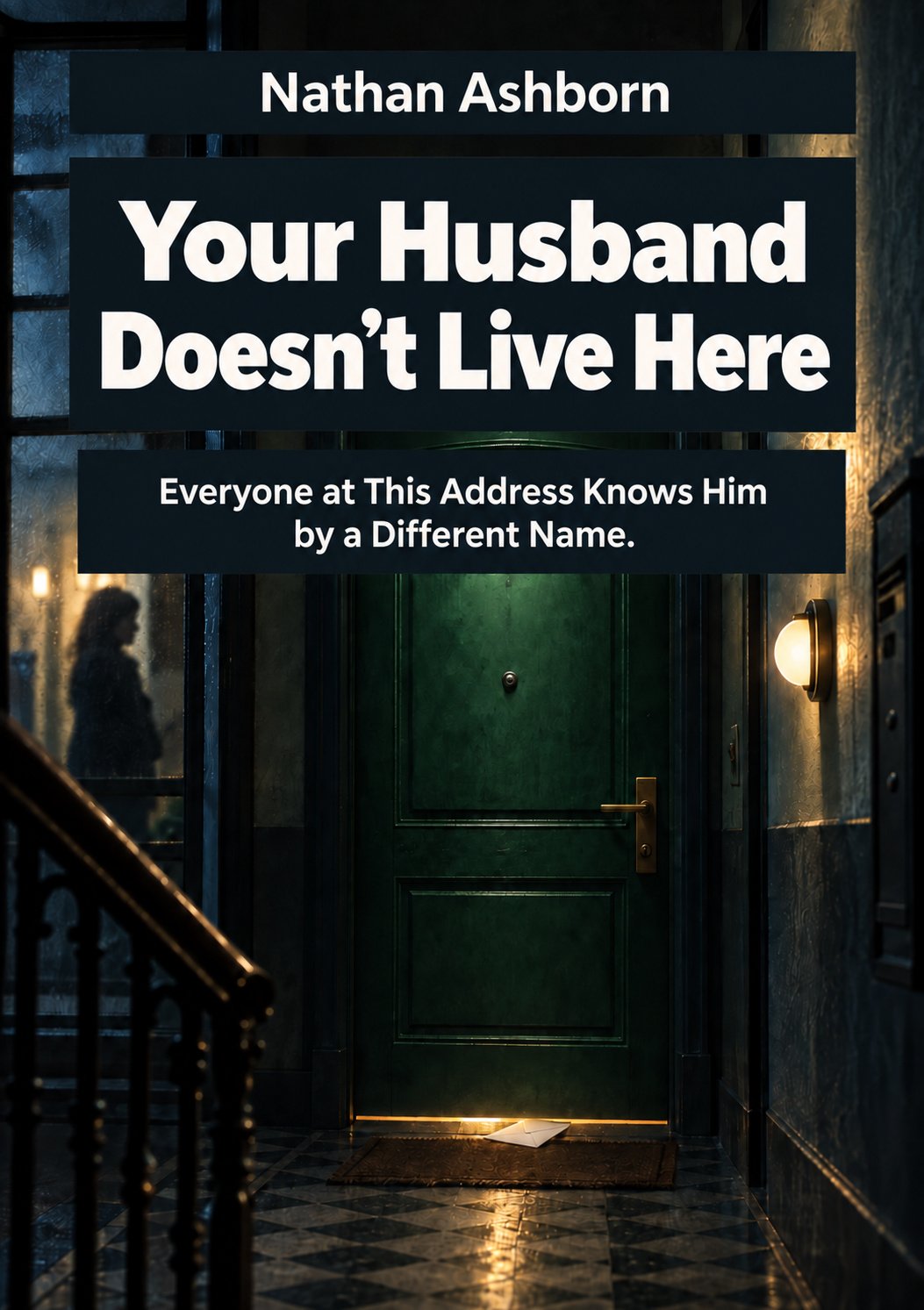
Your Husband Doesn't Live Here - ebook
Your Husband Doesn't Live Here - ebook
Marta Rybacka thinks she knows the man she has been married to for nine years. Then an anonymous note sends her to an address where strangers know her husband as Adam Wysocki. A family he claimed was dead is waiting behind the door, and an old missing-person case leads back to him. As Marta follows a trail of photographs, hidden documents and conflicting testimonies, every answer exposes another lie. Someone is watching her. Someone wants the past reopened. And the closer she gets to the truth about Adam, the more dangerous it becomes to decide who Paweł really is. A psychological thriller about identity, marriage, buried loyalties and the cost of discovering that the person beside you may have been telling the truth only in carefully chosen pieces.
Ta publikacja spełnia wymagania dostępności zgodnie z dyrektywą EAA.
| Kategoria: | Thriller |
| Język: | Angielski |
| Zabezpieczenie: |
Watermark
|
| Rozmiar pliku: | 1,7 MB |
FRAGMENT KSIĄŻKI
If Paweł had answered his phone, Marta would never have gotten out of the car on Leszczynowa Street.
Now she stood in front of a three-story apartment building on the outskirts of Poznań, holding her phone in one hand and the paper envelope she had found beneath the doormat that morning in the other. The rain was barely falling. It seemed suspended in the air instead, settling over her hair in a fine layer of damp. For the sixth time that afternoon, her screen informed her that the call had gone to voicemail.
Paweł wasn't answering.
That alone should not have worried her. He worked in sales and spent half his life in the car, in meetings, in hotels and restaurants whose names Marta had stopped trying to remember. Sometimes he disappeared for four hours, sometimes eight. Usually, though, he sent a message first.
That morning, he had written only: "Warsaw. Back tomorrow evening. Love you."
Then she had found the envelope outside the door.
No stamp. No sender's name. On the front, someone had written by hand:
FOR MARTA RYBACKA.
Inside was a piece of paper with an address.
14 Leszczynowa Street, apartment 7.
And one sentence.
Ask who Adam Wysocki is.
For the first half hour, she had been convinced it was a mistake. Then she thought it might be a joke. After that, someone from Paweł's work came to mind - an unhappy client, perhaps, or an ex he had never told her about. It was only later that she noticed something that made her enter the address into her navigation app instead of throwing the note away.
The handwriting.
She didn't recognize it, but she recognized the way the number seven had been written. With a short horizontal stroke through the middle.
Paweł wrote his sevens exactly the same way.
Marta entered the stairwell before she could convince herself to go back to the car.
The building smelled of detergent, wet coats, and boiled cabbage. On the wall beside the mailboxes hung a board listing apartment numbers and residents' names. Some had been printed, others written in pen.
Beside number seven:
A. WYSOCKI
Marta stared at the name longer than it took to read two words.
She took out her phone and photographed it.
That was the first moment she thought she should call the police.
The thought immediately made her feel ridiculous. What would she say? Someone had left her an address? A stranger's name was written beside a mailbox? Her husband had not answered his phone for a few hours?
She climbed to the first floor.
Apartment seven was on the left. The door was dark green and looked recently painted. Beside the peephole, someone had attached a small ceramic swallow.
Marta knew that swallow.
Not that exact one.
One just like it.
Two identical swallows hung in their own house above the doors leading onto the terrace. They had bought them three years earlier during a weekend in Kazimierz Dolny. Paweł had insisted, while Marta joked that they looked like decorations from his grandmother's house.
She pressed the bell.
For several seconds, nothing happened.
Then she heard footsteps.
A woman of perhaps sixty opened the door. She wore a gray sweater, and her glasses hung from a thin chain around her neck. She looked at Marta, then at the envelope in her hand.
Something in her face changed almost imperceptibly.
"Yes?"
Marta cleared her throat.
"I'm sorry. I'm looking for Adam Wysocki."
The woman did not answer at once.
"He's not here."
"Does he live here?"
This time the reaction was clearer. The woman frowned.
"And you are?"
Marta could have lied. Said she was from the housing association, the building administration, or that she had the wrong apartment. Instead, she heard herself say:
"Marta Rybacka."
Her surname had an effect she had not expected.
The woman stepped back.
"Please leave."
"I only want to speak to Mr. Wysocki."
"I told you, he's not here."
"When will he be back?"
The door began to close.
Marta slid her hand between the door and the frame.
"Please, wait. Someone gave me this address."
The woman stopped the door.
"Who?"
"I don't know."
Her gaze dropped to the envelope.
"Someone left it outside my door this morning."
For a moment, no sound came from inside the apartment. Marta caught a glimpse of the hallway: wooden flooring, a black umbrella, a shoe rack. A mirror hung on the wall.
And beneath it stood a pair of men's shoes.
Brown leather, with a darker mark near the left heel.
Marta had bought Paweł an identical pair for his fortieth birthday.
She felt her fingers tighten around the edge of the envelope.
"Those shoes..."
The woman glanced behind her.
And then she became genuinely frightened.
Not surprised.
Frightened.
"Please leave," she said more quietly.
"Who is Adam Wysocki?"
"I shouldn't be talking to you."
"Why?"
The woman closed her eyes for a second, as if trying to make a decision.
Then she looked directly into Marta's face.
"Because I don't know why you've come here."
"I just told you..."
"I know what you told me."
"Then please answer me. Who is Adam Wysocki?"
The woman said nothing.
Marta took out her phone.
The contact photo she had assigned to Paweł was still on the screen. She had taken it the previous summer by a lake. Paweł was sitting on a jetty, squinting into the sun. His hair was shorter than it was now, but otherwise he looked exactly the same.
She turned the screen toward the woman.
"Do you know this man?"
There was no hesitation.
It was the absence of hesitation that stole Marta's breath.
The woman looked at the photograph and went pale.
"Where did you get that picture?"
"He's my husband."
The woman looked up.
"No."
"Excuse me?"
"That's impossible."
Marta almost laughed, but no sound came from her throat.
"We've been married for nine years."
The woman gripped the door with both hands.
"What did you say his name was?"
"Paweł Rybacki."
The silence stretched.
Somewhere on the floor above, a dog barked. From the street came the sound of a passing bus.
The woman looked at the photograph again.
"Your husband doesn't live here."
Marta felt an absurd rush of relief.
"Good. Then apparently someone's decided to play some kind of..."
"Paweł Rybacki doesn't live here," the woman interrupted.
Marta lowered the phone.
"I understand."
"No." The woman shook her head. "You don't understand."
She turned, reached for a chest of drawers in the hallway, and took a photograph from one of the drawers. For a moment, she held it against her chest as though trying to decide whether she should show it.
Then she handed it to Marta.
The photograph showed six people seated around a table on a terrace. It had to have been taken in summer. Two children, a dark-haired woman of about forty, an older married couple, and two men.
One of them was Paweł.
Not someone who looked like Paweł.
Paweł.
He was wearing the pale blue shirt Marta had ironed three weeks earlier before his trip to Wrocław.
Beside him sat the dark-haired woman. Her hand rested on his shoulder.
On the back of the photograph, someone had written in black pen:
July 2026. Adam's birthday.
Marta read the words twice.
"It's been edited."
The woman did not answer.
"This is some sick joke."
"Marta..."
"How do you know my first name?"
Only after she said it did she realize.
The older woman froze.
Marta stepped back.
"I never told you my first name."
"Please leave."
The door began to move.
"Who are you?"
"Please..."
"Who is Adam?"
The woman looked at her through the narrowing gap.
"The man in the photograph."
"That's Paweł."
"To you."
The door slammed shut.
A second later, Marta heard the lock turn.
She stood in the stairwell, clutching the photograph the woman had apparently forgotten to take back.
The phone vibrated in her other hand.
Her husband's name appeared on the screen.
Paweł.
Marta answered immediately.
"Where are you?"
For a brief moment, all she could hear was the hum of a car.
Then came his calm, familiar voice.
"I told you. Warsaw."
Marta looked at the green door of apartment seven.
"Paweł, who is Adam Wysocki?"
Silence on the other end.
Not a long one.
Maybe two seconds.
Enough.
"Marta," he said at last.
And for the first time in nine years of marriage, she heard something in his voice she could not mistake for anything else.
Fear.
"Where exactly are you?"CHAPTER 1 - THE SURNAME SHE DIDN'T KNOW
Marta was still holding the phone to her ear even though Paweł's question had already faded into silence.
"Where exactly are you?"
He wasn't raising his voice. He didn't even sound upset in any of the ways she had learned to recognize over nine years of marriage. When Paweł was angry, he spoke faster. When he was afraid, he did the opposite - he slowed down, as though every word had to be turned over and examined from all sides before he let it out.
That was how he was speaking now.
Marta looked at the closed door of apartment seven, then at the photograph in her hand.
"Answer me first."
"Marta, please. Where are you?"
"You already know."
Silence on the other end.
She didn't need confirmation.
"You're on Leszczynowa Street," he said at last.
It wasn't a question.
Marta stepped down one stair.
"How do you know?"
"Because if someone told you about Adam Wysocki, that's exactly where they wanted to send you."
"Who?"
"Get out of the building."
"Paweł..."
"Leave. Now."
His tone was so firm that for a moment she almost obeyed on instinct. He had spoken the same way several years earlier, during a storm, when he'd stopped her from touching a downed electrical cable on the neighbors' property. There had been no room for argument in his voice then, either.
Except today, he was the live wire.
"Is that your mother?"
Silence.
"The woman in apartment seven," Marta added. "Is she your mother?"
Paweł exhaled.
"Yes."
Marta put her free hand on the banister.
For nine years, she had heard a different version. Paweł's mother had died when he was in his twenties. His father even earlier. He had no siblings. He wasn't in touch with any extended family. It wasn't something they discussed often because Marta had learned not to push. Paweł usually answered with a few sentences, changed the subject, and she had accepted that as a boundary she ought to respect.
Now, on the other side of the green door, stood a dead woman.
"You told me she was dead."
"I know."
"Then why is she standing five meters away from me?"
"We'll talk about everything, but not there."
"Are you in Warsaw?"
Another pause.
"Yes."
Marta checked the time.
Five twenty-three.
"So you'll be back tomorrow?"
"I'm coming back today."
"Three hours ago you said you had meetings through tomorrow."
"I'll cancel them."
"What meetings?"
"Marta."
"What company?"
"What?"
"If you're in Warsaw, tell me where. Hotel? Office? Client?"
"Let's not do this over the phone."
"We've been doing this over the phone since the moment I found out my husband is called Adam Wysocki."
A door opened on the floor above. Marta heard footsteps, then an elderly man in a navy jacket passed her with a brief hello. When he reached the half landing, he glanced back.
Not at Marta.
At the photograph in her hand.
He stopped.
"Excuse me," Marta said. "Do you know Adam Wysocki?"
The man looked at her more carefully.
"Adam?"
"Yes."
"What happened?"
Paweł's voice came through the phone.
"Who are you talking to?"
Marta moved the phone away from her ear.
"Does he live here?"
The older man nodded toward the green door.
"Helena is his mother. But Adam hasn't lived here in years."
"Does he visit often?"
The man shrugged.
"More often lately."
"Marta, get out of there," Paweł said through the phone, loudly enough for the neighbor to hear.
The man glanced at the screen in her hand.
"Adam?" he asked.
Marta said nothing.
She didn't have to.
The man's face hardened. He went downstairs without another word.
Paweł swore under his breath.
"Listen to me. Go home. Don't talk to anyone else. I'll be there before nine."
"If you're really in Warsaw."
"I'll be there."
"And if you don't come?"
"I will."
He ended the call.
Marta remained on the stairs for another moment. Part of her wanted to ring the bell of apartment seven again and refuse to leave until Helena Wysocka opened the door. Another part understood that this address had stopped being a random point on a map. Paweł knew it. The neighbors knew Paweł. His mother knew Marta before Marta had given her first name.
Someone had set this up.
She put the photograph in her handbag and went downstairs.
Outside, it was almost dark. Autumn dusk arrived too early now, as though the day were ending before all its obligations had been completed. Her car was parked across the street. A dozen or so meters farther down, a silver Opel stood by the curb with its lights on.
Marta looked toward the driver.
A man. Baseball cap. His face partly hidden behind the windshield pillar.
She looked away.
She didn't want to start seeing danger in everything.
She got into the car, locked the doors, and only then took out the photograph. In the glow from her phone screen, she examined it more carefully.
Paweł - Adam - sat at the table between the dark-haired woman and an older man. Marta recognized the older woman immediately. Helena Wysocka looked different in the picture than she had moments ago, but it was unquestionably her.
Then Marta noticed something she had missed before.
Paweł was wearing his wedding ring.
Their wedding ring.
She used her phone camera to enlarge the image. The dark-haired woman's hand rested on his shoulder, but Paweł wasn't touching her. Across the table sat two children, perhaps eight and eleven years old.
July 2026.
Not three years ago. Not before their marriage.
Three months ago.
Paweł really had spent several days away from home in July. Wrocław first, then Zielona Góra. Marta remembered because the garden pump had broken that week, and she'd joked over the phone that he always managed to leave town exactly when something stopped working.
He hadn't been in Wrocław.
At least not the entire time.
She slipped the photograph into the inner pocket of her handbag.
The silver Opel was still at the curb.
Marta pulled away. Two intersections later, she glanced in the rearview mirror. The Opel was behind her.
At the next roundabout she turned right, even though the navigation told her to continue straight.
The Opel turned right as well.
An unpleasant pressure tightened beneath Marta's ribs.
She drove another kilometer and pulled into the parking lot of a supermarket. She parked close to the entrance, got out, and walked inside among people pushing carts and children trying to persuade their parents to buy sweets.
Through the glass, she watched the road.
The Opel drove past.
It didn't slow.
Only then did she realize she had been holding her breath.
Maybe no one had been following her at all. Thousands of silver cars drove through Poznań every day. The man could have been heading the same way. He could have needed the same turn.
Marta bought a bottle of water she didn't need, then went back to her car.
She reached home a few minutes after seven.
Their house in Strzeszyn looked exactly as it had that morning. A mug stood beside the coffee machine in the kitchen. Paweł's jacket hung over the back of a chair. A shopping list, written in his distinctive handwriting, was still attached to the refrigerator.
Sevens crossed with a horizontal line.
Marta took the note down.
She compared it with the photograph she had taken of the note from the envelope.
The matching seven proved nothing. Thousands of people wrote the number that way. But the capital A in Adam had the same slightly shortened left stroke as Paweł's.
She sat at the table.
Before leaving that afternoon, she had hidden the original envelope in the desk drawer. Now she brought it to the kitchen and examined it again.
FOR MARTA RYBACKA.
The handwriting was blocky and uneven, as if whoever had written it had deliberately forced themselves to write more slowly than usual.
Paweł could have left the envelope.
But why would he send his own wife to the mother whose existence he had hidden from her?
Her phone vibrated.
Paweł: I'll be there around 8:40. Please wait for me.
She replied with one word.
Fine.
Then she opened her browser and typed:
"Adam Wysocki Poznań."
The first results meant nothing. A doctor, a photographer, a university researcher, several men on professional networking sites. She added Paweł's age.
Forty-three.
Nothing.
She added "Leszczynowa."
An old document from the residents' association appeared with Helena Wysocka's name on it. No Adam.
Without really knowing why, Marta searched his name with the word "missing." Maybe because thrillers had given people the terrible habit of expecting a crime where an ordinary lie would have been enough.
No results.
"Adam Wysocki accident."
Several unrelated articles.
"Adam Wysocki 2015 Poznań."
On the second page of results she found a link to an old discussion forum.
She clicked.
The page loaded slowly. The thread concerned a local criminal case from more than a decade earlier. Most of the comments had been deleted.
One name caught her attention.
Karolina Bielska.
Marta read part of a comment:
"...last seen near Głogowska Street. Fiancé Adam W. claimed..."
She stopped breathing.
She clicked the next link.
The page no longer existed.
She returned to the search engine.
"Karolina Bielska Adam Wysocki."
This time there were more results.
The first article was dated June 2015.
Marta opened it.
A photograph of a young woman with long dark hair appeared on the screen.
The headline read:
SEARCH CONTINUES FOR 29-YEAR-OLD KAROLINA BIELSKA. FIANCÉ WAS LAST PERSON TO SEE HER.
Marta read the first two paragraphs.
Karolina Bielska disappeared during the night of June 6 to June 7. Her last confirmed contact was with her fiancé, Adam Wysocki. Police questioned the man. No charges were filed.
At the bottom was a small photograph.
Adam Wysocki was leaving a building with one hand raised to shield his face.
He was younger.
His hair was longer.
But Marta was looking at her husband.
She heard a car pull into the driveway.
She closed the laptop.
Paweł entered the house at eight thirty-eight.
He wore a dark coat and the same shirt he had left in that morning, and he looked like a man returning from an ordinary day at work. It was only after he closed the door that Marta noticed the tension in his jaw.
"Where's the envelope?"
Not hello.
Not I'm sorry.
Marta stood beside the kitchen island.
"That's the first thing you want to ask me?"
Paweł took off his coat.
"I want to know who did this."
"I want to know who my husband is."
"Marta..."
"What's your name?"
He looked at her.
"Paweł."
"What was your name?"
This time, he didn't try to avoid answering.
"Adam."
The word sounded almost ordinary.
"Adam Wysocki?"
"Yes."
"How long have you been Paweł Rybacki?"
"Eleven years."
"Did you change your name legally?"
"Yes."
"Why?"
He sat down. Marta remained standing.
"My family was complicated."
"Every family is complicated. Most people don't change their entire name because of it."
"I wanted to start over."
"You told me your mother was dead."
Paweł rubbed a hand over his face.
"That was a mistake."
"A mistake is saying someone is sixty-two when they're sixty-three."
"I know."
"For nine years, you let me believe you had no family."
"I didn't have a normal relationship with them."
"The photograph is from July."
His hand stopped halfway across his face.
Marta took out the photograph.
Paweł stood.
He didn't move toward her to take it. Seeing it was enough to drain some of the color from his face.
"Where did you get that?"
"Your mother gave it to me."
"Helena gave you that?"
It was the first time he had called her by name.
"She took it out of a drawer."
Paweł took the photograph. He looked at the front, then turned it over.
"Damn it."
"Who are these people?"
"My mother. My father. My sister Agata, her husband Marcin, and their children."
Marta felt something inside her sink still deeper.
"You have a sister."
"Yes."
"Your father is alive too."
"Yes."
"Anyone else you'd like me to point at?"
"No."
"Are you sure? Maybe you've got a brother living in the garage?"
"Marta, stop."
She gave a short laugh.
"I'm the one who should stop?"
Paweł put the photograph down.
"I don't have another family. I don't have another wife. I don't have children you don't know about. Agata is my sister. Those children are my niece and nephew."
"Is that supposed to make me feel better?"
"No. It's supposed to be the truth."
"One truth after nine years."
Paweł pressed his lips together.
"I cut contact with my family before I met you. Later, there was some contact again when my mother got sick. I didn't tell you because the longer I waited, the harder it became to say anything."
Marta thought of the article on her laptop.
"What was wrong with her?"
"Her heart. She had surgery two years ago."
"And in July?"
"My father was turning seventy. I went because my mother asked me to."
"So you weren't in Wrocław the entire time."
"No."
"How many other business trips weren't business trips?"
Paweł didn't answer.
Which meant: more than one.
Marta felt as though she were beginning to see their marriage as an apartment after a burglary. Everything was still where it belonged, but the mere fact that it remained there no longer meant nobody had touched it.
"Why did you change your name?"
"I told you."
"No. You said your family was complicated."
"It was."
"How complicated?"
Paweł looked toward the window. The glass reflected the kitchen, two people standing several meters apart, and the light above the island.
"My father was a man I spent most of my life trying to get away from. He controlled everything. Money, work, relationships. When I was thirty-two, things happened between us that made me want nothing more to do with him. With any of them."
"And that's why you became Paweł?"
"I wanted them to stop finding me."
Marta studied him for a long moment.
"And Karolina Bielska?"
Paweł went still.
That reaction was different from all the others.
He didn't look like a man caught in another lie.
He looked as though someone had opened a door behind which he'd kept something locked away for years.
"Where did you find that name?"
"Online."
"What exactly did you read?"
"Enough."
Paweł walked to the table and sat down.
"Marta, listen to me very carefully now."
"I've been listening to you for nine years."
"Karolina disappeared in 2015. I was her fiancé."
Marta's mouth went dry.
"What happened to her?"
"I don't know."
"The police don't know either?"
"No."
"They never found her?"
"No."
"And you were the last person to see her."
Paweł closed his eyes.
"Yes."
Marta waited.
"We had a fight that night," he said. "Karolina left. The last time I saw her was around eleven. Then she disappeared."
"And a few months later you changed your name?"
"Almost a year later."
"Why didn't you tell me about her?"
"Because by the time I met you, I was already someone else."
"That's not an answer."
"I know."
"Did they suspect you?"
Paweł looked at her.
"Yes."
The word landed between them more heavily than anything she had heard before.
"And you?"
"What about me?"
"Did you do something to her?"
"No."
The answer was immediate.
Marta wanted to feel relieved.
She didn't.
"Why did someone send me to Leszczynowa today?"
"I don't know."
"You're lying."
"Not this time."
"How did you know I was there?"
"Because if someone wants to dig up Adam Wysocki, they'll start with my old address."
"Your mother knew my name."
"She knows about you."
"Since when?"
"From the beginning."
For a moment, Marta almost didn't understand.
"Your mother knew your wife existed, but your wife didn't know your mother existed."
Paweł lowered his eyes.
"Yes."
Marta walked toward the hallway.
"Where are you going?"
"To the guest room."
"We need to finish this conversation."
"Not tonight."
"Tonight of all nights."
She turned around.
"No. Today I found out your mother is alive, your father is alive, you have a sister, you used to have another name, and you were the last person to see a missing woman. That's enough for one day."
Paweł took a step toward her.
"The envelope. Where is it?"
Marta looked at him.
"Safe."
"I need to see it."
"Tomorrow."
"Marta, whoever left it knows your address."
"So do you."
"That's not funny."
"I'm not joking."
Something in his eyes made her stay for another second.
"Lock all the doors and windows tonight," he said.
"Why?"
Paweł took a moment before answering.
"Because someone who only wanted to tell you the truth about my name could have sent a message. They didn't have to come to our house."
Marta wanted to ask who he was afraid of.
She didn't get the chance.
Paweł's phone, lying on the table, lit up.
One message.
The sender wasn't saved under a name.
Only the letter H.
Marta managed to read the text before Paweł turned the phone over.
Adam, does she have the photo?
Paweł looked up.
Marta said nothing.
This time, she didn't have to.CHAPTER 2 - THE LAST PERSON TO SEE HER
Marta barely slept before four in the morning.
She locked the guest-room door, something she had never done before. For the first hour she sat on the bed with the laptop on her knees, reading everything she could find about Karolina Bielska. Later she put the computer aside, but the images stayed. The face of the twenty-nine-year-old woman in the photograph circulated by her family. Dark hair, pale eyes, a small mole beneath her right cheek. The missing-person photo appeared in so many articles that after two hours Marta felt as though she knew Karolina.
The reports said very little.
On June 6, 2015, Karolina had dinner with friends. At around ten thirty she returned to the apartment she shared with her fiancé. A neighbor heard raised voices. Several dozen minutes later, Karolina left. Adam Wysocki claimed he did not know where she had gone.
Karolina's phone connected to the network for the last time shortly before midnight.
Then nothing.
Her car remained outside the house.
Her bank cards were not used.
No body was ever found.
Over the following weeks, police searched several areas outside Poznań. Friends, former partners, and places Karolina frequented were checked. Adam Wysocki was questioned repeatedly but never charged.
One later article contained the sentence Marta kept returning to:
"According to unofficial information, investigators were unable to confirm part of the fiancé's account concerning the hours immediately following the disappearance."
There was no explanation of which part.
At four, Marta switched off the screen.
At six thirty she heard the coffee machine.
Paweł was in the kitchen.
When she came downstairs half an hour later, he was already wearing a shirt and work trousers. His mug stood on the table. He had made a second coffee for her, as he did every morning.
That tiny gesture made her angrier than if he had packed a suitcase and vanished.
"You're not going to work today," she said.
Paweł looked up from his phone.
"I have a meeting at nine."
"I was supposed to have a normal day too."
"I'll come home early."
"You don't understand. I want to talk now."
He put the phone down.
"All right."
Marta sat opposite him.
"H is Helena?"
For a moment, he looked as though he were considering lying.
"Yes."
"Why did she write, 'Adam, does she have the photo?'"
"Because she panicked."
"Why?"
"She didn't want you taking it."
"You didn't answer me."
Paweł tightened both hands around his mug.
"My mother has been afraid for years that the Karolina case would come back."
"Why would she be afraid if you had nothing to do with Karolina's disappearance?"
"Because she saw what the first investigation did to us."
"'Us' sounds like something the victim's family would say."
"It was hell for everyone."
"Probably more so for Karolina."
Paweł absorbed the remark without reacting.
Marta opened the laptop and turned the screen toward him.
"What's false in this?"
The article showed a photograph of Paweł from eleven years earlier.
He gave it a brief glance.
"Most of the facts are accurate."
"You argued."
"Yes."
"She left around eleven."
"Yes."
"You were the last person who could confirm seeing her."
"According to the police, yes."
"'According to the police'?"
"I don't know whether she met someone else afterward."
"You said investigators suspected you."
"For a while."
"Why?"
Paweł shook his head.
"Because the fiancé is always the first person they look at."
"Only because of that?"
"No."
Marta waited.
"We had a terrible fight," he said. "One of the neighbors claimed he heard me threatening her."
"Did you?"
"I said things I regret."
"What?"
Paweł looked away.
"That if she walked out, she didn't have to come back. That I never wanted to see her again."
"That's not a threat."
"The police eventually agreed."
"What about your statement? Why do the articles say they couldn't confirm where you were afterward?"
Paweł stood up.
"I have to go."
Marta rose as well.
"Last night you wanted to talk all night."
"And today I know we're not going to solve eleven years in one hour."
"I'm not asking about eleven years. I'm asking about one night."
Paweł looked at the clock.
"I'll tell you everything. Tonight."
"I don't believe you."
Those three words stopped him more effectively than anything else could have.
Marta saw the pain on his face and hated herself for the fact that some part of her still responded automatically to his emotions. She knew this man better than anyone. She knew how he scratched the side of his neck when he was trying to remember something, that he disliked cold tomatoes, and that he always woke a few seconds before the alarm. She knew his handwriting, the music he listened to in the car, and why he couldn't fall asleep with the window open.
She hadn't known his name.
"I understand," he said quietly.
He picked up his keys.
"Where's the envelope?"
Marta said nothing.
"I still need it."
"I know."
"If whoever left it put fingerprints on it..."
"The police can preserve them."
Paweł looked at her sharply.
"Don't take this to the police."
"Why?"
"Because so far, no crime has been committed."
"Someone is watching our house."
"We don't know that."
"Someone left an envelope outside our door."
"That doesn't necessarily constitute a crime either."
"You sound more afraid of the police than you are of whoever did this."
Paweł held her gaze for a long time.
"Because I already learned once that when you get pulled into a story like this, the truth stops being the most important thing. What matters is what people can build out of it."
"Maybe you should have told me that nine years ago."
He left.
Marta watched through the window as he got into the car. He didn't drive away immediately. He sat behind the wheel for nearly a minute, staring straight ahead.
Then he left.